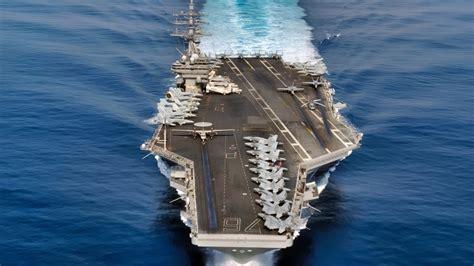
The USS Ronald Reagan (CVN-76) is nearing the end of a major 17-month maintenance period that could soon return one of the U.S. Navy’s most important nuclear-powered aircraft carriers to active service. The Nimitz-class carrier has been undergoing its latest Drydocking Planned Incremental Availability (DPIA) at Puget Sound Naval Shipyard in Bremerton, Washington, as the Navy works to restore and modernize a vessel designed for roughly five decades of service.
Commissioned into the U.S. Navy fleet on July 12, 2003, the carrier was named after former President Ronald Reagan. Nancy Reagan served as the ship’s sponsor during its christening in March 2001. Over more than two decades, CVN-76 has supported combat operations, Global War on Terrorism deployments, humanitarian missions, and a lengthy forward-deployment period in Japan.
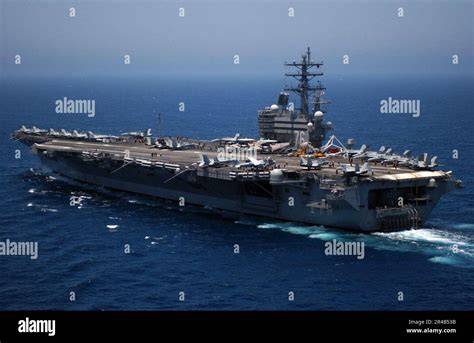
The current maintenance cycle began after the USS Ronald Reagan returned to Bremerton in August 2024, with the principal 17-month maintenance period beginning in March 2025. The Navy expects the work to reach completion in late August 2026, an important milestone at a time when the service faces intense pressure to maintain enough aircraft carriers for worldwide operations.
What the USS Ronald Reagan Overhaul Involves
Specific details of the current DPIA have not been widely disclosed. Nevertheless, a maintenance period of this scale typically involves extensive inspections, repairs, equipment overhauls, and modernization work across the carrier. Structural assessments can address the hull and freeboard, while engineering and shipboard systems may receive upgrades intended to keep the vessel compatible with evolving Navy requirements.
The importance of the overhaul extends beyond simply returning an individual ship to sea. A Nimitz-class aircraft carrier represents an enormous concentration of aviation, propulsion, command, and logistical capabilities. Keeping CVN-76 operational therefore gives Navy planners another major platform for managing an increasingly demanding global force structure.
From Yokosuka to Bremerton
Ronald Reagan previously underwent a 12-month DPIA in 2012, supported by a reported $210 million budget. After completing training and qualification activities in 2013, the carrier eventually moved to Yokosuka, Japan, becoming the Navy’s only forward-deployed aircraft carrier in 2015.
That chapter demonstrated the strategic value of the ship’s mobility. From Japan, Ronald Reagan could support U.S. interests across the Indo-Pacific while maintaining the flexibility associated with a nuclear-powered carrier strike group.
Sea Trials Come Before Deployment
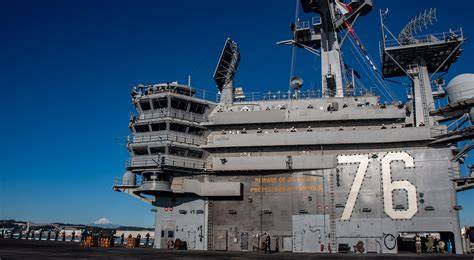
Although completion of shipyard work is expected soon, Ronald Reagan will not immediately return to operational deployment. The carrier must first undergo sea trials to verify that its systems perform correctly after the extensive maintenance period. The crew and embarked air wing will then need training and qualifications before the ship can rejoin the Navy’s deployment cycle.
Its eventual destination remains undisclosed. The Navy has emphasized that future movements and operations are protected for operational-security reasons, meaning speculation about its next deployment theater should be treated cautiously.
A Carrier Designed for the 2050s
With a projected 50-year service life, USS Ronald Reagan could remain relevant into the early 2050s. Its return will therefore represent more than the completion of a lengthy shipyard project. It will restore a highly capable carrier to a fleet facing sustained operational demands.
For now, the focus is straightforward: finish the overhaul, complete sea trials, qualify the crew and air wing, and return CVN-76 to active service. After 17 months in maintenance, one of America’s most recognizable aircraft carriers is getting close to sailing again.