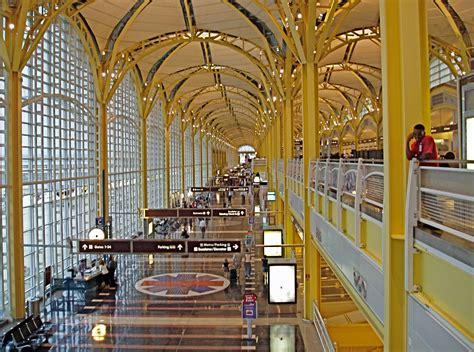
Ronald Reagan Washington National Airport (DCA) stands as a uniquely symbolic gateway to the United States capital. Just five miles from downtown Washington, D.C., this facility is not merely a transportation hub—it is a deeply integrated component of American political, architectural, and aviation history. Owned by the U.S. federal government and operated by the Metropolitan Washington Airports Authority (MWAA), DCA exemplifies the balancing act between modern air travel demands and the preservation of national security and environmental controls.
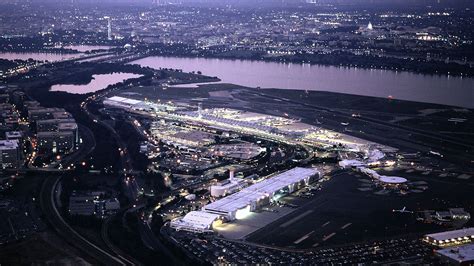
Originally opened on June 16, 1941, the airport quickly embedded itself in the heart of the nation’s wartime logistics network. Its location on land reclaimed from the Potomac River shoreline and an old plantation, backed by President Franklin D. Roosevelt, marked a crucial turning point in the nation’s aviation infrastructure development.
From Hoover Field to National Significance
The history of DCA stretches beyond its 1941 opening, rooted in the confluence of two inadequate and short-lived predecessors—Hoover Field and Washington Airport, which merged in 1930. These earlier airfields were burdened by dangerous topography, obstacles like smokestacks, and limited runways. After Congress repealed restrictive legislation in 1938, the federal government commenced one of the most ambitious aviation construction efforts in the pre-WWII era.
Completed in record time, the new airport served as a point of both civil pride and military readiness, showcasing captured Japanese aircraft post-World War II and becoming an early testbed for aviation policy. Despite being so close to the District of Columbia, a 1945 decision legally placed the airport in Virginia, shaping future political control and taxation rights.
Jet Age Expansion and Federal Oversight
From its early role as a regional connector, DCA rapidly scaled operations through the mid-20th century. By 1954, passengers could travel nonstop to Los Angeles, a remarkable leap in route extension. Jet aircraft first entered service here in 1966, signaling a transition to high-volume, long-distance travel, and by 1970, the Boeing 727-200 began servicing the airport.
Terminal expansions in the postwar decades laid the groundwork for the infrastructure seen today. New holdrooms, concourses, and ticketing facilities were gradually added. The arrival of the Washington Metro’s Yellow and Blue Lines in 1977 further tied the airport to the fabric of the capital’s transportation grid.
Terminal 2 and Modern Design Excellence
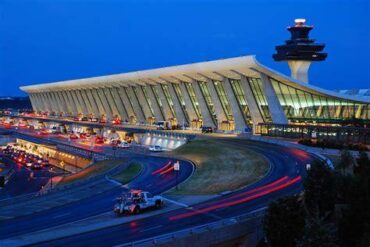
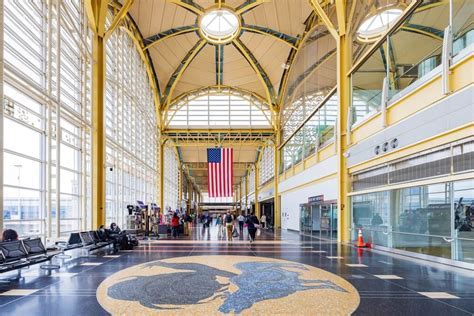
A major architectural shift occurred in 1997 with the unveiling of Terminal 2, a gleaming structure designed by César Pelli, known for combining futuristic curves with functional elegance. It quickly became the face of modern DCA, with its sweeping roofline and abundant natural lighting.
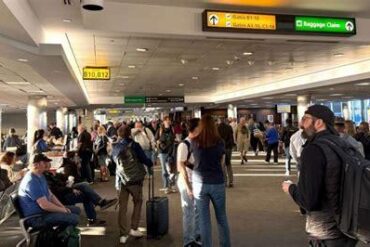
The expansion continued under Project Journey, which culminated in 2021 with the opening of Concourse E, adding 14 gates tailored for regional jet operations. New unified security checkpoints opened in November 2021, significantly reducing congestion. These upgrades not only improved capacity but aligned with post-9/11 security architecture, balancing access and resilience.
Legislated Restrictions and Slot Control
DCA’s expansion has always been tempered by congressional oversight and community sensitivities, particularly concerning noise and airspace security. In 1966, Congress imposed a 650-mile perimeter rule to prevent overcrowding and protect Dulles International Airport’s development. This rule now sits at 1,250 miles, with only a few exemptions granted annually.
The High Density Rule of 1969 further capped hourly takeoffs and landings, giving rise to a complex slot system where airlines must buy, sell, or lease landing rights. Significant slot transfers in 2011 and 2014 reshaped carrier presence, most notably favoring American Airlines, which maintains a dominant hub today.
A Renaming Wrapped in Controversy
In February 1998, Congress passed legislation to rename the facility Ronald Reagan Washington National Airport, aligning the change with the former president’s 87th birthday. The renaming, while politically motivated, remains contested among locals. A 2015 survey showed divided usage between “Reagan” and “National,” reflecting the political symbolism the name carries.
Operational Constraints and Airspace Complexity
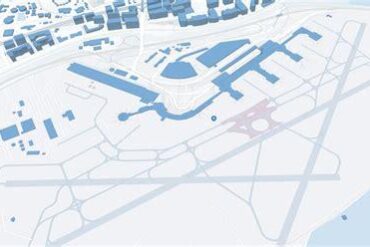
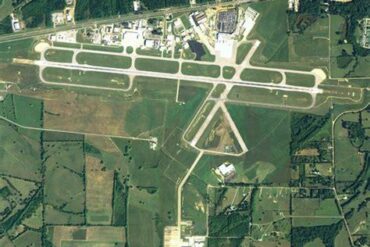
Today, DCA’s daily operations are a choreographed ballet of precision and restraint. With three runways—01/19 (the main), 15/33, and 04/22—the airport must accommodate over 26 million passengers annually (2024 figure), while adhering to strict noise abatement and security flight paths.
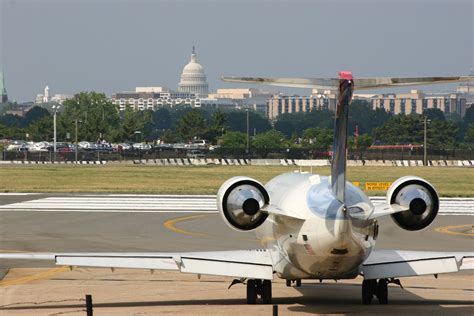
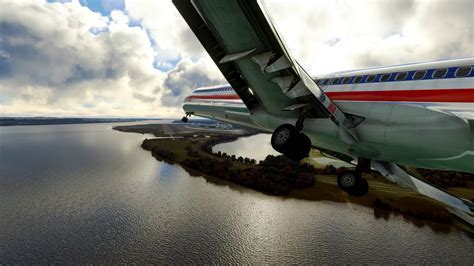
The most iconic of these is the River Visual approach to Runway 19. Pilots must follow the winding Potomac River, making tight turns while keeping visual contact with landmarks like the Washington Monument and Jefferson Memorial. This approach, while stunning, demands absolute concentration and instrumental accuracy.
Safety Incidents and Regulatory Scrutiny
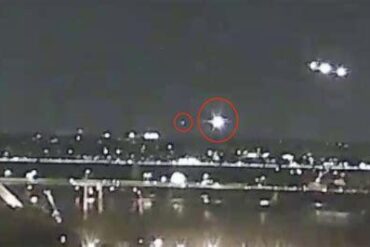
Since 2011, DCA has been under scrutiny following several high-profile safety breaches, most notably an incident where an air traffic controller fell asleep on duty, leaving pilots to land unaided. More recently, in early 2025, a series of near-midair collisions triggered federal investigations and a temporary reduction in peak-hour flight volumes.
These events have sparked renewed debates over whether DCA’s urban location, constrained airspace, and rising traffic levels are sustainable in the long term. Nonetheless, the airport continues to operate as a critical federal and regional aviation asset.
Terminals, Airlines, and Lounges
DCA currently features 59 jetway-equipped gates:
- Terminal 1 (nine gates): Used by Air Canada Express, Frontier, and Southwest.
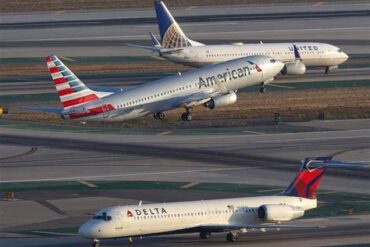
- Terminal 2 (50 gates): Divided into Concourses B through E, home to American Airlines, Delta, United, Alaska, and JetBlue.
The airport’s amenities cater to a sophisticated traveler demographic, featuring:
- Admirals Club (American Airlines)
- Delta Sky Club
- United Club
- AmEx Centurion Lounge (opened July 2024)
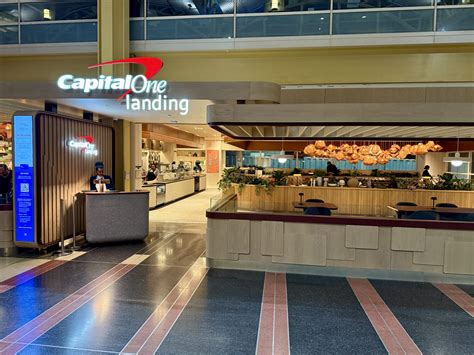
- Capital One Landing Lounge (opened November 2024)
Ground Transportation and Access
One of DCA’s most attractive features is its multi-modal connectivity. Passengers can access the terminals directly from the Yellow and Blue Metro lines, via elevated pedestrian bridges. For motorists, the airport connects to I-395, the George Washington Parkway, and U.S. Route 1, allowing swift ingress and egress.
The airport also features parking garages, shuttle systems, and 48 bike racks—including the first airport-hosted bikeshare station in the United States. In the near future, a pedestrian land bridge will link the airport directly to Amazon’s HQ2, reinforcing the role of DCA in the region’s economic ecosystem.
Most Popular Routes and Regional Role
Despite its size limitations, DCA consistently ranks among the busiest domestic origin-destination airports. In 2024, the top city pairs included:
- Atlanta (ATL)
- Boston (BOS)
- Chicago–O’Hare (ORD)
- Orlando (MCO)
- Miami (MIA)
These routes reflect DCA’s emphasis on high-frequency, high-yield business and political travel, reinforcing its place in the nation’s political and commercial matrix.
Conclusion: A Strategic Gateway Balancing Tradition and Modernity
Ronald Reagan Washington National Airport remains a testament to strategic compromise—between growth and noise, security and access, modern architecture and historical continuity. Its layered legacy, from WWII origins to post-pandemic reconfiguration, embodies the evolving priorities of both aviation planners and the American public.
As federal oversight, public sentiment, and urban planning continue to converge, DCA will remain not just an airport, but a living artifact of national infrastructure, politics, and culture, poised at the very edge of the Potomac and the heart of American governance.