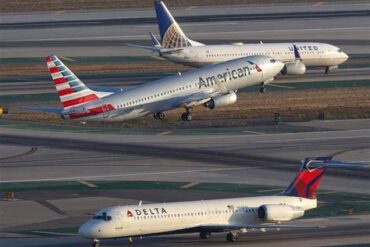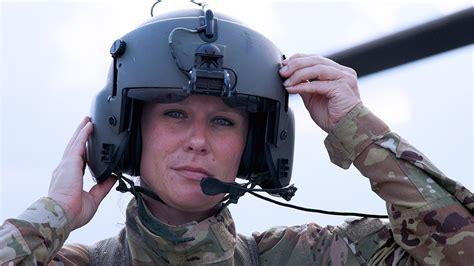
The aftermath of the Reagan National Airport midair collision has prompted a sweeping transformation in how military aviation operates over the Washington, D.C. area. In particular, elite U.S. Coast Guard helicopter crews—known as the Blackjack pilots—have taken center stage in implementing a new tier of airspace safety protocols. Operating just yards from commercial runways, these pilots now face a radically different flight environment shaped by heightened security concerns and fresh Federal Aviation Administration mandates.
The Tragedy That Triggered Reform
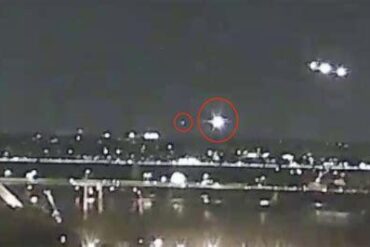
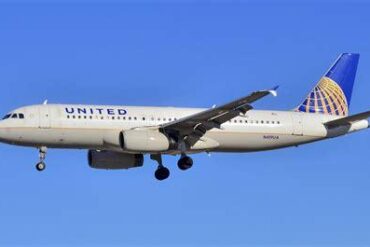
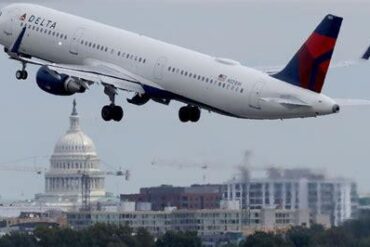
On January 29, 2025, the tranquil sky over the Potomac was shattered when American Airlines Flight 5342 collided midair with an Army Blackhawk helicopter, resulting in 67 fatalities and nationwide shock. The incident immediately became one of the most devastating domestic aviation accidents in recent years. What was initially seen as a horrific outlier soon evolved into a galvanizing moment for national airspace reform.
The collision highlighted gaping vulnerabilities in air traffic coordination and communication protocols between military and civilian aircraft operating near congested zones. Route 4, a low-altitude helicopter corridor that ran dangerously close to commercial traffic lanes, was pinpointed as a major contributing factor.
Blackjack Pilots at the Frontlines of Airspace Security
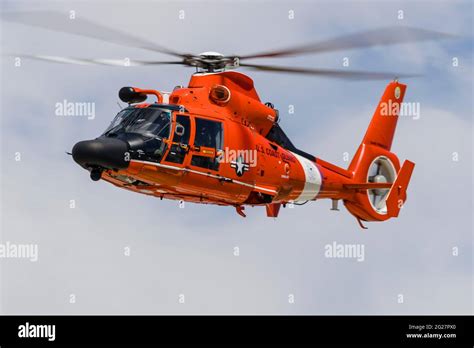
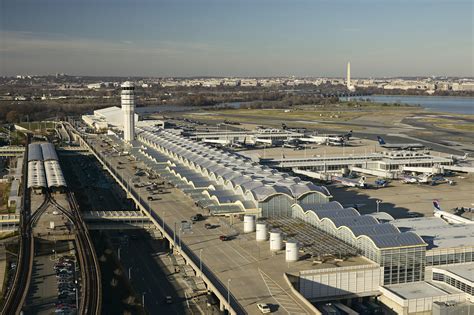
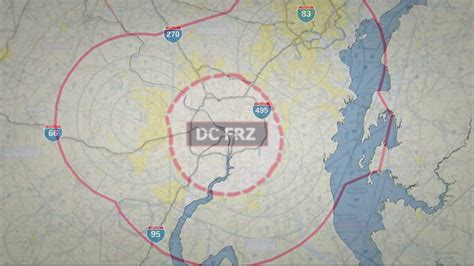
From a secured hangar tucked alongside Reagan’s bustling runways, the Blackjack unit of the U.S. Coast Guard’s Air Station Washington continues its mission undeterred. Their task: to scramble on a moment’s notice and intercept unauthorized aircraft entering the highly restricted National Capital Region (NCR) airspace.
Armed with four MH-65D Dolphin helicopters, these pilots perform under the command of NORAD (North American Aerospace Defense Command), patrolling what is arguably the most politically sensitive airspace in the United States.
“We’ll get a few violators a week that will end up getting scrambled,” said Commander Nate Rhodes, noting that even two decades after 9/11, the threats haven’t diminished—they’ve simply evolved.
Technological Barriers Meet Human Ingenuity
The most common airspace violators are so-called “low, slow” targets—typically small, privately piloted aircraft whose operators may be lost, inattentive, or poorly informed about restricted airspace. Unlike fighter jets, which cannot slow to the pace required for close inspection or redirection, the MH-65Ds are uniquely suited to fly parallel with these craft.
To mitigate risks and ensure clear communication, the Blackjack helicopters now use a multi-modal signaling system. In scenarios where radio contact fails or is unavailable, pilots display signboards through their cockpit windows with messages such as “REVERSE COURSE”—a practice not unlike the route displays on city buses.
Rhodes acknowledges the method’s simplicity: “If they don’t have a working radio, maybe they had electronic failure in the aircraft. This is the most effective way to communicate.”
The helicopters are also equipped with flashing red and blue police-style lights, providing a visual warning akin to being pulled over by state police—except it happens thousands of feet in the air.
New Airspace Protocols: Raising the Safety Bar
Following the January tragedy, federal airspace guidelines underwent significant revision. What was once a flexible and relatively permissive environment for military helicopters is now tightly regulated with the following mandatory changes:
- Closure of Route 4, the low-altitude helicopter corridor along the Potomac River
- Enhanced electronic identification requirements for all military aircraft
- Tighter separation mandates: Passenger aircraft must now maintain at least 1.7 miles of distance from any military operations, compared to the earlier standard of just 150 feet vertical clearance
“We take off and land strictly to the west now to stay away from the runways,” explained Captain Jeff Graham, reflecting on the loss of previous flight path flexibility. “The margin of safety has gone from a 10 to a 20.”
Dynamic Environments Require Adaptive Pilots
Blackjack pilots emphasize the agility required to perform in a constantly shifting operational landscape. “We abide by all FAA rules, regulations and agreements that we have, and comply with any instructions in the area,” Rhodes said. “It’s a bit more dynamic because of those changes.”
Air traffic controllers, under immense scrutiny since the incident, have tightened their oversight dramatically. The real-time coordination between civilian control towers and military operations has become far more regimented. Pilots are now explicitly instructed to avoid runway centerlines during approaches and departures—a stark contrast from pre-incident protocols that allowed direct crossings.
“We’re still kind of storming and forming and figuring out the best way to operate in this environment,” said Graham, hinting that further adjustments are imminent.
Presidential Travel and Layered Defense
While day-to-day operations remain challenging, security reaches a peak when President Donald Trump travels to his residences in Bedminster, New Jersey, or Mar-a-Lago, Florida. During such times, airspace closures are even more tightly enforced, with Blackjack pilots forming a crucial part of a layered defense network involving surveillance, radar detection, and aerial intercept.
Each intercept mission becomes a precision choreography between aircrews, NORAD command centers, and sometimes even civilian air traffic controllers. The goal is always the same: prevent any aircraft, no matter how benign it may seem, from compromising national security.
The NORAD Perspective: Human Eyes Still Matter
Despite the array of radar, satellite, and surveillance technology available to NORAD, Steve Armstrong, a spokesperson for the agency, emphasized the continued need for human verification.
“To be able to discern what’s going on in the cockpit of an aircraft, the best way to do that is to put literal eyes-on that pilot that’s flying in that,” Armstrong said.
This statement underscores a crucial truth of national defense: advanced systems are indispensable, but real-time human judgment remains irreplaceable. The Blackjack crews, with their unique skillset and tactical flying capability, fill that indispensable gap.
Looking Ahead: A New Paradigm of Civil-Military Airspace Integration
In the months since the tragedy, a clearer picture has emerged of how America’s busiest and most sensitive airspace must evolve. There is growing consensus that integrating military response protocols with civilian air traffic management is not only prudent—it’s essential.
The Blackjack pilots’ experience serves as a case study in adaptation under pressure. Their shift from standard military operations to hyper-regulated, security-focused intercepts marks a pivotal moment in post-9/11 aviation.
As the FAA, NORAD, and Homeland Security continue to refine airspace policy, Reagan National becomes more than a civilian airport. It becomes a living laboratory for modern airspace security, where tragedy has forced evolution and where every sortie flown is a testament to renewed vigilance.
Conclusion: Vigilance in a New Airspace Era
The Blackjack helicopter crews are more than pilots—they are frontline responders in a volatile environment where one miscommunication or slow response can lead to national tragedy. Their aircraft, their instincts, and their split-second decisions now play a critical role in protecting lives both in the air and on the ground.
From signboards in the sky to advanced airspace zoning, the response to the Reagan National Airport collision has ushered in a new era—one where the margin for error is smaller, the technology is smarter, and the men and women of the Coast Guard’s Blackjack unit remain sharp-eyed guardians of American airspace.