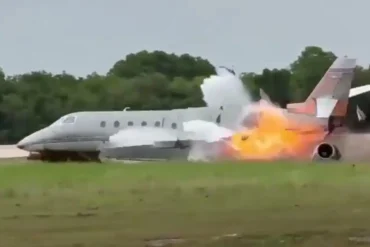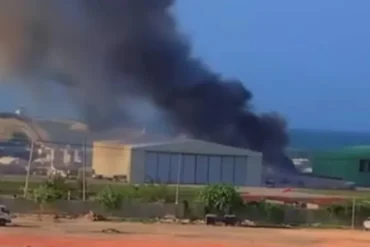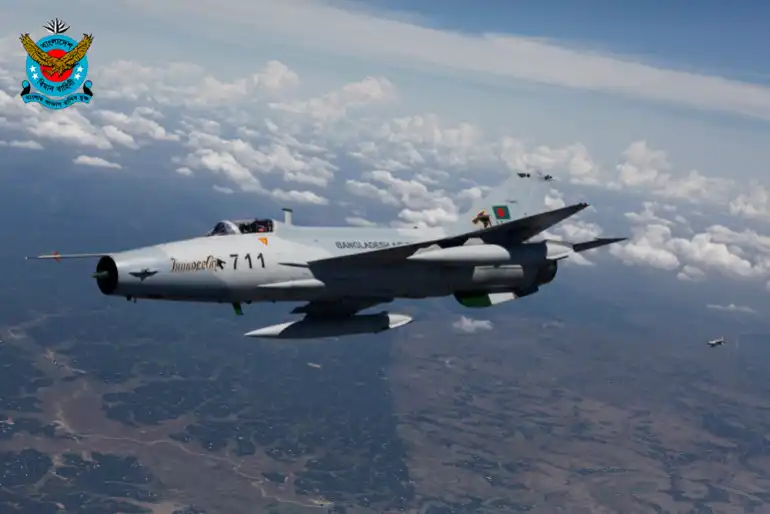
In the heart of Bangladesh’s capital city, a devastating military aviation disaster unfolded on the afternoon of July 21, 2025. At approximately 13:16 local time, a Bangladesh Air Force Chengdu F-7BGI fighter jet crashed directly into a school building in the densely populated Uttara neighborhood of Dhaka, setting off a massive explosion and killing at least 19 people, including schoolchildren and staff. Over 100 others were injured, many with severe burn injuries, and the death toll may still rise as authorities continue rescue and recovery operations into the night.
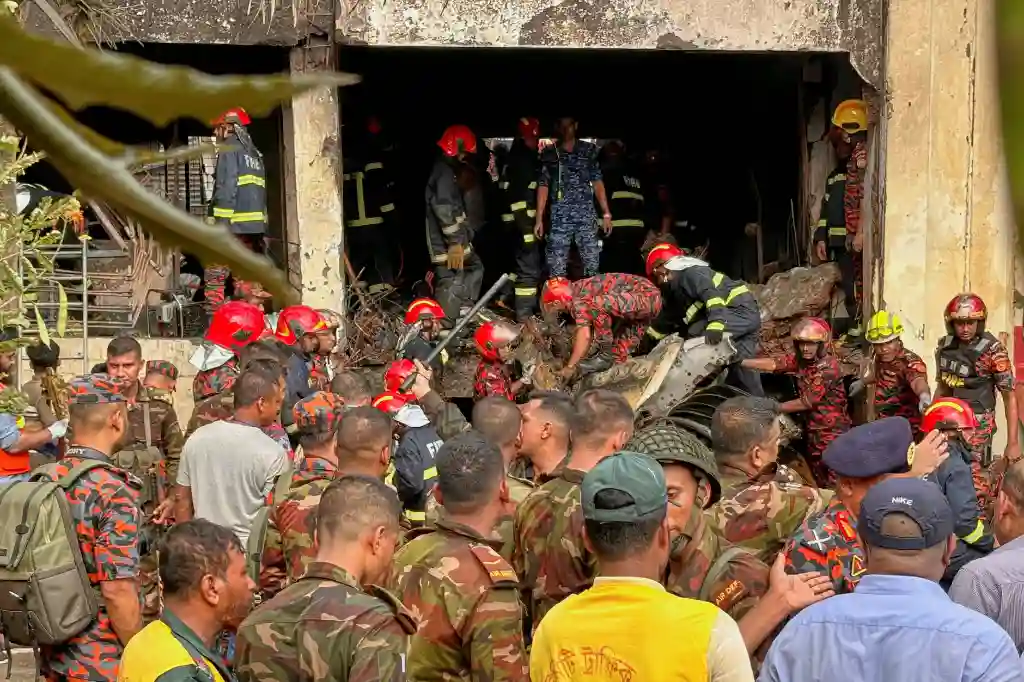
Tragedy Strikes at Milestone School and College
The crash occurred just minutes after takeoff, during what was reportedly a training sortie. The Chengdu F-7BGI—a Chinese-made derivative of the Soviet MiG-21—was part of a pair of aircraft operating under routine training protocols. However, something went catastrophically wrong. According to official military reports, the aircraft departed from Dhaka’s Tejgaon Air Base at 13:06 local time and experienced mechanical failure within ten minutes.
Eyewitness accounts describe a horrific scene: the jet clipped the upper floors of the Milestone School and College, a prominent educational institution in the area, before slamming into a nearby two-story primary school annex. The resulting explosion shattered windows across the neighborhood, ignited multiple fires, and sent plumes of black smoke billowing into the sky. Within moments, flames consumed large sections of the building, trapping students and teachers inside.
Firefighting and Emergency Response Under Strain
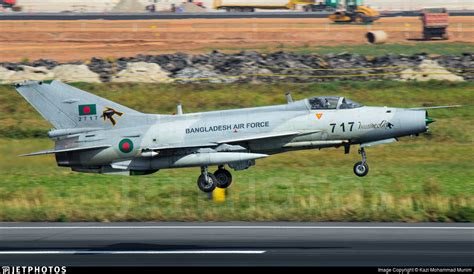
Nine fire engines and six ambulances were immediately dispatched to the scene as first responders struggled to gain control of the blaze. The National Institute of Burn and Plastic Surgery reported that more than 50 of the 100 injured were admitted with severe burn injuries. Hospital corridors quickly filled with grieving parents and relatives searching for missing children, as emergency teams tried desperately to triage the wounded.
The chaotic aftermath laid bare the strain on Bangladesh’s emergency services, revealing the urgent need for modernized response frameworks in dense urban areas. Many survivors were pulled from the wreckage by local residents before emergency crews could even arrive, an act of community courage that undoubtedly saved lives.
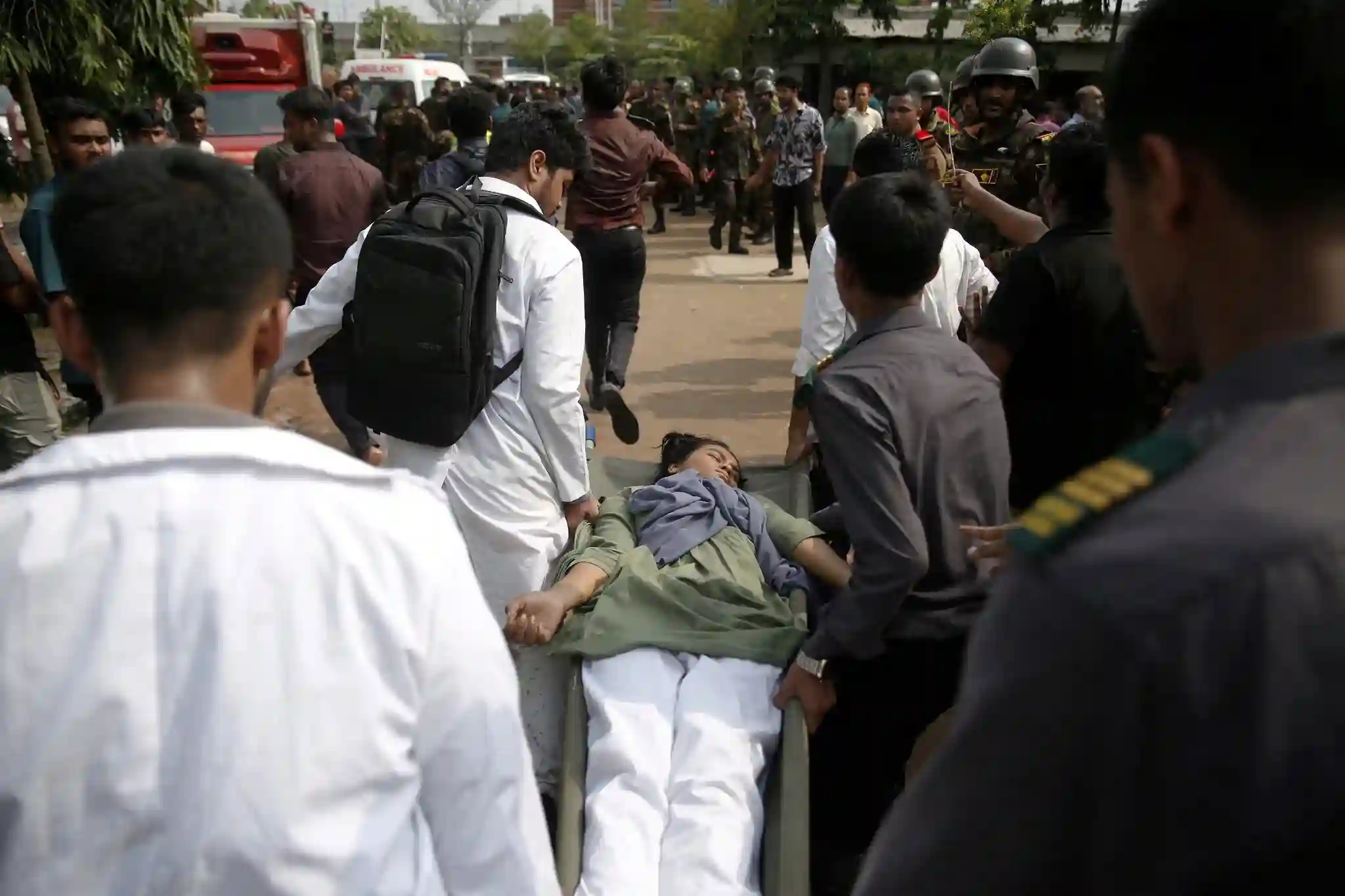
Aircraft Details and Pilot’s Final Moments
The Chengdu F-7BGI is an advanced trainer and interceptor aircraft, developed in China and based on the MiG-21 platform. Bangladesh, which began acquiring these fighters in the early 2000s, uses them primarily for pilot training and quick reaction alerts. Despite being heavily modified with digital avionics and modern weapon systems, the platform has a checkered safety record globally.
According to Bangladesh Air Force sources, the pilot of the ill-fated jet was on their first solo training mission and had been in the air for only a few minutes when control input systems began to fail. Communications transcripts reveal that air traffic controllers instructed the pilot to eject, but the aircraft was already descending rapidly. In a final act of bravery, the pilot attempted to steer the aircraft away from crowded residential areas, mirroring heroic decisions made by pilots in similar circumstances throughout aviation history. Sadly, the pilot did not survive.
Conflicting Reports and Government Response
In the hours following the crash, there were conflicting casualty numbers between hospital sources, the Ministry of Defense, and the local government. Initial tallies placed the number of fatalities at 11, which was later revised to 19 confirmed dead as more victims were identified. Chief Adviser Muhammad Yunus, speaking in a somber national address, pledged a full inquiry into the accident and promised compensation and medical support for victims’ families.
“The government will take all necessary steps to determine the cause of this horrific tragedy and support every affected family,” Yunus said. “Tomorrow will be observed as a national day of mourning across the country.”
Flags across Bangladesh will be flown at half-mast, and memorial services are being organized at schools and mosques throughout Dhaka. Rescue teams, including personnel from the military and the Bangladesh Red Crescent, continue to search for survivors and assess the structural integrity of nearby buildings damaged by the blast.
Bangladesh’s Military Aviation Safety Record Under Scrutiny
This tragedy has reignited debate over military aviation safety protocols in Bangladesh, particularly the continued use of aging aircraft platforms for training missions in populated areas. While the F-7BGI is among the newer variants of the J-7 family, it is still based on a 60-year-old Soviet airframe. Critics argue that such jets should not be flying over civilian zones, let alone performing training exercises near schools.
This isn’t the first such incident involving Bangladesh Air Force aircraft. Past crashes involving MiG-29s and training variants of the Yak-130 have raised questions about aircraft maintenance, pilot readiness, and airspace coordination. Analysts point to an urgent need for a review of pilot training procedures, maintenance regimes, and safe flight corridors.
Survivors’ Stories: Trauma and Resilience
Among the most haunting scenes from the aftermath were the accounts of survivors—both students and teachers—who witnessed the jet screaming overhead before the crash. 14-year-old Amina Rahman, a student in a second-floor classroom, described hearing a deafening roar moments before the ceiling collapsed.
“Everything was shaking. The windows exploded, and then it was fire—everywhere fire,” she said from her hospital bed, her arms wrapped in gauze. “I don’t know where my best friend is. She sat right beside me.”
Many survivors remain hospitalized in critical condition, while mental health professionals have been deployed to local shelters and hospitals to assist in counseling efforts. In a country where mass casualty trauma services remain underfunded, the psychological impact of this disaster may ripple through affected communities for years.
Calls for Accountability and Reform
Civil society groups, including the Bangladesh Center for Policy Dialogue, have called for an independent civilian-led investigation into the causes of the crash. Activists and parents of victims gathered outside government offices late Monday night demanding transparency in the inquiry and long-term changes to military flight operation zones.
Public pressure is also growing for Bangladesh’s Ministry of Education to re-evaluate school locations in proximity to military training routes. Urban planning authorities are being urged to publish and enforce no-fly zones over educational institutions, hospitals, and densely populated civilian neighborhoods.
International Condolences and Regional Reactions
Condolences have poured in from neighboring countries, international aviation bodies, and foreign embassies. Indian Prime Minister Narendra Modi extended his sympathies to the people of Bangladesh, while UNICEF issued a statement mourning the loss of young lives and offering logistical support for trauma recovery.
The International Civil Aviation Organization (ICAO) has also reached out to Dhaka, expressing readiness to collaborate on safety audits and civil-military coordination improvements. Meanwhile, the crash has triggered security reviews at other air force bases across South Asia.
A Nation in Grief
As Bangladesh mourns, the people of Dhaka face the daunting task of recovering from a disaster that has shaken the very foundation of their community. The image of a fighter jet crashing into a school—a space meant to nurture and protect the future—will be etched in national memory for generations.
There is grief, but also a demand for answers. For the families of the 19 who perished and the dozens more whose lives have been irrevocably altered, justice, accountability, and reform must follow the sorrow. The skies above Dhaka must never again darken in flames over a schoolyard.