After a devastating Air India crash shook global aviation just days earlier, another alarming incident unfolded—this time on American soil. A burst of flames from an American Airlines jet engine at Chicago’s O’Hare International Airport not only delayed flights but intensified fears already on edge. The timing of the event magnified its psychological toll, underscoring growing concerns about air travel safety amid an industry grappling with escalating scrutiny.
Fire Flash Before Takeoff: Chaos on the Tarmac at O’Hare
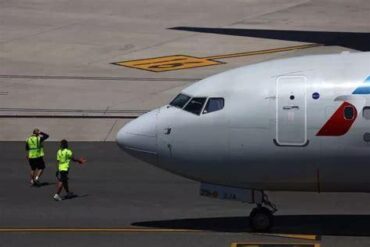
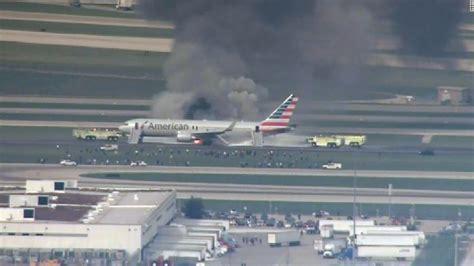
It was meant to be a routine departure. American Airlines Flight 2537, scheduled to fly to Tucson, Arizona, had fully boarded and was taxiing toward the runway when a sudden eruption of flames and smoke jolted passengers and crew. A passenger’s phone video captured the terrifying moment—a fireball briefly flared from the engine under the wing, followed by a cloud of thick black smoke. Panic spread through the cabin.
Flight attendants immediately initiated protocols as the plane was brought to a halt. Emergency services stood on alert, but the aircraft was able to safely return to the gate without further escalation. While no injuries were reported, the emotional and operational impact was profound.
No Fire Confirmed—Yet the Fallout Is Real
Following the incident, American Airlines officials released a statement attributing the scare to a likely maintenance-related issue, claiming that no fire was ultimately found within the engine system. But for passengers who witnessed the flame, and for millions who viewed the video online, the reassurance did little to ease fears. The sight of a plane ablaze—no matter how brief—cannot be unseen.
This event comes at a particularly fragile moment for aviation. The Air India Flight AI171 disaster, which claimed 240 lives just days earlier, had already jolted the public’s trust in airline safety. Against that somber backdrop, even a minor technical hiccup can feel like a catastrophic warning sign.
O’Hare’s Emergency Spotlight: Protocols Under Pressure
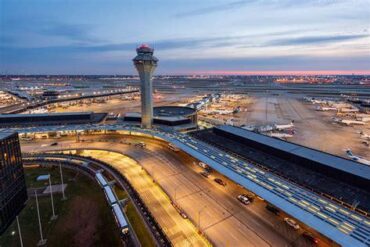
Chicago’s O’Hare International Airport, ranked among the busiest in the world, has long prided itself on tight coordination and rapid response. But this incident highlighted just how quickly schedules and emotions unravel in the face of potential disaster. Gate agents scrambled to communicate with confused travelers as ripple effects extended to other flights lined up behind Flight 2537.
Ground crews were praised for their quick action, but questions have now been raised about how the airport and airline jointly handle mechanical scares. In a city deeply connected to national and international routes, a single mechanical issue can cripple entire logistical networks.
Flame Burst Raises Industry-Wide Maintenance Concerns
This incident isn’t isolated—it’s part of a pattern. Aviation watchdogs have noted an uptick in in-air technical anomalies over the past two years, ranging from decompression scares to emergency landings prompted by faulty indicators. The American Airlines flame burst adds to a growing body of evidence that maintenance protocols, particularly for aging aircraft, are in urgent need of digital modernization and predictive analytics.
American Airlines, already facing scrutiny for delays and cost-cutting practices, may now face regulatory pressure to overhaul inspection routines and invest in real-time engine diagnostics. While legacy carriers tout decades of experience, passengers are increasingly drawn to data, transparency, and proof of rigorous upkeep.
Passenger Psychology: The Viral Power of Fear
In today’s connected world, perception spreads faster than reality. A single video of engine flames—looped endlessly across social media—can dent an airline’s reputation far more severely than a delayed flight ever could. For many passengers, witnessing a near-miss like this one has a lasting effect.
Psychologists specializing in aviation trauma report a noticeable uptick in flight anxiety cases following widely reported incidents. For families, business travelers, and first-time fliers, the emotional cost of travel has become part of the booking equation. Airlines are being urged not only to ensure mechanical soundness, but also to adopt trauma-informed passenger support systems.
Airlines and Regulators: A Reckoning on the Horizon
This incident, juxtaposed with the Air India tragedy, creates a flashpoint moment for international aviation. Flight AI171’s catastrophic crash shortly after takeoff from Ahmedabad exposed potential flaws in monitoring aircraft performance at low altitudes. The Boeing Dreamliner’s sudden plunge into a crowded district claimed nearly every life aboard. The juxtaposition of these events—one fatal, one narrowly avoided—intensifies public demand for change.
Regulators in both the U.S. and India are now under pressure to reassess safety checks, particularly during peak travel seasons. Inspections that were once periodic must evolve into continuous, data-driven safety surveillance. In-flight sensors, machine learning diagnostics, and AI-powered alert systems are no longer futuristic ideas—they’re essential tools for restoring faith in aviation.
The Market Impact: Shifting Consumer Behavior and Airline Accountability
Beyond the terminals and hangars, the financial implications of aviation scares are enormous. American Airlines’ stock wavered slightly after the O’Hare incident, while investor calls grew louder for greater transparency in safety practices. Insurance premiums for both carriers and aircraft manufacturers could rise.
Cities like Tucson, heavily reliant on tourism and seasonal traffic, could feel secondary shockwaves from such disruptions. Travelers canceling flights, rerouting through alternative carriers, or avoiding certain hubs altogether all contribute to an economic domino effect.
For airlines, these incidents are more than PR crises—they are reputation-defining moments. The road to recovery involves not just fixing what broke, but proving it will never break again.
Air India Crash: A Global Tragedy Demanding Global Response
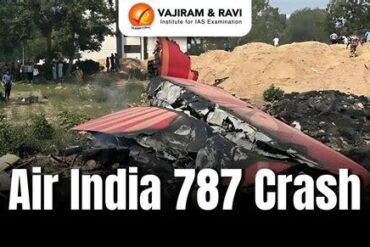
The crash of Air India Flight AI171 has cast a long shadow. Just six minutes after departing Ahmedabad’s Sardar Vallabhbhai Patel International Airport, the Boeing 787 lost altitude and nosedived into a residential zone near B.J. Medical College. Flames engulfed the wreckage almost instantly. Of the 242 passengers onboard, only one survived—a 9-year-old boy, now the symbolic center of a nation’s grief.
Investigators suspect a critical failure in the thrust management system, though black box analysis is ongoing. The tragedy has spurred an emergency summit among global aviation authorities, with particular emphasis on fleet-wide system vulnerability reviews.
In London, where the flight was headed, mourning vigils outside Indian consulates drew thousands. Across India, national mourning was declared. Prime Minister and civil aviation officials promised full transparency, but public trust remains shaken.
Lessons in Accountability: From Apology to Action
While the O’Hare scare and the Air India crash differ in magnitude, both point to the same structural vulnerabilities—overworked maintenance teams, aging aircraft, and reactive rather than proactive protocols. These events are not mere misfortunes; they are red flags that demand a tectonic shift in how safety is prioritized.
Passengers today are not just booking seats—they are placing trust. And that trust must be earned with every flight, every inspection, every policy change. It’s no longer enough to promise better oversight. Airlines must show their work, publish their audits, and include passengers in the dialogue of safety.
Looking Ahead: Grounding Fear, Elevating Standards
The fire at O’Hare and the tragedy in Ahmedabad must not become fleeting headlines. They must serve as industry-defining inflection points. Aviation, for all its marvels, walks a fragile line between wonder and catastrophe. Each incident erodes the margin for error—and with it, the space for public forgiveness.
To move forward, airlines must invest not only in engines but in ethics, communication, and human-centered safety design. Every step toward transparency is a step away from disaster.
Because the sky may be vast—but the room for failure has never been smaller.