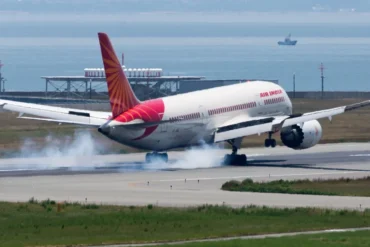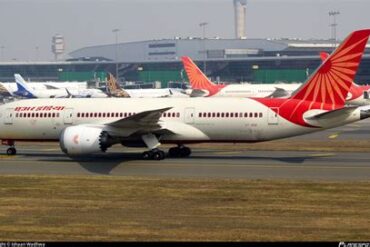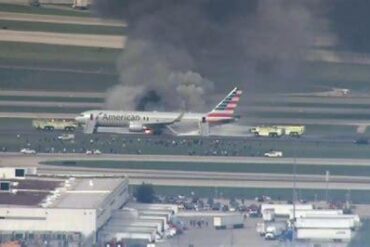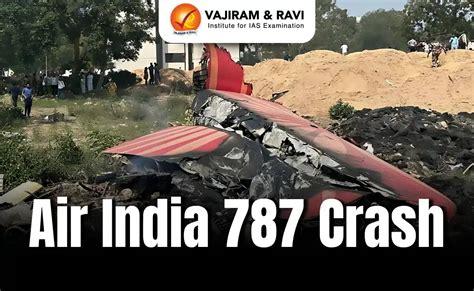
On June 12, 2025, Air India Flight AI171, a Boeing 787-8 Dreamliner, departed from Sardar Vallabhbhai Patel International Airport (AMD) in Ahmedabad bound for London Gatwick Airport (LGW). Within minutes of takeoff, the aircraft experienced catastrophic technical failures and crashed into a densely populated residential area. The devastating crash claimed 260 lives, including 242 passengers and crew, as well as 18 people on the ground, instantly making it one of the deadliest aviation disasters in Indian history.
Immediate Aftermath and Timeline of the AI171 Disaster
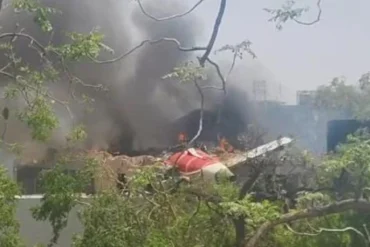
The flight lifted off at approximately 6:30 AM local time, and eyewitnesses reported hearing unusual engine noises before seeing the aircraft falter mid-air. According to preliminary data from air traffic control and early radar readings, the aircraft failed to gain altitude properly. Just minutes after takeoff, it plunged into a densely inhabited neighborhood, causing fiery explosions and widespread structural damage. Emergency services arrived swiftly, but the impact zone was already engulfed in flames.
What compounded the tragedy was the failure of the landing gear to retract, a troubling indication that something had gone drastically wrong within seconds of liftoff. Speculations rapidly mounted about a multi-system failure, with early theories pointing toward electrical, hydraulic, or power system breakdowns. This mechanical mystery soon caught global attention.
Key Findings from the AAIB Preliminary Report
The Aircraft Accident Investigation Bureau (AAIB), under the Ministry of Civil Aviation, swiftly launched a full-scale investigation. Their preliminary report, submitted on July 1, 2025, provided troubling—yet inconclusive—insights into what may have caused the fatal sequence of events.
While data from flight data recorders and cockpit voice recordings is still under analysis, the report offered the following critical revelations:
- Normal Flap and Slat Configuration: The aircraft appeared to execute standard takeoff procedures, and no anomalies were observed in the wing configurations.
- Landing Gear Retraction Failure: A pivotal detail that pointed to an issue in the aircraft’s hydraulic or electronic systems. The inability to retract the landing gear often initiates emergency protocols.
- Engagement of Emergency Power Unit (EPU): Evidence suggested that the aircraft automatically engaged its emergency power systems—an act only triggered under critical failure conditions, such as loss of both engines or major power outage.
- Early Systemic Failure: Investigators lean toward a hypothesis of multiple, cascading failures within moments of takeoff—either an electrical short-circuit, fuel supply malfunction, or catastrophic engine fault.
While the official cause is pending, these early indicators suggest a rare and catastrophic confluence of technical failures, something that will deeply influence ongoing aviation safety reviews.
The Human Toll: Lives Lost and Communities Shattered
The emotional and humanitarian dimension of the AI171 crash is overwhelming. The 242 people onboard hailed from diverse nationalities, adding an international scope to the tragedy:
- 181 Indian nationals
- 52 British citizens
- 7 Portuguese nationals
- 1 Canadian citizen
Additionally, 18 individuals on the ground—including children and elderly residents—lost their lives as debris and burning fuel engulfed homes in the densely packed neighborhood.
In the days following the crash, 254 victims were identified via DNA analysis, while six more were confirmed using facial recognition. Air India responded by offering ₹1 crore (USD 120,000) as ex-gratia compensation to each victim’s family, along with ₹25 lakh (USD 30,000) in interim relief.
The grief extended across continents, with memorials held in London, Lisbon, Toronto, and New Delhi. Entire families were lost. Communities were torn apart. The tragedy touched not just those directly involved but all who watched in horror from around the world.
Air India’s Operational Response and Safety Overhaul
Air India’s leadership, under unprecedented scrutiny, has initiated a suite of emergency reforms and fleet-wide inspections. Recognizing that the crash may point to deep-rooted vulnerabilities in aircraft systems or operational oversight, the airline undertook several immediate measures:
- 15% Reduction in Widebody Operations: Until mid-July 2025, Air India suspended a significant portion of its international Dreamliner routes to conduct urgent aircraft inspections.
- Fleet Upgrade Commitments: The airline committed to a massive modernization push, updating system components on older 787s and investing in new avionics.
- Pilot and Crew Re-training: A major emphasis has been placed on simulator-based emergency scenario training, ensuring crews are prepared for worst-case technical failures.
- Safety Task Force Deployment: Air India has launched an internal Task Force for Operational Safety, reporting directly to the CEO, with cross-functional teams from engineering, flight ops, and emergency response.
Speaking at a media conference, the CEO stated, “This disaster is a defining moment—not just for Air India, but for Indian aviation as a whole. We owe our passengers a future where safety is uncompromising.”
Boeing 787 Under Global Scrutiny
As investigators narrow down the technical causes, global aviation regulators are intensely focused on the Boeing 787 Dreamliner series, an aircraft model heralded for its fuel efficiency and advanced systems, but also one that has seen intermittent controversies over the past decade.
Key areas now under the microscope include:
- Electrical System Design: The Dreamliner’s cutting-edge, fully-electric architecture replaces traditional pneumatic systems. While efficient, this dependence on electricity may have implications during cascading failures.
- Hydraulic Redundancy: If both primary and backup hydraulic systems failed, questions will be raised about whether the redundancy built into 787s is sufficient.
- Software Failures: Advanced digital systems, while powerful, can be vulnerable to coding flaws. Boeing may be required to roll out a global software diagnostic update.
The Federal Aviation Administration (FAA), European Union Aviation Safety Agency (EASA), and India’s Directorate General of Civil Aviation (DGCA) are reportedly coordinating to launch a multinational review of the Dreamliner’s safety protocols.
Industry-Wide Shockwaves and Reform Momentum
The ripple effects of the Air India crash are not limited to one carrier or aircraft. Around the globe, airlines, aviation regulators, and aircraft manufacturers are re-evaluating safety strategies:
- Reinforced Maintenance Standards: Airlines are reviewing their system-check procedures, especially post-maintenance checklists and diagnostic tests.
- Simulator Training Overhaul: More airlines are demanding advanced failure-mode scenarios in pilot simulators—training for the unimaginable.
- Emergency Protocol Updates: Ground crews and tower operations are updating response procedures for immediate abnormality detection after takeoff.
- Passenger Safety Advocacy: Victim advocacy groups have begun lobbying for legislation mandating black-box data transparency, faster investigation processes, and mandatory aircraft recalls upon system design failures.
In India, civil aviation minister Rajiv Prasad hinted at introducing a National Aviation Safety Bill, outlining new standards for flight certification, pilot licensing, and emergency reporting.
A Legacy of Loss, and a Future Built on Reform
As black-box data continues to be examined and system logs analyzed, one truth remains: the Air India AI171 crash was a preventable catastrophe. And while the investigation is far from over, it has already become a catalyst for sweeping changes.
For the victims’ families, no amount of compensation can bring back their loved ones. Yet their loss is now part of a larger movement—one that demands transparency, accountability, and progress in aviation safety.
The Boeing 787, once a symbol of cutting-edge commercial aviation, now carries the burden of renewed scrutiny. Air India, in its darkest moment, has chosen a path of reform and resilience.
Ultimately, this tragedy must serve as more than a painful memory. It must become the cornerstone of a safer future for all who take to the skies.