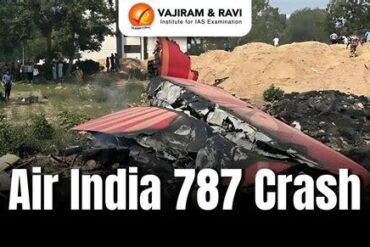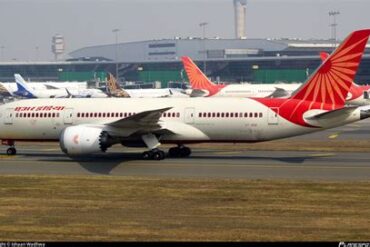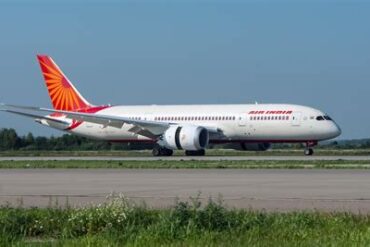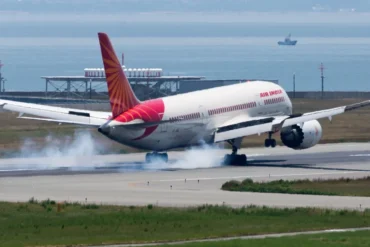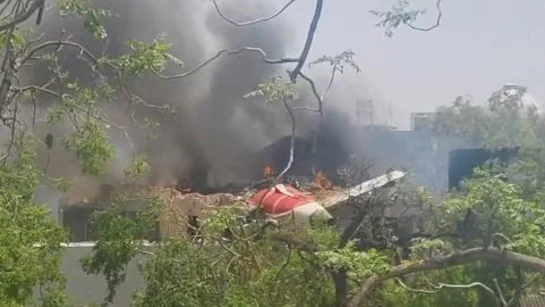
The skies over Ahmedabad turned grim on June 15, 2025, as Air India Flight AI171, a Boeing 787 Dreamliner, crashed just moments after takeoff from Sardar Vallabhbhai Patel International Airport. Bound for London Gatwick, the aircraft’s catastrophic plunge resulted in 270 fatalities, marking it as one of the deadliest aviation disasters in recent Indian history. Among the dead were 230 passengers, 12 crew members, and several people on the ground as the plane slammed into a nearby medical college hostel.
The incident not only triggered a wave of national mourning but also unleashed a flurry of speculation and investigation after the pilot’s chilling final transmission was revealed.
The Final Words: “Thrust Not Achieved, Falling, Mayday”
Just moments into the flight, ATC recorded a broken transmission: “Thrust not achieved, falling, communication line during this transmission very weak, Mayday.” These fragmented words were the last known contact with the pilots before the plane descended rapidly and lost radar contact. It’s a phrase that has now become symbolic of both technical failure and a looming mystery.
The aircraft, tail number VT-ANA, had only reached an altitude of about 6,000 feet when it started losing speed and stability. Witnesses near the airport reported seeing the aircraft listing to one side before it made an almost vertical drop, crashing into the hostel and igniting a large-scale fire.
Only one passenger survived — a British national of Indian origin — now under intensive care at Ahmedabad Civil Hospital. Their account, which investigators hope to gather when recovery permits, might prove vital in understanding what occurred during those final minutes.
Black Box Recovered: Clues in Critical Data
Recovery teams, working tirelessly through debris and intense heat, retrieved the Flight Data Recorder (FDR) and Cockpit Voice Recorder (CVR) — collectively referred to as the black box — 28 hours after the crash. These critical tools are now being analyzed by teams from the Directorate General of Civil Aviation (DGCA) and international aviation experts from Boeing.
Preliminary reports suggest a possible engine failure or fuel system malfunction, especially in the left engine, which may not have delivered the expected thrust. This has become a focus area, as the Boeing 787 has historically maintained an impeccable record until now.
Civil Aviation Minister Ram Mohan Naidu confirmed the investigation would include a full inspection of all Boeing 787-8 and 787-9 aircraft currently in operation under Air India. Multiple international agencies, including the FAA (Federal Aviation Administration) and EASA (European Union Aviation Safety Agency), have also joined hands in offering technical expertise.
Boeing 787: A First-Ever Fatal Crash
Launched into commercial service in 2011, the Dreamliner was hailed as a next-generation aircraft, known for its fuel efficiency, composite materials, and modern avionics. Despite facing some early technical hurdles related to lithium-ion batteries, the Boeing 787 had never experienced a fatal crash until this tragedy.
Analysts are now re-examining its thrust management systems, especially considering the pilot’s final remarks. Sources indicate that a software miscommunication between the throttle control unit and the engine could have resulted in thrust being under-delivered at a critical phase — just after liftoff.
Impact Zone: Tragedy Beyond the Aircraft
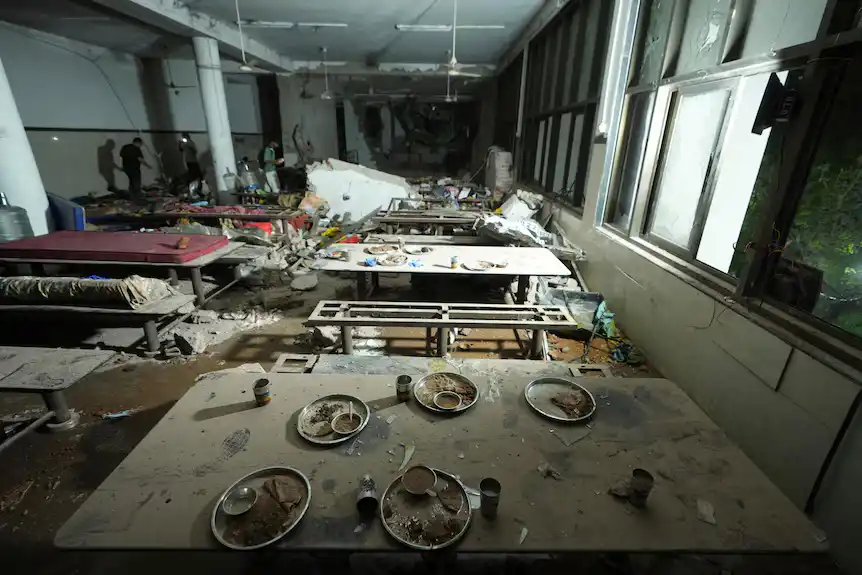
The doomed flight not only claimed lives onboard but brought devastation to the ground. The aircraft crashed into the hostel of Sushruta Medical College, reducing parts of the structure to rubble and igniting a large-scale fire that emergency responders battled for nearly four hours.
At least 17 people on the ground, including students and staff, lost their lives. Dozens more suffered injuries ranging from burns to crush wounds. The hospital adjacent to the crash zone became an epicenter of both medical care and emotional devastation, as families gathered in desperation for news.
Government’s Emergency Response and Accountability Measures
Within hours, Prime Minister Narendra Modi expressed condolences and ordered a full-scale emergency response. The DGCA took charge of the investigation, coordinating with Air India, airport authorities, and defense teams for swift action.
Civil Aviation Minister Naidu convened an emergency session with senior aviation officials and Boeing representatives to ensure that all similar aircraft in operation undergo immediate technical evaluations.
In an unprecedented move, Air India grounded seven Boeing 787 aircraft pending detailed inspections. These checks include thorough diagnostics of:
- Engine thrust control systems
- Hydraulic actuators
- Avionics interfaces
- Real-time telemetry transmission logs
A Survivor’s Story: Voice of the Only Living Passenger
The lone survivor, identified only as Ravi M., had been seated near the rear exit row. Medical responders noted he was found lying several meters from the main fuselage, apparently ejected during the final moments. Though sedated and undergoing treatment for multiple fractures, Ravi reportedly regained partial consciousness.
Doctors say Ravi mumbled about a “rumbling sound” and “sudden downward jolt” before blackout. This eyewitness testimony — even if fragmented — may offer investigators crucial insights into the physical sensations and mechanical vibrations felt before the crash.
Pressure Mounts on Aviation Safety Protocols
Aviation experts worldwide are urging regulatory bodies to treat the incident as a wake-up call. Despite years of automation, fly-by-wire systems, and AI-driven diagnostics, manual oversight and real-time situational analysis remain irreplaceable.
The crash has put a spotlight on:
- Pre-flight system diagnostics for modern aircraft
- The human-machine interface, especially in emergency decision-making
- Adequacy of current simulator training for catastrophic failures
Industry analysts also believe the accident will likely lead to new global aviation directives, potentially affecting not only Air India but other major carriers using Boeing’s Dreamliner fleet.
The Human Toll: Stories of Grief and Heroism
In the wake of the crash, heart-wrenching stories have emerged. Families who had come to see off loved ones are now holding vigils outside makeshift morgues. Social media is filled with tribute videos, especially of Dr. Mira Shah, a young doctor returning to London after visiting family in Gujarat, who was praised for her humanitarian work during COVID-19.
Air India has pledged ₹15 lakh (approx. $18,000) as initial compensation to the victims’ families, along with offering to cover funeral expenses and long-term support for dependents. However, legal experts suggest that multiple lawsuits are likely, especially from international passengers’ families, as they question maintenance records and crew readiness.
What Lies Ahead: The Long Road to Truth and Reform
As the black box data continues to be analyzed, both mechanical and human factors remain under scrutiny. Was there a failure in fuel pressurization, a software glitch, or perhaps a more complex sequence involving pilot response protocols?
Experts suggest a full report could take several months. In the meantime, the aviation sector must grapple with the dual burden of mourning and reform. Stakeholders from manufacturers to air traffic controllers are being summoned into broader discussions about tightening protocols.
Public confidence in air travel in India, which has seen a remarkable rise over the past decade, is now vulnerable. While the Air India brand attempts damage control, the real priority remains rebuilding trust through action, transparency, and rigorous adherence to international safety standards.
Conclusion: A Somber Chapter in India’s Aviation History
The tragedy of Air India Flight AI171 will forever be etched in the collective memory of a nation and the annals of global aviation. With 270 lives lost, and the haunting echo of a pilot’s final words, the incident serves as a stark reminder that even the most advanced aircraft cannot outpace the importance of vigilance, transparency, and human responsibility.
The black box may soon speak the truth, but until then, families grieve, authorities investigate, and the skies — for now — remain a little quieter above Ahmedabad.