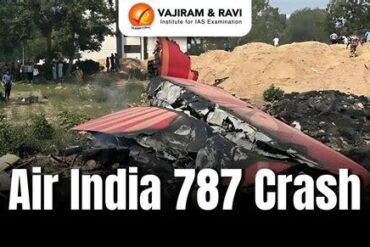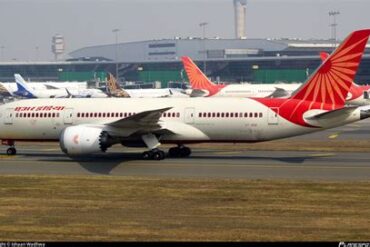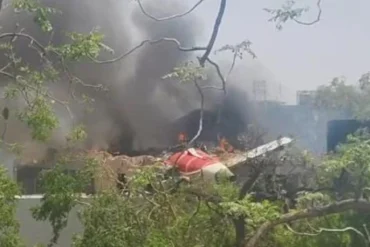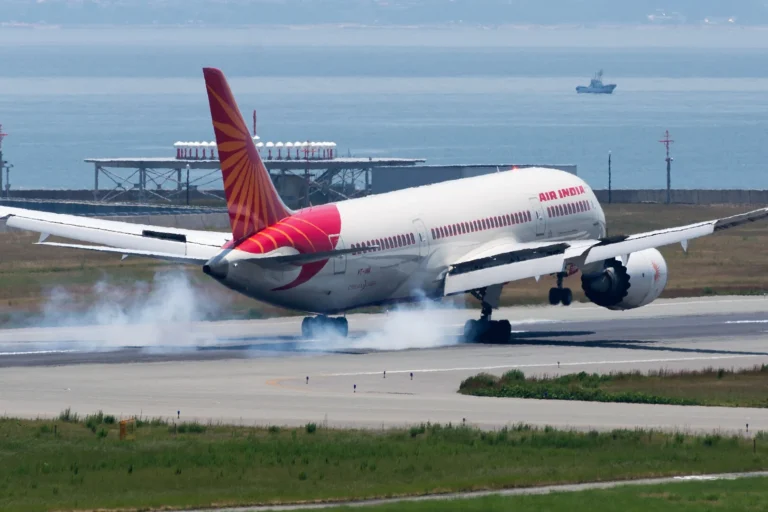
In a devastating incident that has stunned the nation and triggered a massive emergency response, an Air India Boeing 787 Dreamliner crashed near Ahmedabad’s Sardar Vallabhbhai Patel International Airport (AMD) shortly after takeoff on the morning of Thursday, June 12, 2025. The wide-body aircraft, operating as Flight AI171 to London Gatwick (LGW), was carrying more than 250 passengers and crew when it plunged into the densely populated Meghani area, just minutes into its ascent.
Immediate Aftermath: Explosions, Fire, and Chaos
Eyewitnesses described a harrowing scene as the aircraft, fully fueled for its long-haul journey, ignited a massive explosion upon impact. Plumes of black smoke were visible from miles away, darkening the skyline and sending residents into panic. The fire, fueled by the aircraft’s enormous kerosene load, rapidly consumed surrounding structures, complicating rescue operations and putting additional lives at risk.
Local residents were among the first to reach the scene, pulling injured individuals from debris and attempting to douse flames with makeshift methods before the arrival of emergency services. Multiple fire brigades, ambulances, and police units soon descended on the crash site, initiating search and rescue operations under extremely perilous conditions.
Questions Mount Over Possible Technical Failure
The aircraft, a Boeing 787-8 Dreamliner, had no prior reported malfunctions and was presumed airworthy. However, the sudden nosedive shortly after takeoff has sparked immediate concerns regarding a possible technical failure during initial climb. Aviation experts stress the importance of the initial minutes of flight, when any system failure can quickly become catastrophic.
A source familiar with preliminary radar and tower communication data revealed that the aircraft struggled to gain altitude and veered unnaturally to the left moments before contact was lost. Initial speculation suggests a failure in flight control systems or an engine malfunction, but no formal conclusions have yet been drawn.
Eyewitness Testimonies Offer Clues
Residents of Meghaninagar recounted seeing the aircraft tilting erratically before a sudden descent. “We heard a thunderous roar and then a fiery explosion. The impact shook buildings,” said Rahul Mehta, a local shopkeeper who ran to the scene with others. Another resident, Farheen Sheikh, shared, “We saw the wing clip a building before the aircraft exploded. There were cries for help, smoke, and complete chaos.”
These testimonies are crucial as the Directorate General of Civil Aviation (DGCA) initiates its formal investigation. Authorities have secured the crash site and sealed off access to preserve evidence critical for determining the cause of the disaster.
Government and Airline Response
Ram Mohan Naidu Kinjarapu, India’s Civil Aviation Minister, expressed profound shock and assured the public of swift and coordinated response. In his statement on social media, he said:
“Shocked and devastated to learn about the flight crash in Ahmedabad. We are on highest alert. I am personally monitoring the situation and have directed all aviation and emergency response agencies to take swift and coordinated action.”
Air India issued a brief public statement confirming the incident and noting that details were still being gathered. “We are working with local authorities and emergency services to support rescue efforts,” the airline said, adding that a technical team from Boeing is expected to arrive shortly to assist with the investigation.
Casualty Toll Remains Unclear
Although rescue operations are ongoing, there has been no official confirmation of the death toll or injury count. Given the scale of destruction and the intensity of the fire, expectations are grim. Hospitals across Ahmedabad, including Civil Hospital and SAL Hospital, have reported receiving multiple injured individuals, many with severe burns and trauma injuries.
Medical teams are on high alert, and the Gujarat state government has mobilized additional personnel to support treatment and trauma counseling services. The identification of victims is expected to take time due to the condition of the remains.
Investigative Protocol and Data Recovery
Experts from the DGCA will focus on retrieving the Flight Data Recorder (FDR) and Cockpit Voice Recorder (CVR)—collectively known as the “black boxes”—which are essential to understanding the final moments before the crash. Recovery of these devices, typically located in the aircraft’s tail, could be complicated due to the intense fire damage.
In addition to the black boxes, investigators will analyze:
- Maintenance logs from Air India’s technical division
- Air traffic control (ATC) communications
- Pilot medical and training records
- Surveillance camera footage from near the airport and crash zone
Boeing’s technical representatives, once on-site, are expected to conduct their own internal assessment, offering expertise on potential mechanical or systems issues specific to the Dreamliner series.
Historical Parallels: Air India’s Troubled Safety Record
This tragic event echoes past incidents in the history of Indian aviation, especially the Air India Express Flight 1344 crash in Calicut in August 2020. In that case, a Boeing 737-800 overshot a rain-soaked tabletop runway, leading to the deaths of 21 individuals, including both pilots. Investigations by the Aircraft Accident Investigation Bureau (AAIB) revealed multiple procedural lapses, including pilot error, weather misjudgment, and failure to brief the crew adequately.
The AAIB’s 257-page report criticized Air India Express for fostering a weak safety culture, noting repeated violations of standard operating procedures and poor risk assessments. That disaster served as a wake-up call for regulators and airlines alike. Now, five years later, similar concerns are resurfacing—raising uncomfortable questions about how much has truly changed in India’s aviation oversight and airline training environments.
Aircraft Model in Focus: Boeing 787 Dreamliner
The Boeing 787 Dreamliner, introduced as a revolutionary leap in aviation technology, has been in operation since 2011. Known for its composite material body, fuel efficiency, and passenger comfort, it is favored for long-haul routes like Ahmedabad to London. However, it has faced its share of scrutiny over the years, including battery overheating issues, engine wear, and electrical system malfunctions.
The specific aircraft involved in the Ahmedabad crash was reportedly six years old, maintained under Air India’s standard fleet program. Aviation experts will now explore whether the incident was a rare mechanical failure or symptomatic of broader maintenance and operational oversights.
Public Safety and Urban Planning Under Scrutiny
The crash site in Meghaninagar is a congested, urban area—raising serious concerns about flight paths over residential zones and the adequacy of emergency infrastructure near major airports. This incident underscores the urgent need for evaluating buffer zones, enforcing no-construction zones, and ensuring that city planning aligns with aviation safety protocols.
Urban planners and civil authorities may face tough questions about how such a densely populated neighborhood came to lie directly under critical flight corridors, leaving thousands vulnerable in case of such aviation disasters.
The Road Ahead: Grief, Accountability, and Reform
As rescue efforts continue and families await news of loved ones, the tragedy of Air India Flight AI171 will likely become a landmark case for India’s aviation industry. Public trust, already shaken by past incidents, is at stake. Calls for transparency, rapid investigation, and institutional accountability will only intensify in the coming days.
The airline faces the dual task of supporting affected families while cooperating with what will be a painstaking and high-profile investigation. Meanwhile, national and international aviation bodies will watch closely, knowing that the findings here could lead to sweeping policy reforms, training upgrades, and perhaps a reevaluation of Air India’s broader safety culture.
As the smoke clears in Ahmedabad, what remains is a sobering reminder that even in an age of advanced aviation technology, the human cost of a failure—technical or systemic—can be profound and irreversible.