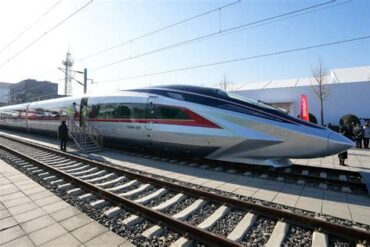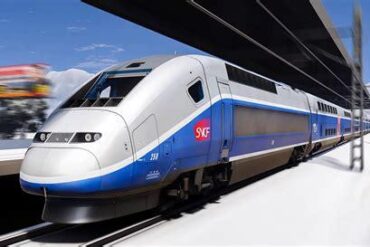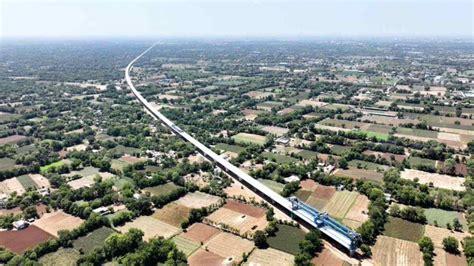
India is poised to usher in a new era of modern transportation with its first-ever bullet train project, connecting the vibrant cities of Ahmedabad and Mumbai. This ambitious initiative promises to revolutionize the way people travel across the country, offering an efficient, fast, and eco-friendly alternative to conventional road and air transport. The National High Speed Rail Corporation Limited (NHSRCL), the agency responsible for overseeing the execution of this high-speed rail corridor, is making significant strides despite encountering several delays.
The bullet train project is part of a larger plan to upgrade India’s infrastructure and promote sustainable modes of travel. A recent milestone was achieved when NHSRCL awarded the agreement for the signalling and telecommunications infrastructure to a consortium led by Siemens. This development marks a critical step forward in the project’s journey towards completion, bringing the vision of a high-speed bullet train system closer to reality.
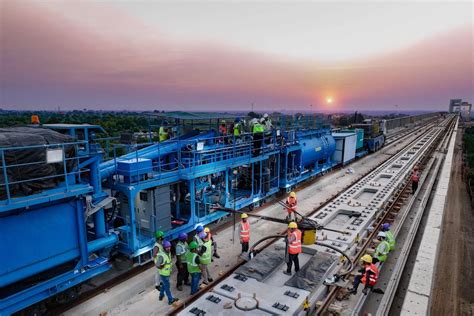
A Consortium of Expertise: Siemens and Partners
The contract for the design and installation of advanced signalling and telecom systems has been awarded to a consortium consisting of Dineshchandra R Agrawal (DRA) Infracon Private Limited, Siemens Limited, and Siemens Mobility GmbH. The expertise of this consortium will play a vital role in ensuring that the project meets the highest standards of safety, efficiency, and modernity. Siemens, a global leader in automation and electrification, will be responsible for implementing the European Train Control System (ETCS) Level 2, an advanced signalling and train control system already operational in over 50 countries worldwide.
ETCS Level 2: A Step Towards High-Speed Safety and Efficiency
Under the terms of the contract, Siemens will deploy the ETCS Level 2 system, specifically designed to support high-speed trains traveling at speeds of up to 350 km/h. This advanced signalling system ensures the safe and efficient operation of high-speed trains through continuous monitoring of train movements, real-time communication between trains and control centers, and precise train control over long distances. The implementation of ETCS Level 2 is crucial for enhancing safety and optimizing the overall operation of the bullet train system.
One of the key benefits of the ETCS Level 2 system is its ability to facilitate uninterrupted wireless communication between trains and central control systems. This capability allows control centers to remotely monitor train movements, adjust speeds, and respond swiftly to unforeseen circumstances, guaranteeing the safe and smooth operation of the entire network. By incorporating real-time data monitoring and automated adjustments, the system helps prevent accidents, improves operational efficiency, and reduces the risk of delays caused by manual interventions.
Enhancing India’s Railway Infrastructure
The launch of the bullet train project represents a significant step forward in India’s efforts to modernize its transportation infrastructure. As the country grapples with issues such as overcrowded trains, traffic congestion, and environmental concerns, the high-speed rail network will serve as a sustainable and efficient alternative for commuters. With trains capable of reaching speeds of up to 350 km/h, the Ahmedabad-Mumbai corridor is expected to drastically reduce travel time. The journey between these two cities, which typically takes around seven to eight hours by road or conventional trains, will be completed in just about two hours by bullet train.
The introduction of this state-of-the-art system will not only serve passengers but also boost India’s economy by facilitating faster movement of goods and people. This high-speed rail system is expected to ease congestion on roads and in airports, thereby alleviating the pressure on existing transport infrastructure. Furthermore, the project is anticipated to create thousands of jobs and generate opportunities across various sectors, including construction, manufacturing, and technology.
The Role of NHSRCL in the Project’s Success
The National High Speed Rail Corporation Limited (NHSRCL) is at the forefront of executing the bullet train project, overseeing planning, construction, and operational aspects of the high-speed rail corridor. NHSRCL’s role is to ensure that the project is completed within its timelines and budget while maintaining the highest safety and quality standards. The organization also manages the integration of advanced technologies, ensuring all system aspects function harmoniously.
Despite the challenges faced, NHSRCL is committed to making the bullet train project a success. Significant progress has been made, and cooperation with Siemens and other international and domestic partners is essential to ensure that India’s first bullet train network meets global performance, safety, and sustainability standards.
Challenges and Delays
While the bullet train project has encountered several delays, these challenges are typical of large-scale infrastructure initiatives. Issues such as land acquisition, environmental clearances, and technical complexities have occasionally slowed progress. However, with recent contract approvals and the implementation of cutting-edge systems like ETCS Level 2, the project is consistently advancing. It is expected that the first phase of the project, connecting Ahmedabad and Mumbai, will be operational in the coming years, paving the way for further expansion of India’s high-speed rail network.
In conclusion, India’s first bullet train project is not just about speed; it symbolizes a transformative shift in the country’s approach to transportation, aiming to enhance travel efficiency, connectivity, and economic growth. As the nation moves closer to realizing this ambitious vision, the future of travel between Ahmedabad and Mumbai looks promising, setting a benchmark for high-speed rail initiatives across the globe.