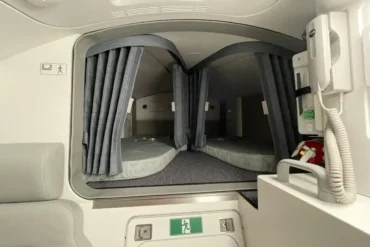
Checking Safety Equipment Before Every Departure
Long before the first passenger steps through the aircraft door, a flight attendant has already performed a task no traveler will ever observe. A security sweep confirms that nothing onboard has been tampered with or left out of place, and then the real work begins: verifying that every piece of emergency equipment is present, sealed, and fully functional. The emergency lights, the evacuation alarm, and the public address system are tested one by one. The defibrillator is inspected for its visible or flashing indicator light, a quiet confirmation that it will power on if a heart stops mid-flight. Safety cards and spare equipment counts are checked against the manual safety demonstration kit, including infant life vests, infant rafts, and extension seat belts, while every seatbelt is pulled and examined for fraying or a failing buckle.
The inventory continues through a list that most passengers assume exists only in training manuals. Oxygen bottles must be valid and more than three-quarters full. Halon or BCF fire extinguishers must have their pins in place and their gauges resting in the green zone. Lavatory smoke detectors and waste bin extinguishers have to be unobstructed and working, because a lavatory fire is one of the most common in-flight emergencies. Where the aircraft carries them, life rafts are confirmed in position and the Emergency Locator Transmitter is verified as armed so it will broadcast a distress signal on impact. Slide pressure gauges receive the same scrutiny, since a slide that will not inflate is a slide that will not evacuate anyone.
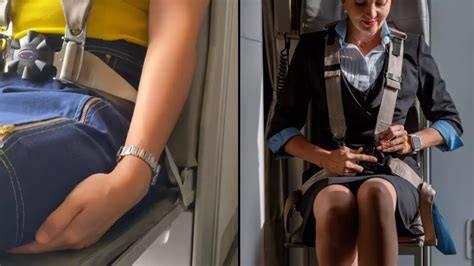
Each crew member then inspects their own station with equal rigor. The jumpseat must fold and lock correctly and the harness must fit the individual wearing it. The smoke hood, known as a PBE, must be sealed yet ready to break open. Fire gloves sit within reach, the crew life jacket is sealed beneath the seat, and a manual release tool stands by in case the oxygen masks fail to deploy automatically. The flashlight is switched on to confirm that its red light blinks. Galley checks close the sequence, ensuring trolleys, ovens, and loose items are secure before any weight shifts in turbulence. None of this is visible, and all of it happens on every single flight.
Identifying Able-Bodied Passengers During Boarding
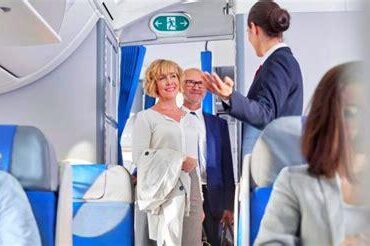
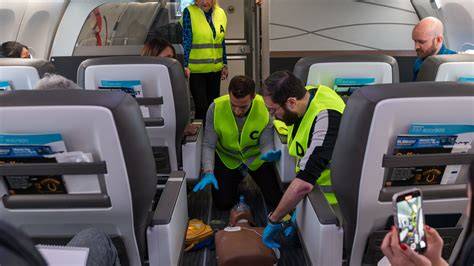
While passengers wrestle carry-on bags into overhead bins and hunt for their seats, flight attendants are scanning the cabin for able-bodied passengers, or ABPs: people who could assist during an evacuation. Law enforcement officers, military personnel, and firefighters are quietly noted, as are off-duty pilots and cabin crew, who already know the drill and might even be capable of operating an exit door if every crew member were incapacitated. Doctors and medical practitioners are logged as well, because assistance may be needed for a medical emergency hours later or for triage on the tarmac after an evacuation. Boarding is often the most stressful phase of the job, since the same crew members are simultaneously resolving seating disputes, replacing lost boarding passes, and clearing blocked aisles.
An ABP can be tasked with responsibilities in the moments after an evacuation begins. They might stand at the bottom of a slide, steadying passengers as they land and directing them upwind and away from the aircraft. They might steady a deflated slide to keep it usable, or open an exit in a pre-planned emergency if a crew member is unable to do so. Passengers seated in exit rows receive a separate briefing on how to operate their door, and eligibility is stricter than most travelers realize. In the United States, exit-row passengers must be at least 15, able to understand crew commands, physically capable of assisting, and not responsible for another passenger such as a young child. In the United Kingdom, crews use the acronym CODPIES to screen out Children, Obese, Deportees, Pregnant passengers, Infants, the Elderly, and the Sick, although the exact criteria vary between airlines.
Arming Doors and Crossing Checks Before Taxi
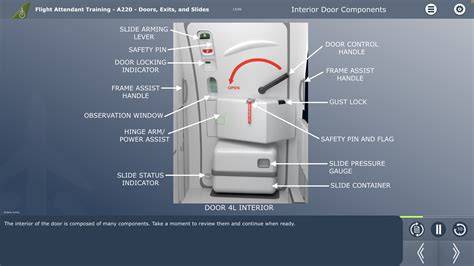
When the flight deck calls to arm the doors and cross-check, each flight attendant moves an arming lever that connects the evacuation slide mechanism, so the slide will deploy automatically the instant the door is opened. Some airlines issue the instruction as doors to automatic and cross-check. The crew member positioned opposite then physically inspects the door, confirms aloud that it is armed and cross-checked, and reports to the senior crew member, who consolidates every door’s status before the aircraft pushes back. The cross-check exists because a single misconceived lever could cost lives, and the same procedure is reversed after landing, when the command becomes disarm doors and cross-check.
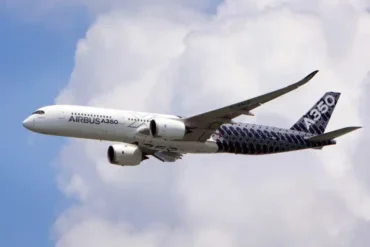
The hardware differs by manufacturer. On Airbus A320 family aircraft, the arming lever is secured with a safety pin and follows a pin-lever-pin sequence. On the Boeing 737, the slide is armed mechanically through a girt bar that crew members physically attach to a floor bracket, with a flag displayed across the window to signal status. Mainline Boeing doors use a range of mechanical configurations, so crews qualify on each variant rather than assuming one aircraft behaves like another. Disarming matters as much as arming, because a slide that inflates onto a jetbridge can seriously injure ground staff. Crews also follow a strict rule never to open a door until the jetbridge or stairs are in place and a ground agent has knocked on the window with a thumbs-up.
The Silent Review Before Takeoff and Landing
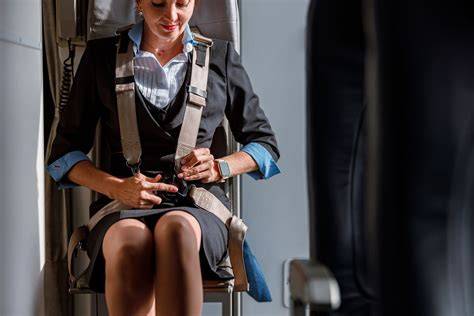
Once seated for takeoff and landing, flight attendants perform the silent review, also called the 30-second review, a mental rehearsal of their emergency response. They run through their evacuation commands, catalog the safety equipment within reach, and assess the conditions visible through their window. They note the nearest available exits in case their own is blocked by fire or debris, and they recall which passengers in their vicinity might need extra help. Trainers often use memory aids to organize this sequence, such as ELA for Equipment available, Location of equipment, and Able-bodied passengers, or ALERT for Aircraft type, Location of exit, Equipment required, Responsibility, and Threat. Another common framework is OLDABC, covering Operation of exit, Location of emergency equipment, Drills such as brace for impact, ABPs and special assistance passengers, Brace position, and Commands.
Crew members often sit in a partial brace position during these moments, hands tucked beneath their thighs or gripping the jumpseat, with feet planted forward or back depending on which way the seat faces. This posture is far from the full emergency brace position, which places the head back, hands behind the head, elbows forward, and feet in the same orientation. The partial version is a relaxed compromise that keeps the body braced enough to react instantly while remaining comfortable for the duration of taxi and landing. Passengers who see a flight attendant sitting quietly with hands under their legs are watching a professional rehearse a scenario they hope will never materialize.
Interphone Communication With the Flight Deck
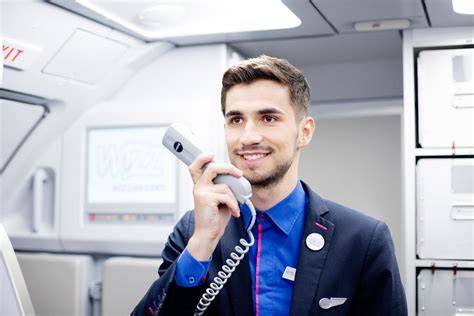
When a flight attendant lifts what looks like an ordinary telephone handset, they are almost certainly speaking to the pilots, the senior crew member, or other cabin crew over the aircraft’s interphone. The cockpit door stays locked throughout the flight, so this internal line is the sole coordination channel between the cabin and the flight deck, carrying warnings about turbulence ahead, updates on the service flow, and the critical cabin secure confirmation that must be relayed before takeoff and landing. Crew members learn to identify the caller by the number and tone of the chimes, and they are trained to answer promptly no matter what task they are performing.
The chime system itself is a language. On Airbus aircraft, cabin lights and chimes are managed by the Cabin Intercommunication Data System (CIDS) and displayed on overhead Area Call Panels (ACP). A single chime paired with a blue light signals a passenger pressing the call button, while a single chime with a yellow light signals a call from the lavatory. A high-low chime marks a normal crew call. Other tones and lights indicate smoke detection in a lavatory or a full emergency, and crews must distinguish them in an instant. The next time a chime sounds overhead and no passenger has moved, the caller is likely the flight deck, and the flight attendant walking swiftly but calmly toward the handset is performing one of the most vital safety duties in the sky.