An American Airlines flight bound from San Diego to Chicago was forced to divert to Phoenix overnight after a passenger attempted to breach the cockpit, prompting air traffic controllers to declare a “Level 3 threat” and forcing cabin crew and fellow travelers to physically restrain the individual before the aircraft touched down safely.
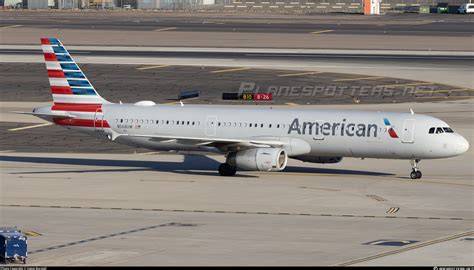
American Airlines flight AA1494 departed San Diego International Airport (SAN) late on Tuesday evening en route to Chicago O’Hare International Airport (ORD). According to flight tracking data, the overnight service was operated by an Airbus A321 registered N568UW. The 13-year-old aircraft originally entered service with US Airways before joining American’s fleet following the merger of the two carriers, according to Planespotters.net.
According to ABC 15 Arizona, air traffic controllers reported the level three threat aboard the aircraft, with cabin crew and passengers working together to restrain a disruptive passenger before the plane landed. While initial reports suggested the passenger attempted to breach the cockpit, police have yet to confirm which aircraft door was targeted. Federal regulations impose strict requirements on airlines to safeguard their flight decks, and several passengers who have attempted to gain unauthorized access to cockpits in recent years have subsequently been sentenced to federal prison and substantial fines.
Phoenix Police Detail Passenger’s Attempt to Interfere With Aircraft Door
The Phoenix Police Department said preliminary findings indicated that a male passenger had disregarded repeated instructions from flight attendants and attempted to interfere with an aircraft door. Initially, this was reported as an attempted breach of the cockpit door, but subsequent ATC recordings obtained via X suggest the unruly passenger may have tried to open door R in the forward cabin, triggering an alarm. Authorities have yet to confirm whether it was one or both of these doors that the passenger targeted.
Video footage recorded by passengers showed the individual being restrained, while police confirmed that both passengers and crew members were involved in subduing him. The Federal Aviation Administration (FAA) confirmed that the aircraft landed safely in Phoenix, where law enforcement officers removed the passenger. It also said the FBI has been notified of the incident and confirmed it will investigate. According to Arizona’s Family, the individual was taken to the hospital with a minor injury, while no other injuries were reported.
ICAO Threat Levels Explain the “Level 3 Threat” Classification
The International Civil Aviation Organization (ICAO) classifies onboard security threats into four levels of increasing severity. In February 2026, the International Federation of Air Line Pilots’ Associations (IFALPA) and the International Federation of Air Traffic Controllers’ Associations (IFATCA) called for wider adoption of the framework to improve coordination between airlines, flight crews, air traffic controllers, and law enforcement agencies.
- Level 1 — disruptive behavior, including suspicious conduct or verbal threats
- Level 2 — physically abusive behavior directed at other occupants
- Level 3 — life-threatening behavior that endangers human life
- Level 4 — flight deck breach, meaning attempted or actual unauthorized cockpit entry
Notably, an attempted cockpit breach would ordinarily constitute a Level 4 threat, and the fact that ATC reported a Level 3 threat further supports the theory that the unruly passenger was tampering with door R. Either way, it represented an unacceptable risk to the aircraft and its passengers, which fully supports the pilot’s decision to divert.

Captain’s Authority Justified the Emergency Diversion to Phoenix
According to the FAA, the captain is responsible for the safety of the aircraft, its passengers, and crew. Federal regulations also grant captains considerable emergency authority, including the ability to deviate from standard operating procedures when necessary to safeguard the aircraft. While publicly available regulations do not mandate an automatic diversion for every threat classification, captains will usually divert when continued flight presents an unacceptable safety risk. In the case of AA1494, the crew declared an emergency as a result of the incident, and American later stated: “We want to thank our team members for their professionalism, as well as our customers for their assistance and understanding.”
Previous Cockpit Breach Attempts Have Resulted in Federal Prison Sentences
American experienced a similar incident in February 2022, when AA1775 from Los Angeles to Washington, DC, diverted to Kansas City. According to the Associated Press (AP), the passenger attempted to access the cockpit and open an aircraft exit. In July 2024, Juan Rivas was sentenced to 19 months in federal prison and ordered to pay American Airlines $64,434 in restitution.
| Incident Date | Airline | Route | Sentenced | Federal Prison Sentence | Additional Penalties |
|---|---|---|---|---|---|
| April 16, 2021 | United Airlines | Washington Dulles – Pensacola | April 2022 | 12 months | $7,500 fine, civil penalties and three years of supervised release |
| June 25, 2021 | United Express | Los Angeles – Salt Lake City | January 2022 | 18 months | $20,132 restitution |
| February 13, 2022 | American Airlines | Los Angeles – Washington, DC | July 2024 | 19 months | $64,434 restitution |
| March 31, 2024 | Swiss International Air Lines | Newark – Zurich | June 2026 | 10 months | Over $73,000 restitution and one year of supervised release |
One of the most recent convictions involved a Swiss International Air Lines flight that returned to Newark in March 2024 following an attempted cockpit breach and assaults on cabin crew. In June 2026, Belgian passenger Jan Daeninck was sentenced to 10 months in prison. The case also highlights the considerable financial consequences for offenders, with Daeninck ordered to pay more than $73,000 in restitution.
While the federal prison sentences in these four recent cases ranged from 10 to 19 months, US law allows for considerably harsher punishment. Interference with flight crew members through assault or intimidation carries a maximum sentence of 20 years in prison, with even more severe penalties possible under certain circumstances. Whether the passenger aboard AA1494 faces federal prosecution will depend on the findings of the ongoing investigation.