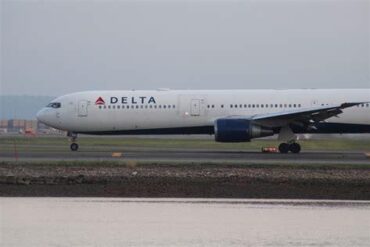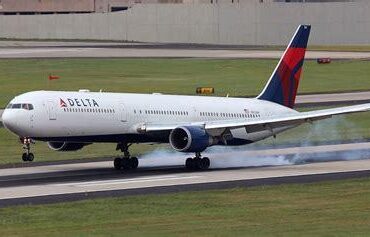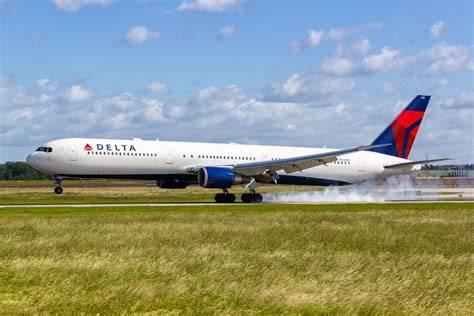
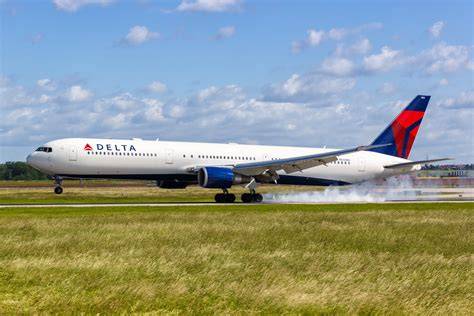
Boeing’s least-sold widebody stretch is alive and busy at Delta — here is where its 21-strong 767-400ER fleet flies in 2026, route by route, according to Cirium schedules.
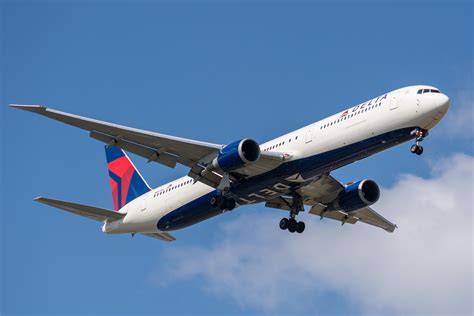
The Boeing 767-400ER is one of the strangest survivors in modern commercial aviation. Boeing built 1,451 aircraft across the entire 767 family, yet only 59 of them were the stretched -400ER variant, a jet that arrived too late, sold poorly, and quietly slipped out of production long before anyone expected a second life for it. Today, the type’s scheduled passenger operators can be counted on one hand: Delta Air Lines and United Airlines, plus a single VIP airframe flown for the Bahrain Royal Flight. That exclusivity alone makes Delta’s 767-400ER network worth studying, because every route it touches tells the story of an aging widebody that is still too useful to retire.
Delta’s twenty-one 767-400ERs are now 26 years old on average, the kind of fleet age that normally sets off retirement alarms. Yet these aircraft remain wedged into one of the largest airline ecosystems in the world, alongside 36 Boeing 767-300ERs averaging 29.7 years and a mainline fleet of 1,009 aircraft. The reason is economic rather than sentimental: the aircraft is fully paid off, shares tooling and crew training with Delta’s 757 and 767 fleets, and fills capacity gaps that nothing else in production does cheaply. The 787-8 Dreamliner, the Airbus A330-800neo, and the A330-900neo are its closest modern equivalents, but the A330-800neo barely counts, since almost no airline is seriously pursuing it anymore. A 767-400ER with low capital costs and 230-plus seats in a two-class layout remains an unbeatable bargain on the right length of route.

How Big Is Delta’s 2026 Boeing 767-400ER Schedule?
According to Cirium schedule data, Delta is operating 12,308 flights with its 767-400ER fleet in 2026, counting both directions. Those flights carry roughly 2.9 million seats and generate about 11 billion available seat miles, at an average stage length of 3,245 nautical miles. That average is the single most revealing number in the dataset: it places the aircraft squarely in medium-to-long-haul territory, too big for most domestic shuttles and too short-legged for true long-haul missions.
The geography is just as concentrated. Just two hubs carry the overwhelming majority of the schedule: Hartsfield-Jackson Atlanta International Airport (ATL) with 2,934 outbound flights and roughly 700,000 outbound seats, and John F. Kennedy International Airport (JFK) with 3,183 outbound flights and about 758,000 outbound seats. Every other spoke on the map is either a tag-on, a seasonal fill, or an opportunistic one-off. Delta inherited plenty of aircraft from Northwest Airlines, but Northwest passed on the 767 entirely, preferring its DC-10s and A330s, so every 767 in Delta’s inventory traces back to an order Delta placed itself.
The result is a network built around roughly eight trunk routes, with everything else orbiting them. New York-JFK to Los Angeles leads with 1,617 flights across 2,151 nautical miles. Atlanta to London Heathrow follows at 1,527 flights over 3,659 nautical miles. New York to Paris Charles de Gaulle logs 1,117 flights at 3,159 nautical miles, while Atlanta to Munich reaches 652 flights across 4,168 nautical miles. The rest of the top tier comprises New York to Zurich with 483 flights, New York to Madrid with 436, New York to Nice with 430, and a comparatively modest 423 flights between New York and London Heathrow. Only three pairings exceed 1,000 annual flights, and only one more clears 500, which is a remarkably shallow long tail for a fleet of this size.
The Short-Haul Oddities Under 2,000 Nautical Miles
Below 2,000 nautical miles, the 767-400ER becomes a spare-capacity machine rather than a planned assignment. Ignoring the ATL-JFK shuttle at 660 nautical miles and 175 flights, every sub-1,000-nautical-mile route in the network departs from Atlanta, and the pattern reads like a fleet-repositioning puzzle. The shortest pairing is Atlanta to Orlando at just 350 nautical miles with 62 flights across both directions, followed by Atlanta to Tampa at 353 nautical miles with only 20 flights. Atlanta to Detroit covers 516 nautical miles on eight flights, and Atlanta to Miami at 517 nautical miles accounts for about 206 flights, making Florida the unexpected center of gravity for the type’s shortest work. Farther out, Atlanta to Minneapolis-St. Paul at 787 nautical miles appears just four times in the entire year.
Between 1,000 and 1,999 nautical miles, Atlanta still dominates. The schedule lists 136 flights to Phoenix at 1,379 nautical miles, 20 to Las Vegas at 1,518, four to San Diego at 1,643, 145 to Los Angeles at 1,691, and 12 to San Francisco at 1,859. Outside Atlanta, the numbers collapse to almost nothing: two flights between New York-JFK and Phoenix at 1,871 nautical miles and a single Las Vegas to New York service at 1,953 nautical miles. These are not routes the 767-400ER owns; they are routes where a 767-400ER happened to be the right aircraft on the right day.
Transatlantic Pairings From New York-JFK and Atlanta
Above 2,000 nautical miles, the fleet settles into its real job. New York-JFK to Los Angeles at 2,151 nautical miles and 1,617 flights is the rare domestic pairing that behaves like a trunk route, while JFK to San Francisco at 2,247 nautical miles appears on 96 flights as a much thinner companion. From there, the map turns decisively eastward, because the 767-400ER has just enough range to link the East Coast with Western Europe’s top destinations without paying for the fuel burn of a larger widebody.
The first transatlantic wave out of JFK is short by European standards. Dublin at 2,763 nautical miles sees 173 flights, Edinburgh at 2,829 sees 80, Lisbon at 2,926 sees 137, and London Heathrow at 3,000 sees 423. Past that line, the frequencies deepen as the distances stretch: Madrid with 436 flights, Barcelona with 200, and Zurich with 483, all between 3,120 and 3,416 nautical miles. Atlanta contributes its own first Atlantic pairing with 78 flights to Dublin, while New York adds Nice at 430 flights, Milan Malpensa at 387 flights, and a lone Atlanta to Edinburgh rotation. Delta has deliberately shifted this fleet toward Europe, cutting domestic 767-400ER flying sharply in its recent schedule overhaul while redeploying airframes across the Atlantic.
Europe’s Deeper Reach: Routes Between 3,500 and 4,250 Nautical Miles
Beyond 3,500 nautical miles, only one major pairing escapes the New York and Atlanta gravity wells: Cincinnati to Paris at 3,611 nautical miles with 250 flights, a legacy of Delta’s Cincinnati hub that refuses to die. The New York to Venice pairing covers the same distance with 451 flights, and after that the next ten routes by distance all radiate from Atlanta. In ascending order, they are London Heathrow with 1,527 flights, Madrid with 288, Marrakech with 127, Paris with 426, Brussels with 187, Barcelona with 198, Zurich with 292, Rio de Janeiro with 315, Nice with 306, and Milan with 387.
Atlanta to Rio de Janeiro at roughly 4,000 nautical miles is the first non-European international pairing by distance, and it pairs with a shorter New York-Rio option of just 18 flights. Atlanta continues to Munich with 652 flights and Venice with 197, rounding out a European map that would have been unthinkable for a 59-airframe variant a decade ago. Marrakech stands out as the most exotic scheduled destination in the entire dataset, a route that only makes sense when a paid-off widebody with transatlantic range is available to fund it.
Delta’s Five Longest 767-400ER Routes in 2026
The five longest routes all exceed 4,250 nautical miles, and every one of them runs at low frequency. New York to Athens leads with 135 flights across 4,294 nautical miles, followed by Atlanta to Buenos Aires with 95 flights, a route Delta normally feeds with A330s and A350-900s. After that, the schedule thins to almost nothing: two flights between Las Vegas and London Heathrow, two between New York and Buenos Aires, and a single Paris to Las Vegas rotation at 4,730 nautical miles that stands as the longest 767-400ER service Delta operates. The Buenos Aires-New York market primarily runs on A330-900neos, confirming that these extreme sectors are substitution flying rather than network design.
Boeing rates the 767-400ER at a basic range of 3,580 nautical miles, rising to 5,190 nautical miles at maximum optional weight with a 3% fuel factor. Delta’s actual deployment tells a more practical story: the fleet is happiest between 2,000 and about 4,300 nautical miles, which is precisely where the transatlantic trunk routes live and where no cheaper aircraft exists in sufficient numbers.

Why a 26-Year-Old Boeing 767-400ER Still Prints Money for Delta
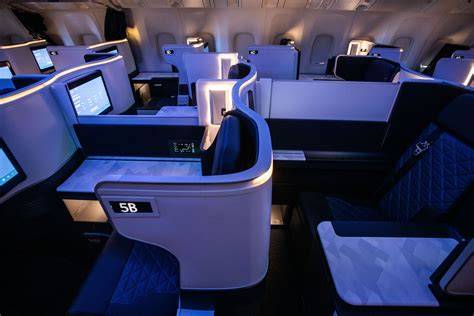
The case for keeping the 767-400ER is a case for sunk costs working in an airline’s favor. The airframes are paid off, so capital and lease expenses are negligible compared with financing a 787-8. Maintenance, tooling, and pilot training benefit from deep commonality with Delta’s 757s and 767-300ERs, spreading fixed costs across a much larger subfleet. And the jet occupies a capacity niche no current production aircraft truly matches: roughly 230 to 240 seats with genuine transatlantic legs, sized for markets that cannot fill a 787-9 but still justify a widebody premium cabin.
The retirement math, however, keeps tightening. Delta’s 767-300ERs average 29.7 years and the 767-400ERs 26 years, and both subfleets will eventually collide with escalating heavy-maintenance checks, aging avionics, and fuel burn that modern engines render increasingly painful. Delta and United both appear committed to flying the type as long as it remains feasible, which in practice means through the late 2020s and possibly beyond, sustained by the same economics that kept the 757 and 767 families alive years past their expected sunset.
For travelers, the practical takeaway is simple. Anyone flying Delta between New York or Atlanta and London, Paris, Munich, Zurich, Madrid, Nice, Milan, Barcelona, or Rio de Janeiro in 2026 has a strong chance of boarding one of the rarest widebodies still in passenger service, a jet built in a batch of 59 that outlived nearly all of its contemporaries through pure economic logic.
Delta 767-400ER: Top Routes by Annual Frequency in 2026
| Route | Annual Flights | Distance (nautical miles) |
|---|---|---|
| New York-JFK – Los Angeles | 1,617 | 2,151 |
| Atlanta – London Heathrow | 1,527 | 3,659 |
| New York-JFK – Paris CDG | 1,117 | 3,159 |
| Atlanta – Munich | 652 | 4,168 |
| New York-JFK – Zurich | 483 | 3,416 |
| New York-JFK – Madrid | 436 | 3,120 |
| New York-JFK – Nice | 430 | 3,468 |
| New York-JFK – London Heathrow | 423 | 3,000 |