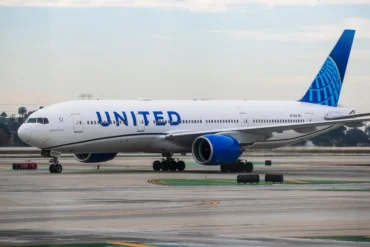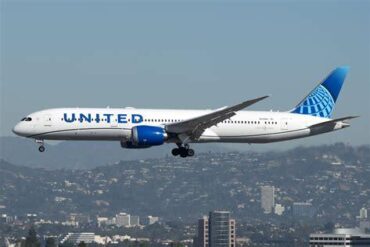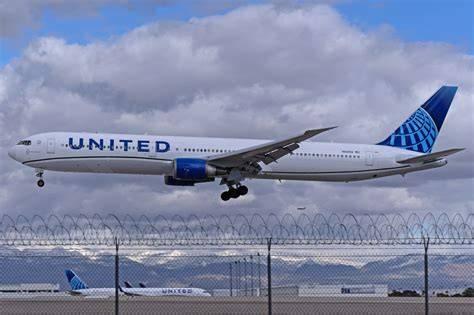
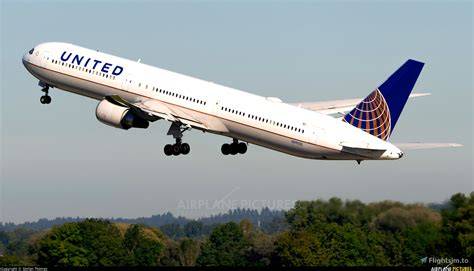
A United Airlines Boeing 767-400ER damaged after striking a light pole during its approach to Newark Liberty International Airport is now nearing a return to commercial service. The 24-year-old aircraft, registered N77066, has spent several months out of operation after sustaining substantial damage to its lower aft fuselage during the incident in May.
The widebody was operating a flight from Venice to Newark when the unusual approach accident occurred. Despite the impact, the aircraft completed its landing safely, allowing all 220 passengers, three flight crew members, and eight cabin crew members to leave the aircraft without injuries. The aircraft subsequently underwent inspections that revealed significant structural damage, keeping it grounded for an extended period.
N77066 is expected to rejoin United’s fleet after undergoing repairs at the airline’s major maintenance facility in Rio de Janeiro, Brazil. The aircraft arrived there on August 12 after first spending roughly a month at Cincinnati Northern Kentucky International Airport. Although an exact return-to-service date has not been established, fleet information indicates that the aircraft is expected to become operational again soon.
United Airlines Boeing 767-400ER Struck a Light Pole During Newark Approach
The incident occurred as N77066 approached Newark during what had otherwise been an uneventful flight. According to information from the Aviation Safety Network, the aircraft was initially being prepared for an approach to Runway 4R, before the crew received a runway change to 22L during the descent.
The situation then became more complicated when the flight was instructed to enter a holding pattern, although that request was quickly canceled. The aircraft had slowed to approximately 250 knots (463 km/h) while the crew prepared for a new approach to Runway 29. The first officer reportedly noted that the aircraft’s airspeed was low, while the crew did not receive any windshear warnings.
As the aircraft continued toward the runway, concerns about its relatively low airspeed and altitude were raised again. During the final stages of the approach, the captain heard a thump, and the crew realized that the aircraft had struck a light pole. The aircraft nevertheless remained controllable and landed safely before taxiing to the gate.
Extensive Damage Grounded N77066 for Months
Although the landing was completed without injuries, the impact left visible and substantial damage to the aircraft. An inspection at Newark found three punctures in the lower aft fuselage, with the affected area extending between stations 1219 and 1373.
The forward puncture measured approximately six inches, while the largest damaged sections reached roughly 46 inches in length. Several dents and creases were also identified between the punctures. In addition to the fuselage damage, the number-one tire on the left main landing gear was damaged.
The falling light pole also reached the New Jersey Turnpike, where debris struck a tractor-trailer. The truck sustained windshield and side-of-trailer damage, adding another consequence to an incident that could otherwise have resulted in a far more serious outcome.
From Newark to Cincinnati and Rio de Janeiro
Following the accident, United removed N77066 from service. Flight tracking data shows that the aircraft remained at Newark from May 3 until July 22, when it was ferried to Cincinnati under flight number UA4214. The aircraft later continued to Brazil on August 12 as UA4207.
The move to Rio de Janeiro reflects United’s established maintenance capabilities in Brazil. The airline operates an extensive maintenance presence there, with the facility serving as its principal heavy-maintenance location outside the United States. The site has particular experience with the Boeing 767, making it a logical destination for structural repairs and other extensive maintenance work.
United took over the former TAP Air Portugal Maintenance & Engineering facility and has subsequently used the Brazilian operation for heavy checks and aircraft overhauls. Maintaining a major maintenance base in Brazil can also provide cost advantages compared with performing comparable labor-intensive work exclusively in the United States.
United’s 767-400ER Fleet Awaits Another Aircraft
Once repairs and required inspections are complete, N77066 will return to a United Airlines fleet that currently includes 15 other Boeing 767-400ER aircraft. The type remains an important part of United’s long-haul operation, particularly for routes connecting the United States with major international and leisure destinations.
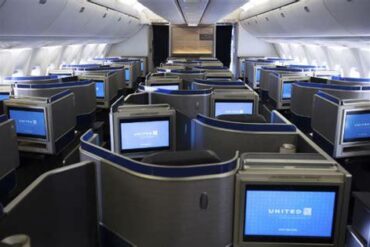
United’s 767-400ERs are configured with 231 seats, including 34 United Polaris seats, 24 United Premium Plus seats, 48 Economy Plus seats, and 125 standard Economy seats. That configuration allows the aircraft to serve both premium international travelers and a substantial number of economy passengers.
For United, returning N77066 to service restores another long-haul aircraft without requiring the airline to replace its capacity through a new delivery or additional aircraft lease. For passengers, the aircraft’s return will be relatively unremarkable operationally—but its journey back to the fleet is a reminder of the extensive structural work that can follow even an incident in which everyone onboard lands safely.
With the repairs in Rio de Janeiro nearing completion, N77066 is now slated to return to service soon. While the precise date remains unconfirmed, the aircraft’s progress marks the final stage of a lengthy recovery that began with an unexpected light-pole strike during its approach to Newark.