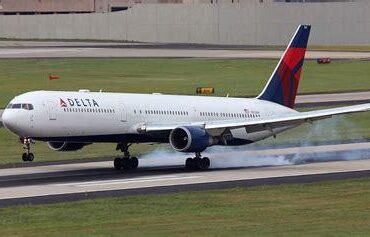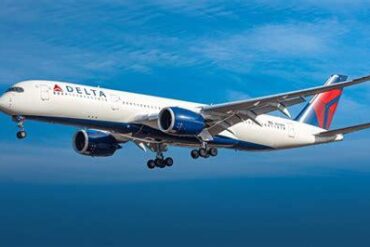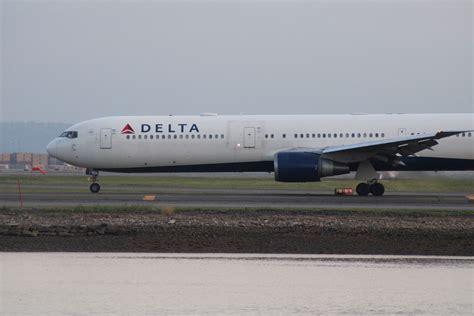
Delta Air Lines occupies a peculiar, almost curatorial role in modern commercial aviation. While much of the industry races toward composite fuselages and next-generation engines, Delta continues to extract remarkable value from an aircraft type that borders on extinct elsewhere: the Boeing 767-400ER. In 2026, this stretched, quietly capable widebody remains a linchpin of Delta’s network strategy—and for passengers, one of the rarest opportunities to experience a true aviation outlier still in frontline service.
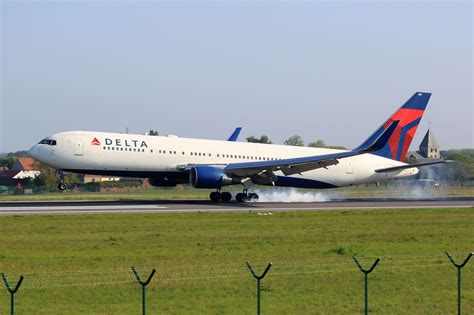
The 767-400ER sits in an odd but valuable niche. Larger than the ubiquitous 767-300ER, yet smaller and more flexible than the A330-900neo or Boeing 787, it delivers what Delta prizes most: premium-heavy capacity without overcommitting seats. Only 38 examples were ever built, with 21 operated by Delta, making every scheduled flight something of a living museum piece—except this museum flies daily, often across oceans.
By 2026, the aircraft’s role is evolving. Once a near-exclusive transatlantic workhorse, the 767-400ER is now splitting time between thinner European routes and an expanding set of domestic missions. The result is a shifting map of opportunities for travelers eager to fly one of Boeing’s rarest widebodies while it still roams the skies.
Why the Boeing 767-400ER Refuses to Fade Away
The persistence of the 767-400ER is not nostalgia. It is math, margins, and cabin economics. With 238 seats, the aircraft provides Delta with a “middle gear” that few modern types replicate cleanly. It carries more passengers—and more premium seats—than the 767-300ER, while avoiding the trip-cost penalty of larger twin-aisle jets.
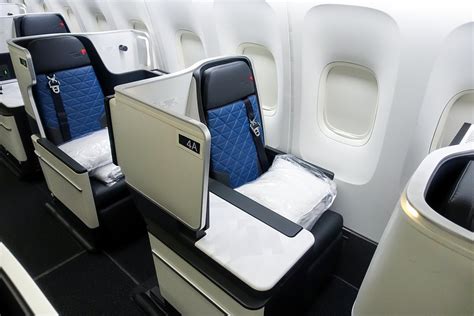
Delta’s business model amplifies this advantage. Premium cabins drive disproportionate revenue, and the extra 21 feet of fuselage compared to the -300ER translates directly into additional Delta One, Premium Select, and Comfort+ seats. This same philosophy explains Delta’s preference for the Boeing 787-10 over smaller long-range variants: capacity beats theoretical range when the network is built correctly.
The fleet’s age—now averaging over 25 years—has not pushed it toward retirement. Instead, Delta invested heavily in a full cabin retrofit, aligning the 767-400ER with the airline’s latest interior standards. Unlike the rapidly departing 767-300ER, the -400ER remains part of Delta’s forward-looking product refresh, a clear signal that its utility outweighs its calendar age.
From Transatlantic Specialist to Network Utility Player
Historically, the 767-400ER lived almost exclusively on transatlantic routes. It excelled at connecting Delta hubs to European cities that demanded widebody comfort but not A330-scale capacity. That pattern is now changing.
The arrival of more Airbus A330-900neos has pushed the -400ER off flagship trunk routes such as London Heathrow and Paris Charles de Gaulle. Those markets now absorb larger aircraft with higher total seat counts and lower per-seat costs. Rather than sidelining the 767-400ER, Delta redeployed it where its balance of range and capacity shines brightest.
Secondary European markets—often competitive Star Alliance hubs—have become prime territory. At the same time, the steady retirement of 767-300ERs has opened space for the -400ER to move into high-demand domestic routes, giving U.S.-based travelers new chances to encounter this rare widebody without crossing an ocean.
Atlanta: The Epicenter of 767-400ER Flying in 2026
For anyone intent on flying the Boeing 767-400ER, Atlanta Hartsfield-Jackson International Airport is the clear focal point. In the first half of 2026, Atlanta accounts for 58% of all Delta 767-400ER flights, a sharp increase from the previous year. The shift reflects Delta’s broader strategy of consolidating widebody operations at its most efficient megahub.
From Atlanta, the aircraft still maintains a strong transatlantic presence, but the composition of destinations tells the real story. Traditional heavyweights like London Heathrow see reduced frequencies, while cities such as Munich and Milan gain significant capacity increases. These routes exemplify the aircraft’s sweet spot: premium demand, stable yields, and right-sized capacity.
Perhaps more intriguing is the aircraft’s growing domestic footprint. Routes from Atlanta to Miami, New York JFK, Phoenix, and San Francisco now feature the 767-400ER, introducing lie-flat widebody comfort on sectors once dominated by narrowbodies or smaller twins. For domestic travelers, this represents an unexpected upgrade—and for aviation enthusiasts, an accessible way to log a flight on a global rarity.

New York JFK: A Strategic Retreat, Not a Retreat from Relevance
While Atlanta ascends, New York JFK tells a different story. The airport remains a key base for the 767-400ER, but its share of operations is shrinking. In early 2026, JFK hosts 40% of Delta’s 767-400ER flights, down sharply from the year prior.
The most dramatic change is on the iconic JFK–Los Angeles route. Once a showcase for Delta’s widebody diversity, the corridor is transitioning to an all-767-300ER operation. The -400ER’s withdrawal from this high-frequency market reflects fleet optimization rather than obsolescence; larger aircraft are being redeployed where they create more network value.
What remains at JFK skews increasingly toward seasonal and secondary European destinations. Routes to Venice, Madrid, Zurich, and Dublin see either growth or stability, especially during peak summer months. These flights preserve JFK’s role as a gateway for experiencing the 767-400ER, albeit with a more selective, opportunity-driven schedule.
A Fleet with a Long Goodbye Ahead
The aviation world often treats aging aircraft as ticking clocks. The Boeing 767-400ER defies that narrative. Delta plans to operate the type well into the next decade, long after its smaller sibling has disappeared from the fleet. This longevity underscores a central truth: performance is contextual, and in the right network, even a quarter-century-old design can remain indispensable.
For passengers, this creates a narrowing but still generous window. The aircraft is rare globally, but within Delta’s system, it remains surprisingly reachable—especially via Atlanta and selected JFK routes. Each flight offers not just transportation, but a glimpse into an alternate evolutionary branch of commercial aviation, one where incremental design and clever deployment outlast flashier successors.
The 767-400ER was never meant to be common. In 2026, its rarity is precisely what makes it fascinating. As Delta continues to refine its fleet around profitability rather than novelty, this understated widebody quietly earns its keep—one transatlantic crossing, and one unexpected domestic hop, at a time.