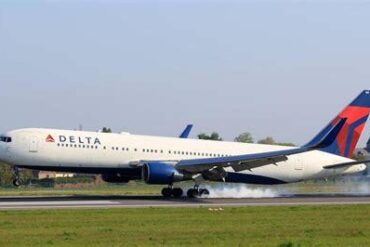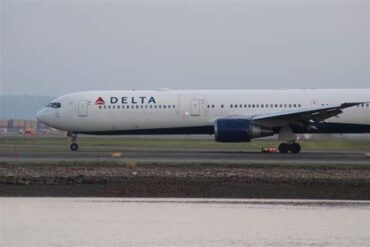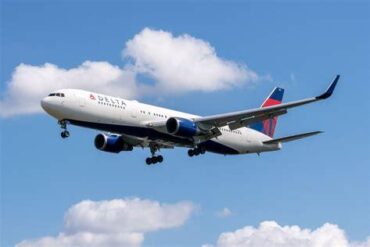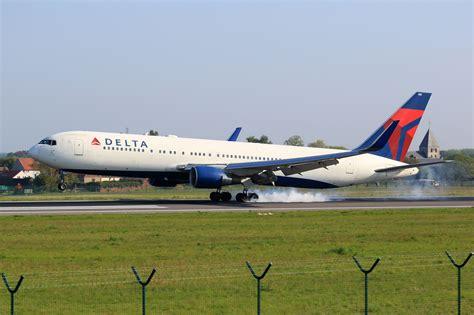
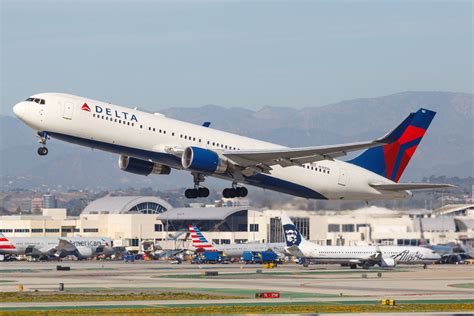
Delta Air Lines faces one of the most complex fleet transition challenges in modern commercial aviation. While many airlines have already retired their oldest widebody aircraft, Delta continues to operate a substantial fleet of Boeing 767-300ERs, some of which are approaching four decades of service. The airline has committed to retiring the type by 2030, yet replacing 36 aging aircraft is proving far more difficult than simply taking delivery of new jets.
The retirement of Boeing 767-300ER N171DN in April 2026 highlighted both the longevity and the growing limitations of Delta’s aging workhorse fleet. Delivered in June 1990 and operating for nearly 36 years, the aircraft accumulated more than 151,000 flight hours and nearly 23,000 cycles before completing its final revenue service from San Francisco to Atlanta. Its retirement marked another step in Delta’s gradual phaseout strategy, but it also underscored a larger reality: dozens of similarly aged aircraft remain essential to the airline’s network.
For decades, the Boeing 767-300ER formed the backbone of Delta’s long-haul operations. The aircraft enabled transatlantic expansion, connected secondary international markets, and provided flexibility that larger widebodies often could not match. Yet despite its historic importance, the fleet now represents the oldest and least competitive widebody product in Delta’s modern network.
The challenge facing Delta is not simply removing old aircraft. It is finding a way to replace them without sacrificing network flexibility, profitability, or growth opportunities.
After more than three decades of service, the Boeing 767-300ER remains deeply integrated into Delta’s operations. Unlike airlines that rely on a single aircraft family for replacement planning, Delta operates a highly diversified fleet where aircraft often cascade through different missions as newer models arrive.
The airline currently operates 36 Boeing 767-300ERs divided between two primary configurations. The smaller 76L subfleet consists of four aircraft configured with 36 Delta One seats and 211 total seats. These aircraft are the oldest examples remaining in service and primarily operate domestic premium routes alongside selected international services.
The much larger 76K subfleet comprises 32 aircraft featuring 26 Delta One seats, 18 Premium Select seats, and 172 economy seats for a total capacity of 216 passengers. These aircraft perform a mixture of transatlantic, domestic, and strategic international missions.
Their relatively modest seating capacity has become both their greatest strength and their biggest obstacle.
Unlike larger modern widebodies, the 767-300ER can profitably serve routes where passenger demand remains uncertain. This capability allows Delta to test new destinations and maintain service on thinner international markets without assuming the financial risk associated with deploying significantly larger aircraft.
Why the Boeing 767-300ER Has Become Increasingly Difficult to Keep
Age alone does not determine an aircraft’s retirement date. Airlines regularly operate aircraft for decades when economics remain favorable. However, the Boeing 767-300ER faces multiple challenges simultaneously.
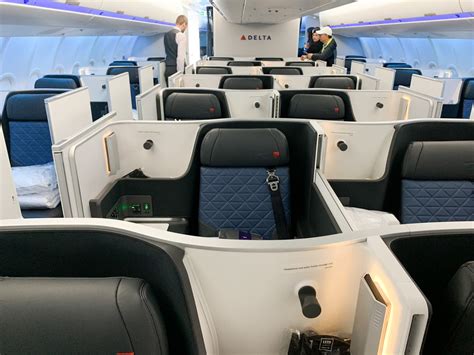
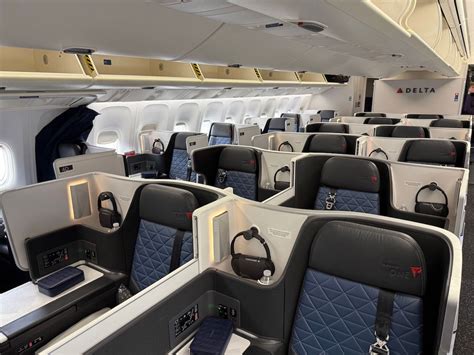
The first issue is passenger experience. Among Delta’s widebody fleet, the 767-300ER offers the most outdated premium cabin environment. While Delta’s newest Airbus A350s and Airbus A330-900neos feature modern Delta One Suites with privacy doors and advanced entertainment systems, the 767-300ER continues to rely on a significantly older generation of business-class seating.
The Thompson Vantage seats installed on the aircraft were designed primarily to maximize capacity within the narrow fuselage of the 767. Although innovative when introduced, they now appear increasingly outdated compared with modern business-class standards.
Passengers frequently criticize the limited privacy, narrow footwells, aging cabin finishes, and relatively small entertainment screens. Even after cosmetic upgrades introduced during some cabin refresh programs, the underlying seat architecture remains unchanged.
This creates an increasingly visible gap between Delta’s flagship products and one of its most heavily utilized aircraft types.
The second challenge involves maintenance complexity. Aircraft approaching 35 years of age require increasingly intensive inspections, structural monitoring, and component replacements. While Delta’s maintenance organization is among the industry’s most respected, keeping aging aircraft operational inevitably becomes more expensive over time.
As the fleet ages further toward 2030, maintenance costs are expected to continue rising.
The Airbus A330-900 Is Not a Perfect Replacement
At first glance, Delta’s Airbus A330-900neo appears to be the logical successor to the Boeing 767-300ER.
The aircraft delivers dramatically improved fuel efficiency, enhanced cargo capability, lower emissions, and a significantly better passenger experience. Most importantly, its operating economics allow it to burn fuel at levels comparable to the older 767 despite carrying considerably more passengers.
However, fleet replacement is rarely straightforward.
The Airbus A330-900 typically accommodates approximately 281 passengers in Delta’s configuration. By contrast, most Boeing 767-300ERs carry between 211 and 216 passengers.
That difference of roughly 65 to 70 seats fundamentally changes route economics.
On high-demand routes, additional capacity creates substantial revenue opportunities. Services linking major hubs with key European or Asian destinations can easily absorb the larger aircraft.
The problem emerges on routes where demand remains seasonal, experimental, or uncertain.
Delta frequently uses the Boeing 767-300ER to launch new destinations, evaluate market potential, and maintain service frequencies that might not justify larger aircraft. Replacing these missions directly with Airbus A330-900neos could introduce unnecessary financial risk.
New aircraft also carry significantly higher ownership costs. While the Boeing 767-300ER fleet has long been paid off, newly delivered Airbus aircraft represent major capital investments that must generate strong returns.
As a result, Delta cannot simply substitute every 767 with a new A330neo.
Delta’s Fleet Domino Strategy
Instead of direct replacement, Delta is executing what can best be described as a fleet domino effect.
New Airbus A330-900 deliveries are expected to assume responsibility for major international routes currently operated by Airbus A330-200s and Boeing 767-400ERs. Those displaced aircraft will then move into markets previously served by Boeing 767-300ERs.
This cascading strategy allows Delta to maximize fleet utilization while gradually modernizing its network.
The approach also explains why the Boeing 767-300ER remains difficult to retire quickly. Every aircraft removed from service requires adjustments across multiple fleet categories rather than a one-for-one substitution.
Additional Airbus A350-900 and Airbus A350-1000 deliveries will further support this process by taking over long-haul missions where higher capacity is advantageous.
Each new aircraft entering the fleet effectively frees another aircraft for redeployment elsewhere in the network.
The result is a carefully managed transition rather than an abrupt fleet replacement program.
The Domestic Routes Keeping the 767 Alive
Although many travelers associate the Boeing 767-300ER with international flying, an increasing proportion of Delta’s fleet now operates domestic premium routes.
Services between Atlanta, New York-JFK, Los Angeles, and San Francisco remain particularly important.
These routes attract substantial corporate travel demand and require premium cabin capacity. The Boeing 767-300ER provides lie-flat seating while maintaining a manageable aircraft size.
Replacing these aircraft domestically was supposed to be the responsibility of a specialized Airbus A321neo subfleet known internally as the 3NF.
The concept promised a highly premium narrowbody featuring Delta One suites, Premium Select seating, and a modern passenger experience tailored specifically for transcontinental operations.
Unfortunately for Delta, the project encountered significant certification delays.
Issues involving the Safran VUE seat selected for Delta One cabins postponed the aircraft’s entry into service. As delays accumulated, Delta began introducing alternative temporary cabin layouts simply to place completed aircraft into operation.
The continuing uncertainty surrounding the premium A321neo program has directly contributed to the prolonged reliance on Boeing 767-300ERs.
Without a fully operational domestic replacement, many of the airline’s oldest widebodies must remain active longer than originally anticipated.
Why Passengers Want Retirement to Happen Sooner
From an operational standpoint, the Boeing 767-300ER still fulfills an important role.
From a passenger perspective, however, retirement cannot come quickly enough.
Delta has spent years building a reputation around premium travel experiences. Modern Delta One Suites on the Airbus A350 and Airbus A330-900 rank among the strongest business-class products offered by any North American airline.
The contrast becomes striking when travelers board a Boeing 767-300ER after experiencing Delta’s newer aircraft.
Cabin design reflects technology and expectations from more than a decade ago. Entertainment screens appear undersized by modern standards. Storage solutions feel limited. Privacy remains minimal compared with contemporary suite concepts.
Even though Delta has invested in cosmetic improvements, passengers increasingly recognize the aircraft as a product from a previous generation.
This inconsistency creates branding challenges for an airline that positions itself as a premium market leader.
The longer the aircraft remains in service, the more visible this gap becomes.
The Future Widebody Fleet Taking Shape
By the end of the decade, Delta’s international fleet will look dramatically different.
The airline has committed to significant growth through Airbus A330-900neos, Airbus A350-900s, Airbus A350-1000s, and eventually Boeing 787-10s.
The arrival of 30 Boeing 787-10s beginning in 2031 represents a particularly significant development. These aircraft will introduce additional flexibility while enabling further expansion across major international markets.
At the same time, Airbus A350 deliveries will strengthen Delta’s position on long-haul routes requiring higher capacity and superior economics.
As new aircraft enter service, older fleets will gradually shift into secondary roles before eventual retirement.
The Boeing 767-300ER sits at the center of this transformation because its departure triggers movement throughout the broader fleet structure.
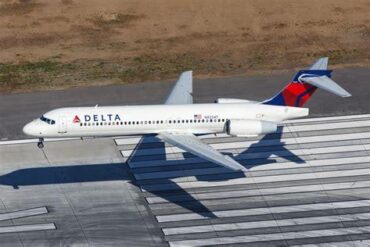
Even after the final 767-300ER leaves service, Delta’s Boeing 767 story will not immediately end. The airline still operates 21 Boeing 767-400ERs, which underwent extensive cabin modernization in 2019 and remain significantly younger than their smaller counterparts.
These aircraft are expected to continue operating well into the 2030s before eventual replacement decisions are finalized.
Can Delta Actually Meet the 2030 Deadline?
The airline remains publicly committed to retiring all Boeing 767-300ERs by 2030 and removing them from long-haul international operations by 2028.
Achieving that objective appears possible, but it depends heavily on several factors.
Additional Airbus deliveries must arrive on schedule. Premium Airbus A321neo aircraft must finally enter service in meaningful numbers. Fleet redeployment plans must proceed without major disruptions. Demand growth must remain strong enough to support larger aircraft on routes historically served by the smaller Boeing 767.
Any significant delay could force Delta to keep portions of the fleet active longer than anticipated.
Nevertheless, momentum is clearly moving toward retirement. Each new widebody delivery reduces reliance on the aging aircraft and brings the airline closer to its long-term fleet vision.
The Boeing 767-300ER helped transform Delta into a global carrier and served as the foundation of its long-haul network for decades. Yet aviation economics, passenger expectations, and fleet modernization strategies have finally converged to make retirement unavoidable.
The challenge is no longer deciding whether the aircraft should leave. The challenge is ensuring that 36 aging widebodies can continue bridging the gap until the replacement ecosystem is fully ready. For Delta Air Lines, that delicate balancing act may become one of the most important fleet management stories of the decade.