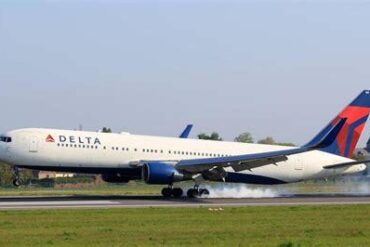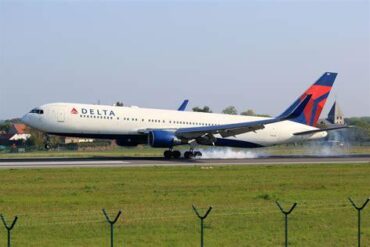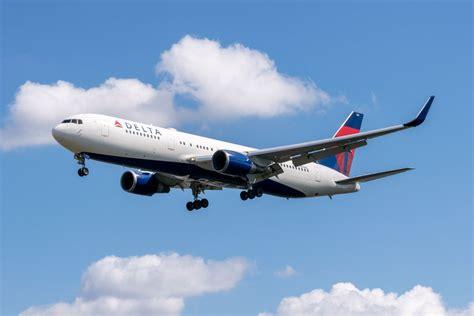
The aviation industry rarely pauses to reflect, yet moments like this demand attention. After nearly four decades of service, Delta Air Lines has officially retired its oldest widebody aircraft, a Boeing 767-300ER registered as N171DN. With more than 150,000 flight hours logged, the aircraft’s final journey marks the end of a remarkable operational lifespan that few commercial jets ever achieve.
The aircraft’s farewell was not ceremonial but practical. On April 10, it departed from Atlanta bound for Birmingham, Alabama, where it will be dismantled. Just one day earlier, it completed its final revenue flight from San Francisco to Atlanta, quietly closing a chapter that began in 1990. That understated conclusion reflects the aircraft’s entire career—consistent, dependable, and rarely seeking the spotlight.
A Boeing 767 That Defined Longevity and Reliability
When N171DN first took to the skies in April 1990, the Boeing 767 program was still gaining momentum. Delivered to Delta just weeks later, the aircraft quickly became a cornerstone of the airline’s long-haul operations. In its early years, it connected continents, serving transatlantic routes and building a reputation for efficiency and reliability.
Over time, as newer aircraft entered the fleet, the role of the 767-300ER evolved. N171DN transitioned from long-haul missions to transcontinental and domestic routes, adapting to changing operational demands. This flexibility is one of the defining strengths of the 767 platform, allowing it to remain relevant across decades of technological advancement.
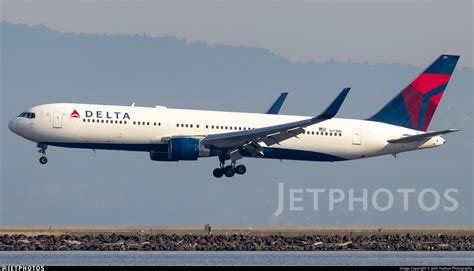
The aircraft’s interior configuration—36 Domestic First seats and 175 Economy seats—reflected its later-life deployment strategy. It became a workhorse on high-frequency routes between major U.S. cities such as Atlanta, Phoenix, New York, and San Francisco. Even in its final weeks, it maintained a demanding schedule, underscoring its enduring utility.
36 Years of Service: A Testament to Engineering and Maintenance
Reaching nearly 36 years of continuous service is no small feat in commercial aviation. Aircraft are subjected to extreme operational stresses, including pressurization cycles, temperature fluctuations, and constant utilization. That N171DN surpassed 150,000 flight hours speaks volumes about both its engineering and the maintenance philosophy behind it.
Delta’s technical operations teams played a crucial role in extending the aircraft’s lifespan. Through rigorous inspection routines, timely component replacements, and adherence to strict safety protocols, they ensured the jet remained airworthy far beyond the industry average. This level of care reflects a broader commitment within Delta to maximize asset value without compromising safety.
Equally significant is the durability of the Boeing 767 design itself. Introduced in the early 1980s, the aircraft has proven to be one of the most versatile and resilient widebodies ever produced. Its twin-engine efficiency, combined with a balanced size and range capability, made it ideal for a wide variety of routes.
The Final Flight and a Quiet Farewell
The final revenue flight of N171DN, designated DL715, departed San Francisco in the afternoon and arrived in Atlanta later that evening. There was no grand send-off, yet aviation enthusiasts tracked the journey closely, sharing images and reflections across social media. For many, the aircraft symbolized an era when reliability and longevity defined fleet strategy.
Its subsequent ferry flight to Birmingham carried a different kind of significance. Reports suggest the aircraft had reached the limit of its operational hours, with just enough remaining for this final repositioning flight. That detail adds a poetic dimension to its retirement—an aircraft that flew until it simply could not fly anymore.
Why the Boeing 767-300ER Is Being Phased Out
Despite its proven track record, the Boeing 767-300ER is gradually being retired across global fleets. For Delta, the transition is already well underway. The airline is replacing these aging jets with newer, more fuel-efficient models such as the Airbus A350 and Airbus A330neo.
These modern aircraft offer significant advantages, including lower fuel consumption, reduced emissions, and enhanced passenger comfort. In an industry increasingly focused on sustainability and cost efficiency, such improvements are not optional—they are essential.
Delta still operates several 767-300 aircraft, but their numbers are steadily declining. The airline has indicated that the type will be fully retired by the end of the decade, signaling a broader shift toward next-generation widebody fleets.
From Service to Scrap: The Aircraft Recycling Process
Retirement does not mean the end of usefulness. Once in Birmingham, N171DN will undergo a meticulous dismantling process. Specialized facilities are designed to extract maximum value from retired aircraft, with up to 90% of components being recycled or repurposed.
The most valuable assets are typically the engines, which can be overhauled and resold for millions of dollars. Avionics systems, cockpit instruments, and landing gear components are also carefully removed, inspected, and refurbished. These parts re-enter the aviation supply chain as certified used serviceable material, offering airlines a cost-effective alternative to new components.
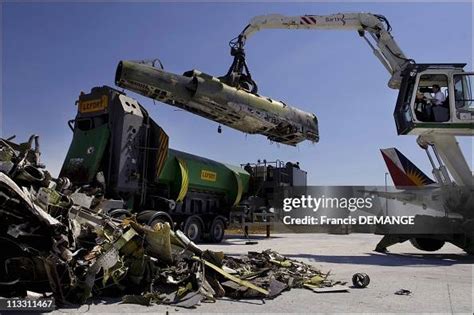
Even structural materials are not wasted. Aluminum and composite elements are processed and reused, contributing to a circular economy within the aviation sector. This approach not only reduces waste but also supports sustainability efforts across the industry.
The Legacy of N171DN in Delta’s Fleet History
N171DN may no longer take to the skies, but its legacy endures. It represents a period when aircraft were built to last and operated with a philosophy centered on durability and adaptability. For Delta, it stands as a symbol of operational excellence and long-term value creation.
Aircraft come and go, but few leave behind a story as compelling as this one. Nearly 36 years of service, thousands of flights, and countless passengers transported safely across continents—these are the metrics that truly define success in aviation.