A Delta Air Lines Boeing 757-200, the last of its kind ever produced, was forced to make an emergency return to Hartsfield-Jackson Atlanta International Airport (ATL) due to engine issues shortly after takeoff. The flight, Delta 2627, scheduled to connect Atlanta to Jacksonville International Airport (JAX), was abruptly halted in its climb on the evening of Sunday, December 28, resulting in a tense but professionally handled incident aboard the veteran jetliner.
Early Trouble After Departure From Atlanta
At 4:42 pm, the Boeing 757-200—registered N823DX—departed from ATL on what was expected to be a short, uneventful 45-minute flight to Jacksonville, Florida. Shortly after reaching an altitude of around 10,000 feet, the crew encountered engine anomalies that warranted immediate attention. Rather than proceeding with the flight, the pilots chose to circle the airspace south of Atlanta to burn excess fuel, a standard precautionary measure before returning to land with a heavy fuel load.

Rather than climbing to cruising altitude, the aircraft hovered between 7,000 and 10,000 feet, indicating a clear deviation from its standard flight profile. The Flightradar24 tracking data confirmed this behavior, showing a looping flight pattern that lasted about 33 minutes before the aircraft landed safely back in Atlanta at 5:15 pm.
Inside the Flight: 191 Passengers and a Swift Response
Onboard the aircraft were 191 passengers, two pilots, and four cabin crew members. Despite the unexpected disruption, no injuries were reported, and Delta’s ground and maintenance crews responded swiftly upon the aircraft’s return to ATL. The passengers were promptly rebooked onto another aircraft, another Boeing 757-200 (registration N6716C), which ultimately departed at 9:44 pm and touched down in Jacksonville just under an hour later at 10:27 pm.
The rescheduling caused a cascade of delays, particularly affecting the return segment of DL2627. Originally scheduled to leave JAX at 6:41 pm, the return flight didn’t take off until 11:32 pm, arriving back in Atlanta just after midnight.
A Glimpse into Jacksonville Operations and Delta’s Market Role
Jacksonville International Airport, located approximately 13 miles from downtown Jacksonville, is a critical regional hub. Delta Air Lines ranks as the second-largest operator at the airport, accounting for 22% of all flights between July 2024 and June 2025, according to the Bureau of Transportation Statistics. This translates to 1.65 million passengers moved over that period.
Delta connects Jacksonville to Atlanta, Detroit, Minneapolis/St. Paul, and New York–JFK via its mainline fleet. Its regional Delta Connection operations expand that network to include Austin, Boston, and both New York–JFK and LaGuardia.
The Aircraft: N823DX – A Legacy in the Sky
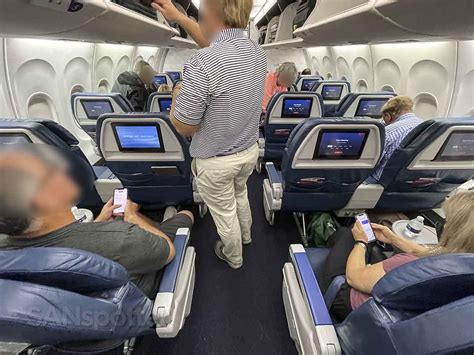
The aircraft involved in the incident, N823DX, carries notable historical weight as the last Boeing 757-200 ever produced. Manufactured by Boeing and assigned serial number 33967, the aircraft took its maiden flight on November 16, 2004. It was delivered new to Shanghai Airlines in April 2005 under the registration B-2876 and later stored in 2014. Eventually, Delta Air Lines acquired the aircraft on February 29, 2016, converting it into a mainline configuration capable of seating 193 passengers across three cabin classes:
- 20 Delta First
- 41 Delta Comfort+
- 132 Delta Main Cabin
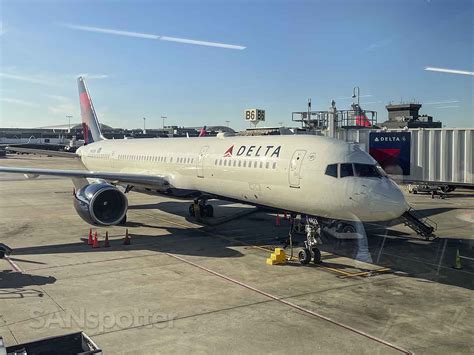
Powered by two Pratt & Whitney PW2037 engines, N823DX has remained a vital part of Delta’s narrowbody transcontinental fleet. While the cause of the engine issue on December 28 has not been publicly disclosed, the aircraft was kept overnight for inspection by Delta’s technical operations team. By the next afternoon, it returned to service without further incident, operating as DL8916 to New Orleans.
Aging Fleet, Exceptional Maintenance Standards
Despite being 21 years old, N823DX continues to meet FAA airworthiness standards, thanks in part to Delta’s rigorous aircraft maintenance programs. Delta, like other major U.S. carriers, continues to rely heavily on the Boeing 757 due to its exceptional range and payload capabilities—especially on short-to-medium haul routes where widebodies would be inefficient.
The 757’s operational reliability, particularly in demanding airport environments like LaGuardia or Reagan National, keeps it relevant despite age. However, as this incident shows, mechanical issues can still arise, especially in aging airframes, reinforcing the need for continuous oversight and fleet modernization efforts.
Contextualizing the Incident in Broader Delta Operations
This is not the first time Delta has faced technical issues with older aircraft models. Earlier in 2025, a Delta 767-300ER bound for Honolulu had to make an emergency landing in Salt Lake City due to engine failure. Such occurrences, while rare, underline the complexities of maintaining aging aircraft fleets.
To Delta’s credit, incidents like these are typically handled swiftly, transparently, and with minimal disruption to passengers. The seamless rebooking of DL2627’s passengers and the quick return of N823DX to operational status reflect mature incident management protocols and a strong technical backbone.
Conclusion: A Reminder of Aviation’s Balance Between Legacy and Modernity
The incident involving Delta’s 21-year-old Boeing 757-200 serves as a powerful reminder of the balancing act airlines must perform between fleet longevity and passenger safety. While older aircraft like N823DX continue to deliver value in terms of performance and versatility, they also demand intensive upkeep and proactive maintenance.
In this case, the professional judgment of Delta’s pilots and the rapid response by ground crews helped avoid a more serious outcome. No injuries were reported, and passengers ultimately reached their destination—a testament to the safety net woven by years of aviation experience and technological evolution.
As Delta gradually phases in newer Airbus A321neo and A330neo aircraft, the legacy of the Boeing 757-200 remains potent, both in utility and in history. For passengers onboard DL2627, that legacy became vividly real—not in cruising comfort, but in the calm, collected handling of a critical situation.