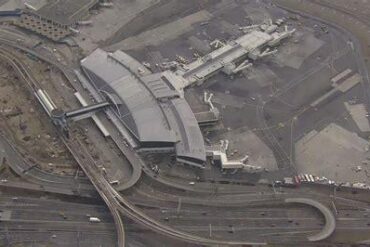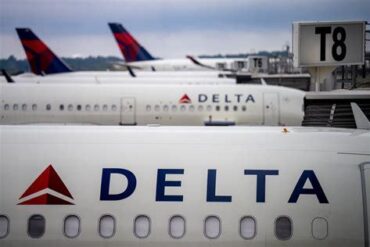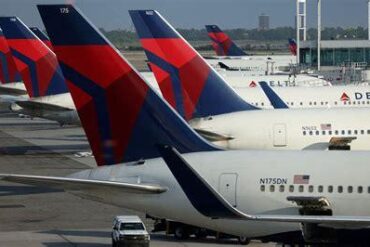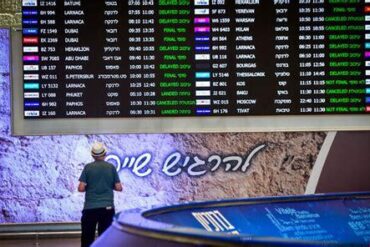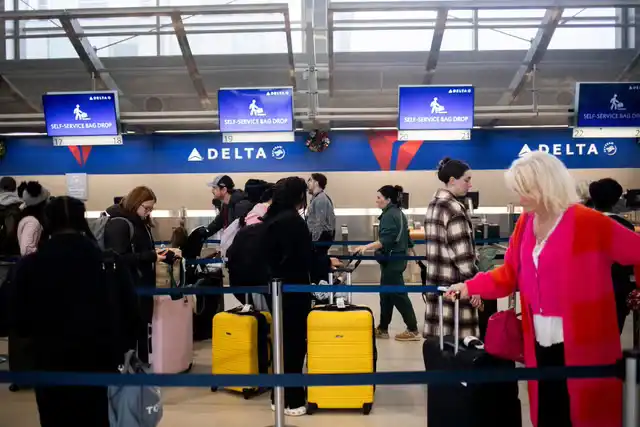
A critical network outage early Friday morning brought Delta Air Lines’ Detroit hub to a halt, turning one of America’s most strategic aviation gateways into an unexpected bottleneck. McNamara Terminal at Detroit Metropolitan Wayne County Airport became the epicenter of disruption, forcing Delta to halt departures and arrivals as thousands of passengers stood still in snaking queues under flickering departure boards and frozen check-in systems.
This was not a minor slowdown. Detroit is Delta’s largest Midwest fortress, holding a 53.7% traffic share—meaning more than half of the airport’s heartbeat depends on one airline’s ability to stay online. When the digital backbone collapsed just as passengers arrived for the morning rush, the scale of impact was immediate, visible, and severe.
Reports first surfaced at around 5:00 a.m., by which time check-in systems had already stalled and boarding operations were no longer functional. What followed was a cascading operational freeze: flights unable to push back, inbound aircraft circling or diverting, and gate areas filling beyond capacity as departures stacked into delay after delay.
Delta Issues Ground Stop As System Failure Deepens
Check-in kiosks went dark, reservation access froze, and boarding systems scrambled. Passengers were stranded in terminals unable to tag bags, retrieve boarding passes, or confirm travel changes. Delta responded with a formal ground stop, halting all of its Detroit traffic in an attempt to contain the disruption until IT recovery teams could stabilize internal systems.
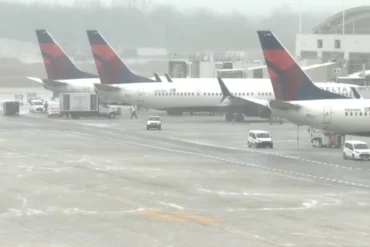
While other carriers continued operations unaffected, Delta—sole primary tenant of McNamara Terminal—absorbed the full weight of the failure. The FAA signaled that the grounding, initially projected to last only a few hours, could stretch far longer depending on system recovery timelines. Even a short outage at a hub of this size creates ripple effects across the national network.
Maintenance Teams Scramble, But Root Cause Still Unclear
Delta maintenance and IT teams began emergency recovery efforts immediately after failure detection, though the precise cause of the outage remains undisclosed. Aviation systems are notoriously layered—interconnected networks of scheduling tools, baggage routing programs, gate-control software, crew assignment algorithms, and reservation databases. A failure in one thread can unravel an entire terminal.
Live FlightAware tracking confirmed 15 outbound cancellations and 40 delays, alongside 17 inbound cancellations and 25 delays, just hours into the event. With 330 scheduled Delta departures planned for the day, the data paints a preview of escalating operational turbulence, especially as crews and aircraft fall out of rotation.
Flights to Atlanta, Grand Rapids, and Indianapolis led the day’s departure roster—each facing mounting backlog pressure as delays accumulated. Recovery will depend not only on restoring local IT availability, but also re-sequencing aircraft and reconnecting crews expected to operate downline flights nationwide.
A Day of Aviation IT Chaos Beyond Detroit
Detroit wasn’t alone in IT meltdown territory. Edinburgh Airport (EDI) temporarily suspended all traffic earlier today after an air traffic control system outage disrupted operations for over two hours. During the freeze, flights to Amsterdam, Bristol, Frankfurt, and London Gatwick were delayed or cancelled, affecting European operators and trans-border rotations.
The coincidence raises uneasy questions for the global aviation sector—where digital infrastructure is now as critical as airframe metal and jet fuel. A glitch once confined to back-office systems can now ground jets, strand thousands, and fracture airline networks within minutes.
Aviation increasingly runs not just on engines and pilots, but on servers.
What Happens Next For Delta and Detroit
Operational recovery will hinge on whether the root failure is isolated quickly or whether residual instability continues through the weekend. Every grounded aircraft is a schedule reshuffled, every rerouted crew a connection severed. The cost compounds flight by flight.
Passengers should prepare for rolling delays even after the terminal reactivates. Aircraft displaced from Detroit must be repositioned; crews timed out will need rest resets; connections throughout Delta’s network may misalign for 24–48 hours.
Disruption is no longer a moment—it becomes a wave. If this outage signals anything, it is how vulnerable modern aviation remains to digital failure. Detroit woke up operating normally, and within one hour an airline worth billions was stopped cold under terminal skylights.
Friday became frantic because one system blinked.