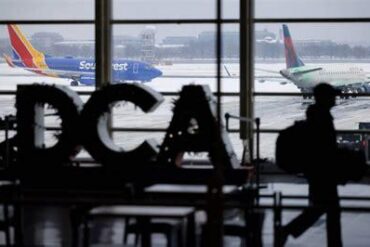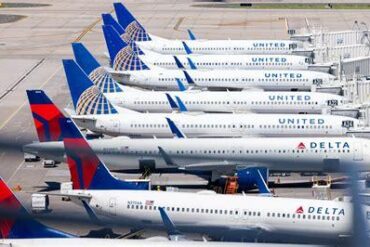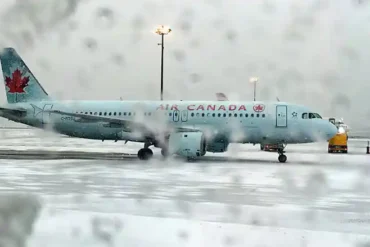
A powerful storm system unleashed widespread chaos across the United States on June 29, 2025, causing extensive disruptions to Delta Air Lines’ operations, with over 1,500 flights delayed or canceled at major airports including Charlotte, Atlanta, Dallas, Chicago, JFK, Newark, Los Angeles, San Francisco, and others.
The sudden arrival of this storm brought a dangerous mix of freezing rain, fierce winds, and dangerously low visibility that crippled flight schedules nationwide. The aviation network, already strained by summer travel peaks, faced one of its most severe weather-related disruptions of the year.
Delta Air Lines’ Network Severely Impacted Across Key Hubs
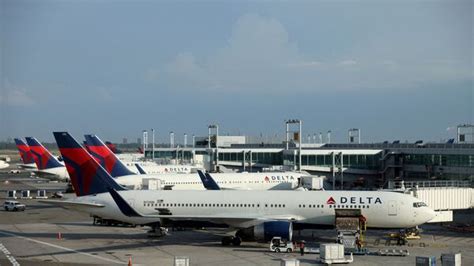
The impact of the storm was felt most acutely at Delta’s primary hubs, particularly in the southeastern and northeastern United States. The worst-hit airports experienced hundreds of flight disruptions, leaving thousands of travelers stranded in terminals, some for hours, others overnight.
At Hartsfield-Jackson Atlanta International Airport (ATL), Delta’s flagship hub and the world’s busiest airport by passenger volume, operations nearly ground to a halt. The storm led to 377 delayed flights and 30 cancellations, creating operational gridlock that rippled across the airline’s global schedule.
Further north, Dallas-Fort Worth International Airport (DFW) faced similar challenges, with 194 delays and 12 cancellations attributed to the volatile weather system. Wind gusts, lightning, and reduced visibility plagued the airport, disrupting both domestic and international connections.
Chicago O’Hare International Airport (ORD), another crucial node in Delta’s network, endured 48 delayed flights and 5 cancellations, as weather-related ground stops compounded existing congestion.
John F. Kennedy International Airport (JFK), one of New York’s busiest gateways, experienced 29 delays and 6 cancellations, with storm bands moving through the region throughout the afternoon, affecting both inbound and outbound services.
Even Newark Liberty International Airport (EWR), no stranger to operational bottlenecks, recorded 66 delayed flights and 1 cancellation, highlighting the widespread impact of the weather event.
Severe Weather Triggers Ripple Effect Across the US
The storm’s destructive influence extended well beyond the primary hubs. Cities such as Detroit, Boston, Fort Lauderdale, San Francisco, Los Angeles, and LaGuardia Airport in New York also faced significant operational difficulties.
In Detroit Metro Wayne County Airport (DTW), 52 flights were delayed and 11 canceled, affecting domestic connections and regional services. Meanwhile, Boston Logan International Airport (BOS) experienced 33 delays and 9 cancellations, as wind shear and low clouds compounded landing challenges.
On the West Coast, San Francisco International Airport (SFO) reported 19 delays and 5 cancellations, with coastal disturbances and fog wreaking havoc on flight schedules. Los Angeles International Airport (LAX) endured similar issues, with 19 delays and 5 cancellations, especially during the storm’s afternoon peak.
Even airports with relatively fewer disruptions, like Charlotte Douglas International Airport (CLT), where only 3 delays were reported, faced operational pressures as flight rotations and crew schedules became increasingly strained.
Delta’s Immediate Response and Passenger Support Measures
Faced with an escalating crisis, Delta Air Lines mobilized emergency response teams to manage the fallout. The airline prioritized rebooking stranded passengers, offering hotel accommodations, and providing meal vouchers where feasible.
Delta’s customer service centers, both on-site and online, were overwhelmed with passenger inquiries. Travelers flooded Delta’s app and website in search of real-time updates, while social media channels became a hub of frustration and urgent requests for assistance.
Despite the airline’s efforts, the scale of the disruption overwhelmed resources. Some passengers endured wait times exceeding six hours, while others faced the prospect of being stranded overnight in airport terminals.
Operational Complexity and Broader Aviation Implications
The events of June 29 serve as a stark reminder of the fragility of airline operations in the face of severe weather. Delta’s global network, intricately connected through key hubs, faced cascading delays that impacted not only domestic routes but also transatlantic and transpacific services.
Aviation experts note that weather-related disruptions can have a “domino effect” across carrier networks, especially for legacy airlines like Delta, whose operations depend on precise scheduling, crew rotations, and aircraft positioning.
Moreover, airports such as Atlanta, Dallas, New York, and Chicago are already operating near capacity. The introduction of severe weather pushes these facilities beyond their limits, with runway closures, ground stops, and air traffic control delays compounding operational woes.
The Meteorological Cause: A Perfect Storm of Hazards
Meteorologists attribute the storm’s ferocity to a rare convergence of atmospheric conditions. A low-pressure system intensified as it moved eastward across the central United States, colliding with warm, moisture-laden air from the Gulf of Mexico.
This collision produced violent thunderstorms, freezing rain in higher elevations, and dangerously gusty winds, particularly along the eastern seaboard. Visibility dropped to near-zero levels at several airports, forcing ground crews to suspend operations for safety reasons.
The storm’s unpredictability further complicated planning. While forecasts warned of severe conditions, the storm’s intensity exceeded expectations, catching airlines and passengers off guard.
Passenger Frustration and Industry Challenges
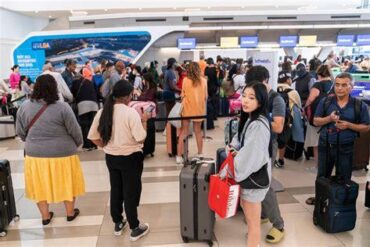
The human toll of the disruption was evident in airports across the country. Travelers shared images of crowded terminals, exhausted families sleeping on floors, and long lines at customer service desks. For many, the storm not only delayed their journeys but upended vacation plans, business meetings, and family reunions.
Delta’s crisis communications emphasized empathy and transparency, but the incident underscores ongoing challenges facing the airline industry in handling large-scale, weather-induced disruptions.
Airlines, already grappling with post-pandemic staffing shortages and increased demand, face renewed scrutiny over contingency planning and passenger support protocols.
Looking Ahead: Delta’s Operational Resilience and Future Preparedness
Delta Air Lines has signaled its intent to review the incident thoroughly, identifying areas for improvement in operational resilience, passenger communication, and weather response coordination.
Aviation analysts anticipate investments in enhanced forecasting tools, more flexible crew scheduling, and expanded digital customer service platforms to help mitigate future disruptions.
Additionally, the storm has reignited debates over infrastructure investment at major US airports. Many facilities lack sufficient capacity to absorb severe disruptions, leaving passengers vulnerable when weather emergencies arise.
Conclusion: A Sobering Reminder of Weather’s Power Over Aviation
The June 29 storm that paralyzed Delta’s operations serves as a sobering reminder of nature’s ability to upend even the most sophisticated transportation systems. As climate patterns grow increasingly erratic, airlines like Delta must adapt to ensure passenger safety, operational efficiency, and reliable service.
For thousands of passengers caught in the storm’s path, the experience was a frustrating ordeal. For Delta and the broader aviation industry, it marks another critical lesson in crisis management and the relentless need for preparedness in the face of weather’s unpredictability.