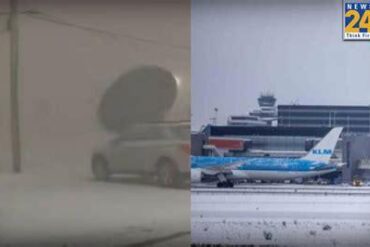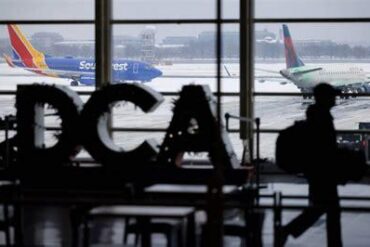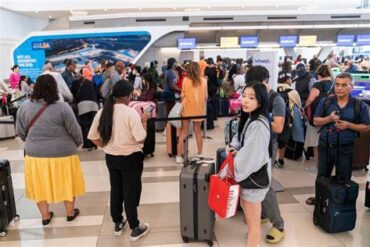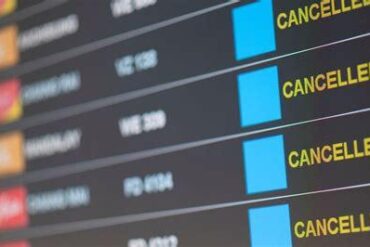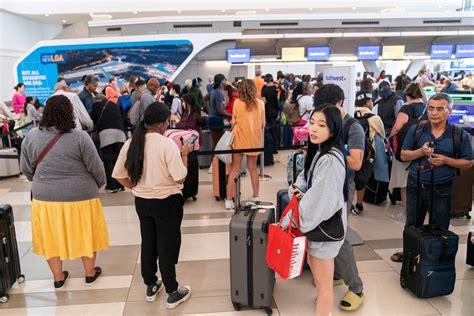
Thousands of passengers across the United States were caught in an unprecedented web of flight delays and cancellations on July 10 and 11, 2025, as over 4,200 flights were disrupted across major U.S. airline hubs. Severe weather, including flash floods, tropical storm remnants, and violent thunderstorms, slammed into key airport operations from the East Coast to the Central Plains, throwing the country’s aviation system into disarray.
Historic Disruption Hits Nation’s Aviation Grid
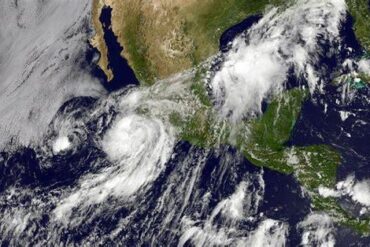
Triggered by the lingering effects of Tropical Storm Chantal and further worsened by a barrage of thunderstorms, the disruptions extended across Charlotte Douglas, Boston Logan, Philadelphia, Chicago O’Hare, Los Angeles International, Denver International, and all three major New York City airports, among others. Passengers were stranded on tarmacs, terminals were filled to capacity, and rebooking systems were overwhelmed by cascading cancellations.
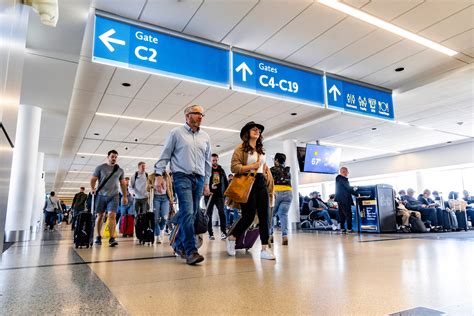
At Charlotte Douglas International Airport, torrential rainfall linked to Chantal’s remnants and statewide flash flood warnings in North Carolina resulted in 379 flight delays and a staggering 62 cancellations. American Airlines, which operates a hub at Charlotte, bore the brunt of these disruptions, followed by PSA Airlines and Piedmont.
Meanwhile, Boston Logan International Airport suffered from wind-laden downpours across Massachusetts, triggering 433 delays and 19 cancellations. JetBlue, which anchors much of its operations at Boston, reported significant challenges, with aircraft rerouted midair and kept on tarmacs due to low visibility and ground holds.
Philadelphia, Washington, and New York: Corridor of Delays
In the Mid-Atlantic corridor, Philadelphia International Airport was slowed to a crawl with 128 delays and 19 cancellations, largely from gusting winds and impaired visibility. American Airlines again led in operational challenges, facing over 70 combined disruptions.
Washington D.C.’s twin airports—Reagan National (DCA) and Dulles International (IAD)—saw a combined total of 293 delays and 54 cancellations. PSA Airlines was hammered at Reagan, logging 32 of the 43 total cancellations there.
New York City’s tri-airport complex mirrored the wider crisis. At LaGuardia, 129 delays and 21 cancellations were logged, while JFK International posted 290 delays and 12 cancellations. Republic Airways and JetBlue were among the most affected operators. The domino effect of grounded flights spread nationwide from these hubs.
Chicago and Denver Collapse Under Central Storm Surge
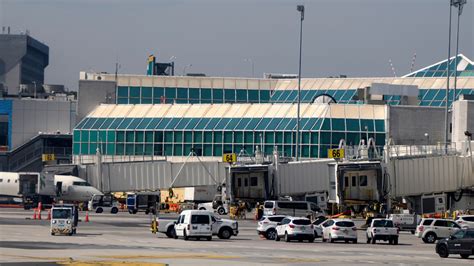
The storm system moved westward, pummeling the Midwest. Chicago O’Hare International Airport, one of the busiest in the nation, was struck with 297 delays and 6 cancellations. Operations were snarled as air traffic flow management protocols were activated to control overwhelmed departure and arrival corridors.
Further west, Denver International Airport (DEN) stood out as one of the most severely affected airports, reporting 489 delays and 17 cancellations. Southwest Airlines, operating over 200 flights out of Denver, suffered 204 delays and 12 cancellations, underscoring the regional impact.
Ripple Effects Across the West Coast and Southern Airports
Although the worst of the weather targeted the East and Midwest, West Coast operations were not spared. Los Angeles International Airport (LAX) recorded 157 delays and 9 cancellations, primarily due to delayed arrivals from eastern cities like Boston, Washington, and Chicago. Gate congestion and aircraft unavailability extended LAX’s delays into the late night.
In the South, Raleigh-Durham International and Houston Bush Intercontinental also reported significant interruptions. Houston faced 164 delays and 27 cancellations, particularly for United and Mesa Airlines, while Raleigh-Durham saw 78 delays and 10 cancellations.
Dallas-Fort Worth International (DFW) was similarly strained, logging 314 delays and 22 cancellations, as airlines struggled to manage the passenger surge amid recurrent ground stops issued throughout the day.
Weather Systems Behind the Travel Catastrophe
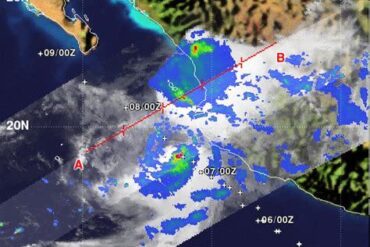
The National Weather Service issued urgent flash flood alerts across key metro areas including Philadelphia, Washington, Baltimore, and Richmond, warning of rainfall exceeding 2–3 inches per hour. The residual power of Tropical Storm Chantal, which made landfall in South Carolina, combined with fresh convective systems over the Central Plains, resulted in hail, high winds, and rain bands that stifled air operations nationwide.
Estimates suggest Chantal alone caused $4–6 billion in damage across the Carolinas. Combined with the widespread thunderstorm activity, the weather effectively paralyzed both East-West and North-South flight corridors.
Airlines in Crisis Mode: Delay and Cancellation Breakdown
Across 16 of the nation’s busiest airports, the cumulative tally stood at 3,930 delays and 309 cancellations, throwing both domestic and international travel into chaos. Major carriers like American Airlines, JetBlue, Southwest, Delta, and United were forced to juggle limited crews, displaced aircraft, and irate passengers.
At Charlotte, American accounted for 218 delays and 27 cancellations. In Boston, JetBlue logged 104 delays and 4 cancellations. Southwest bore Denver’s heaviest weight, while Delta’s operations at Atlanta Hartsfield-Jackson—another crucial hub—recorded 264 delays.
Here’s a glimpse of the worst-hit:
- Denver Intl: 489 delays, 17 cancellations
- Boston Logan: 433 delays, 19 cancellations
- Atlanta Hartsfield: 436 delays, 10 cancellations
- Charlotte Douglas: 379 delays, 62 cancellations
- DFW: 314 delays, 22 cancellations
- JFK: 290 delays, 12 cancellations
Airport ground operations, gate assignment systems, and flight crew rotations were all overwhelmed. With regional carriers like PSA, Republic, and Piedmont relying on tight turnaround schedules, even minor delays ballooned into multi-hour setbacks.
National System Breakdown: Tarmac Holds and Passenger Frustration
In major hubs, tarmac holds became the norm. Aircraft, fully loaded, were held on taxiways due to ATC (Air Traffic Control) metering and lack of available gates. At JFK and LaGuardia, dozens of aircraft were stuck for up to two hours, unable to either park or depart.
Passengers took to social media with frustration, citing poor airline communication, lack of amenities during delays, and confusion over travel waivers. Families, business travelers, and international connections alike were impacted.
Recovery Measures and Travel Advisory
Airlines quickly issued travel advisories and change fee waivers, especially for passengers traveling to or from hubs such as Charlotte, Boston, D.C., New York, Denver, and Dallas. While rescheduling efforts are underway, the massive displacement of aircraft and flight crews has caused multi-day ripple effects.
The FAA and National Weather Service have cautioned that storm systems will persist, especially in the Mid-Atlantic and Midwest, potentially leading to more cancellations over the weekend. Passengers with connecting flights through affected cities are urged to monitor real-time alerts and verify flight status well in advance.
Conclusion: A Storm That Grounded a Nation
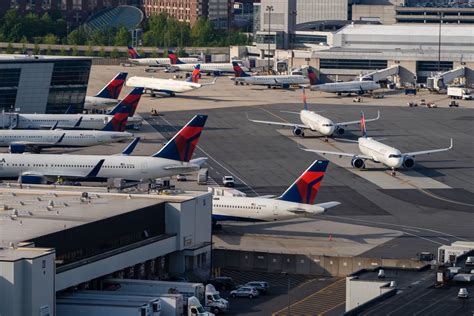
The July 2025 flight meltdown marks one of the most severe weather-related air transport disruptions in recent memory. The convergence of tropical moisture, convective instability, and overwhelmed aviation infrastructure created a near-collapse of the nation’s highly interconnected airline grid.
As the industry works to regain equilibrium, the episode serves as a stark reminder of the fragility of air travel systems in the face of climate-driven weather extremes, and the need for greater resilience planning, passenger communication, and infrastructure modernization.
Travelers across the U.S. should brace for continued volatility and stay informed as authorities respond to what is shaping up to be a historic summer of storms and schedule chaos.