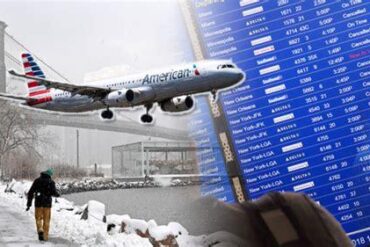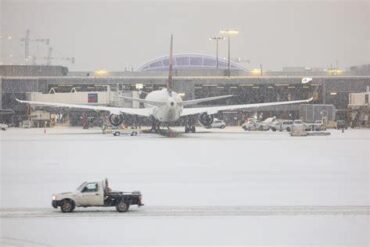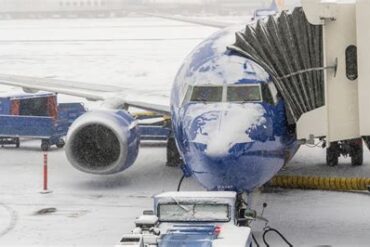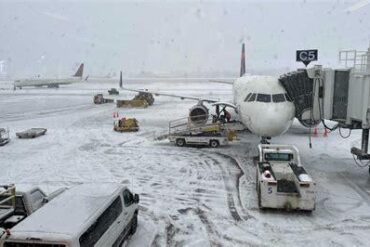
The ripple effects of a powerful winter storm system continue to disrupt air travel across the United States, with thousands of flights delayed or canceled even as conditions begin to stabilize. What initially appeared to be a routine seasonal weather event has evolved into a multi-day operational crisis, exposing the fragility of tightly scheduled airline networks when confronted with overlapping meteorological threats.
Air travel demand remains high, but the combination of snow, ice, and severe thunderstorms has created a cascading disruption that airlines are still working to untangle. While daily figures show incremental improvement, the backlog of stranded aircraft, displaced crews, and rebooked passengers has kept the system under pressure well into the week.
Major East Coast Hubs Lead Disruption Rankings
Airports along the Eastern Seaboard have emerged as the epicenter of the chaos, with Hartsfield-Jackson Atlanta International Airport (ATL) standing out as the most severely impacted hub. As one of the busiest airports in the world, even minor disruptions at ATL can quickly escalate into nationwide delays.
Current operational data reveals a striking picture: dozens of cancellations and over a hundred delays affecting both inbound and outbound flights. The airport’s role as a central connection point amplifies the disruption, as missed connections ripple outward across the network.

New York’s major airports—JFK and LaGuardia—along with Boston Logan, Newark Liberty, and Washington National, are also reporting sustained operational strain. These airports, already constrained by high traffic density, have been particularly vulnerable to weather-induced slowdowns, especially when de-icing procedures and runway limitations come into play.
Airlines Under Pressure as Cancellations Surge
Among major US carriers, Delta Air Lines has borne the brunt of the disruption, a reflection of its heavy operational footprint in Atlanta and the Midwest. The airline has recorded significantly higher cancellation numbers than its closest competitors, highlighting how geographic concentration can magnify risk during regional weather events.
American Airlines and United Airlines have also faced disruptions, though their cancellation rates remain comparatively lower. However, delays across all three legacy carriers remain substantial, underscoring the broader systemic impact rather than isolated operational failures.
Low-cost carriers have not been spared. Spirit Airlines and Southwest Airlines are grappling with their own operational challenges, with Southwest in particular reporting a high volume of delayed flights, even when cancellations remain moderate. This suggests a strategy of attempting to maintain schedules where possible, albeit with significant timing disruptions.
Regional airlines—often overlooked but critical to domestic connectivity—are experiencing notable cancellation rates, further complicating recovery efforts. These carriers operate shorter routes and tighter schedules, making them especially sensitive to sudden weather shifts.
Compounding Factors: Thunderstorms Intensify the Crisis
While snow and ice have dominated headlines, thunderstorms in the southeastern United States have added an unexpected layer of complexity. This dual-weather scenario has limited airlines’ ability to reroute flights or reposition aircraft, effectively shrinking the available operational footprint.
Airports such as Fort Myers (RSW), Pittsburgh (PIT), and Milwaukee (MKE) have reported severe disruption levels, with some reaching the highest categories on aviation disruption indices. In Florida, thunderstorms—not winter precipitation—have been the primary driver, demonstrating how diverse weather systems can converge to paralyze air travel.
This overlapping disruption has also strained air traffic control capacity, as controllers must manage rerouted flights, spacing adjustments, and ground delays across multiple regions simultaneously. The result is a network-wide slowdown that persists even after local weather conditions improve.
Passenger Impact and Airline Response Strategies
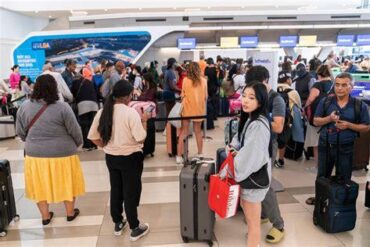
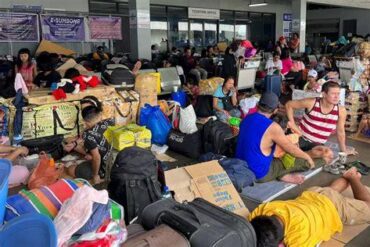
For passengers, the experience has been defined by uncertainty and extended travel times. Missed connections, overnight delays, and limited rebooking options have become common, particularly as airlines prioritize restoring operational balance over maintaining original schedules.
Airlines have responded by implementing automated rebooking systems, aiming to place affected travelers on the next available flights with minimal manual intervention. While efficient in theory, the sheer volume of disruptions has sometimes led to long wait times and limited seat availability, especially on high-demand routes.
Carriers are also attempting to preempt further disruption by canceling flights in advance, a strategy designed to reduce last-minute chaos but one that inevitably impacts travel plans. The approach reflects a shift toward controlled recovery, where stability is prioritized over short-term capacity.
A Fragile Recovery Still in Progress
Although the worst of the weather may be passing, the aviation system remains in a delicate recovery phase. Aircraft and crew rotations must be realigned, and airports must clear accumulated backlogs before normal operations can fully resume.
The scale of the disruption serves as a reminder that modern air travel operates on razor-thin margins, where even predictable seasonal weather can trigger widespread consequences. As airlines continue to stabilize operations, passengers are advised to monitor flight statuses closely and remain flexible.
What emerges from this episode is a clear insight: in an interconnected aviation network, localized weather events rarely stay local. Instead, they cascade across regions, turning isolated storms into nationwide disruptions that take days—not hours—to resolve.