Ultra long-haul flights represent the ultimate frontier of modern aviation. These marathon journeys connect distant continents without a single stop, shrinking the world in ways that were unimaginable only a generation ago. Routes like Singapore to New York, Perth to London, and Auckland to New York push both aircraft technology and airline operations to their absolute limits. From a passenger’s perspective, these flights feel like triumphs of engineering and convenience. Board once, sleep, watch a few movies, and wake up on the other side of the planet.
Yet behind the glossy marketing and record-breaking announcements lies a complex financial reality. Ultra long-haul routes are among the most difficult airline services to operate profitably, even with modern aircraft like the Airbus A350 and Boeing 787 Dreamliner. Airlines celebrate these flights publicly, but they rarely discuss the economic and operational pressures that accompany them.
As more carriers attempt to expand their long-distance networks, the underlying weaknesses of ultra long-haul routes are becoming increasingly clear. One of the most revealing examples is Air New Zealand’s nonstop service between Auckland and New York, a route that perfectly illustrates the hidden challenges airlines face when stretching flights to nearly eighteen hours.
The Rise of Ultra Long-Haul Aviation
Ultra long-haul flights generally refer to routes exceeding 14 to 16 hours of flight time, often covering distances greater than 7,000 nautical miles. These services became more common after the introduction of next-generation aircraft designed to combine long range with exceptional fuel efficiency.
The Boeing 787 Dreamliner and Airbus A350 transformed airline route planning by dramatically reducing fuel consumption compared with older widebody aircraft such as the Boeing 747 or Airbus A340. Their lighter composite structures, advanced engines, and efficient aerodynamics allow airlines to operate routes that were once considered economically impossible.
Ironically, the industry had already reached extreme range decades earlier. Aircraft like the Airbus A340-500 and Boeing 777-200LR could fly even farther than some modern jets. However, those planes consumed far more fuel and were difficult to operate profitably. What makes the new generation aircraft special is not simply their range, but their operational efficiency, which makes ultra long-haul routes feasible on a wider scale.
Airlines seized the opportunity to create nonstop connections between cities that had previously required multiple stops. Routes such as Singapore–Newark, Perth–London, and Auckland–New York emerged as headline-grabbing achievements in aviation.
But technological capability does not guarantee financial success.
Air New Zealand’s Ambitious Auckland–New York Route
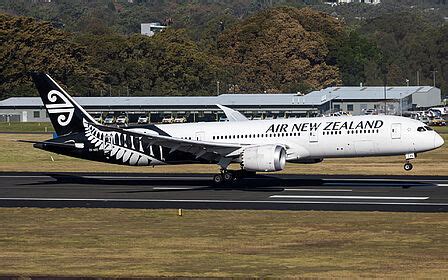
When Air New Zealand launched nonstop flights between Auckland Airport (AKL) and John F. Kennedy International Airport (JFK) in 2022, the route instantly became one of the longest commercial flights in the world.
Covering 7,671 nautical miles (14,207 kilometers), the flight takes roughly 17 to 18 hours, depending on winds and routing. The service was positioned as the airline’s flagship connection to the United States, symbolizing New Zealand’s direct link to one of the world’s most important global cities.
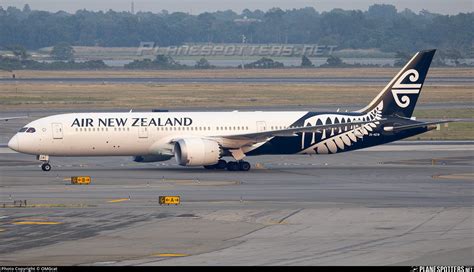
Initially, the route generated significant excitement. Travelers welcomed the ability to avoid connections in Los Angeles or San Francisco. Tourism boards praised the new link, and the airline highlighted the flight as proof of its global ambitions.
However, the enthusiasm gradually collided with economic reality.
Reports began to emerge suggesting that the Auckland–New York route was not generating sufficient profit. The airline soon faced difficult decisions about whether maintaining such a prestigious route was financially sustainable.
Why Ultra Long-Haul Flights Are Extremely Expensive
Operating an ultra long-haul flight is dramatically more complex than flying a typical long-haul route. Every additional hour in the air introduces new costs, constraints, and operational risks.
The most obvious factor is fuel consumption. Even highly efficient aircraft burn enormous amounts of fuel during an 18-hour flight. Fuel prices fluctuate constantly, and sudden increases—often triggered by geopolitical tensions—can quickly transform a marginal route into a loss-making one.
Beyond fuel, airlines must account for several additional cost factors:
- Extended crew duty requirements, which may require multiple pilot teams
- Higher maintenance exposure due to longer flight cycles
- Increased aircraft utilization constraints
- Reduced cargo capacity caused by weight limitations
- Opportunity cost when an aircraft could operate more profitable shorter routes
These factors combine to create a delicate financial balance. If passenger demand weakens or operating costs rise, profitability can disappear quickly.
Competition Can Destroy an Ultra Long-Haul Route
Another rarely discussed challenge is that ultra long-haul routes often have very limited local demand. Unlike short-haul markets with millions of travelers, many ultra long-haul city pairs depend heavily on connecting passengers and premium travelers.
The route between Auckland and New York illustrates this perfectly.
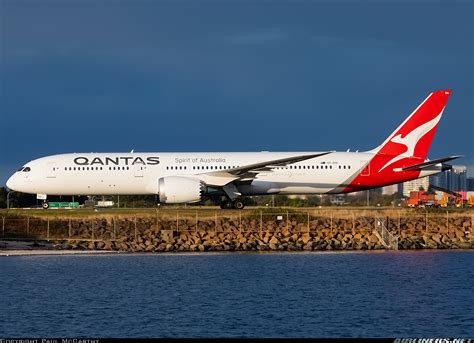
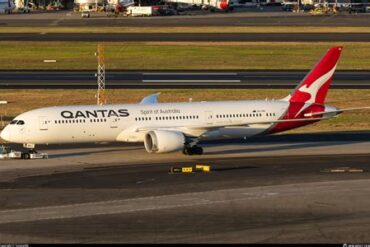
In 2023, Qantas relaunched its own service connecting Sydney to New York, using Auckland as a stopover point. While this flight is technically not fully nonstop, it directly competes with Air New Zealand’s service.
Qantas enjoys several advantages:
- Higher flight frequency
- A larger presence in the Australia–United States travel market
- Strong partnership with American Airlines, which has a major hub at JFK
These factors allow Qantas to capture passengers traveling between New York and Sydney, as well as those flying to Auckland. For travelers, the experience is often smoother because the airline offers better connectivity at JFK through its alliance partner.
For Air New Zealand, this competition dramatically reduces the potential revenue from a route that already has extremely high operating costs.
The Critical Role of Premium Passengers
Ultra long-haul flights rely heavily on premium cabins for profitability. Business class and premium economy seats generate significantly higher margins than economy tickets, which often sell at competitive prices.
Airlines typically design aircraft cabins carefully to maximize premium revenue on long-distance routes. The difference between success and failure can come down to the number of high-paying seats available.
Air New Zealand’s Boeing 787-9 fleet presents a challenge in this area. The airline operates several configurations of the aircraft, some of which emphasize economy seating.
In contrast, Qantas configured its 787-9 Dreamliners specifically for long-haul operations with a much stronger focus on premium seating.
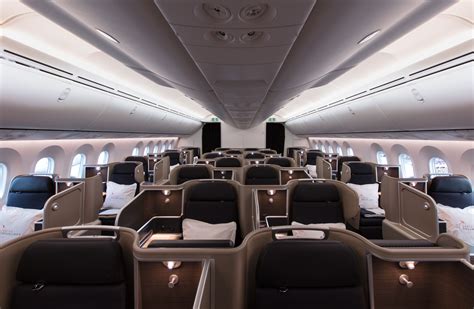
The difference is striking. Qantas offers 42 business class seats on its Dreamliners, while Air New Zealand aircraft may carry as few as 18 or 26 business seats, depending on the configuration.
This imbalance matters enormously on ultra long-haul routes. Business travelers flying between financial centers like New York often prioritize comfort and are willing to pay a premium for nonstop service.
When an airline lacks sufficient premium seats, it sacrifices the most profitable portion of the market.
Aircraft Weight and Cargo Limitations
One of the least visible problems with ultra long-haul flights is weight management.
Aircraft departing on extremely long journeys must carry large amounts of fuel. However, aircraft have strict maximum takeoff weight limits. When fuel loads increase, airlines sometimes must reduce other payload elements to stay within safe operating limits.
This can lead to two revenue-reducing consequences:
- Empty passenger seats may be required to reduce weight.
- Cargo shipments may be left behind, reducing freight income.
Cargo revenue is particularly important for long-haul flights. Freight often contributes significantly to airline profits, especially on routes connecting major global cities.
When ultra long-haul flights sacrifice cargo capacity for fuel, airlines lose a valuable income stream.
Fleet Constraints and Opportunity Costs
Another hidden challenge is aircraft allocation.
Widebody aircraft are among the most valuable assets in an airline’s fleet. A single Boeing 787 can generate significant revenue when deployed on profitable routes with strong demand.
If an airline assigns that aircraft to a marginal ultra long-haul route, it may miss better opportunities elsewhere.
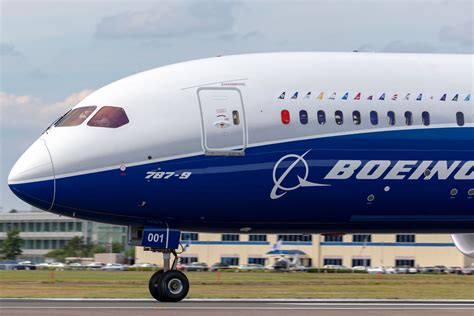
Air New Zealand operates a relatively small widebody fleet, which amplifies this problem. Each aircraft must be used strategically to maximize network profitability.
When a single ultra long-haul route consumes one of those aircraft for nearly an entire day of flying, the opportunity cost becomes substantial. The aircraft could instead operate multiple shorter flights with stronger demand and lower operational risk.
External Pressures That Make Ultra Long-Haul Even Harder
Airlines already operate in an industry with razor-thin profit margins. Ultra long-haul routes magnify the impact of external economic pressures.
Several issues have recently compounded the challenges facing Air New Zealand:
- Rising global fuel prices triggered by geopolitical tensions
- Weakening New Zealand dollar, increasing operational costs
- Declining domestic travel demand
- Engine reliability issues affecting Boeing 787 fleets
The airline has also struggled with engine problems involving the Rolls-Royce Trent 1000, which powers many of its Dreamliners. These issues have forced aircraft out of service and disrupted long-haul operations.
Such disruptions can be devastating for ultra long-haul routes because there are fewer backup aircraft available.
Why Most Ultra Long-Haul Routes Avoid Competition
One of the most interesting patterns in global aviation is that successful ultra long-haul routes rarely face direct competition.
Most airlines prefer to operate these flights in markets where they can dominate the route. Because operating costs are so high and demand is limited, there is often room for only one airline to make the service viable.
When multiple airlines compete on the same ultra long-haul route, profits tend to collapse quickly.
This dynamic explains why routes like Singapore–Newark or Perth–London typically have only one operator. Airlines understand that splitting the market could turn a profitable route into a financial burden.
The Auckland–New York market, with both Air New Zealand and Qantas competing, represents a rare exception—and the financial consequences are becoming evident.
The Prestige Factor Airlines Rarely Admit
Despite the economic challenges, airlines sometimes launch ultra long-haul routes for reasons beyond pure profit.
Prestige plays a significant role.
Operating one of the world’s longest nonstop flights generates enormous publicity. It enhances brand reputation, strengthens national pride, and demonstrates technological capability.
These symbolic benefits can influence airline decisions, even when financial returns are uncertain.
For a national carrier like Air New Zealand, maintaining a direct connection to New York carries significant marketing value. The route signals that the airline operates on a global stage alongside much larger international competitors.
However, prestige alone cannot sustain a route indefinitely if losses continue to accumulate.
The Future of Ultra Long-Haul Aviation
Ultra long-haul travel is unlikely to disappear. In fact, the trend is accelerating as new aircraft models enter service and airlines continue experimenting with longer nonstop routes.
Aircraft such as the Airbus A350-1000 and the upcoming Boeing 777X promise even greater range and efficiency. These planes could enable routes like Sydney to London without stopping, a concept long envisioned by airlines.
Yet the fundamental economics will remain unchanged. Ultra long-haul routes will succeed only when several critical conditions align:
- Strong demand from premium passengers
- Limited direct competition
- Efficient aircraft configurations
- Favorable fuel prices
- Strategic alliance partnerships
When these factors are missing, even the most technologically impressive routes may struggle.
A Reality Behind the Headlines
Ultra long-haul flights capture the imagination of travelers and aviation enthusiasts alike. They represent remarkable achievements in aircraft engineering and operational planning.
Yet the glamorous image often hides a difficult truth. These routes are among the most financially fragile services in commercial aviation.
The story of Air New Zealand’s Auckland–New York route reveals how easily the economics can unravel. High operating costs, limited premium seating, strong competition, and fluctuating fuel prices combine to create a challenging environment.
Airlines will continue launching record-breaking flights because the concept remains powerful and appealing. But behind every ultra long-haul announcement lies a delicate equation that must balance technology, demand, and profitability.
In aviation, the longest flights may capture the world’s attention—but they also carry some of the industry’s greatest risks.
FAQs About Ultra Long-Haul Flights
What qualifies as an ultra long-haul flight?
Ultra long-haul flights typically refer to routes lasting 14 hours or longer, often covering distances above 7,000 nautical miles. These flights connect distant global cities nonstop.
Why are ultra long-haul routes difficult to operate profitably?
They involve extremely high fuel consumption, heavy aircraft weight, limited cargo capacity, and reliance on premium passengers. Small changes in demand or fuel prices can quickly affect profitability.
Which aircraft are commonly used for ultra long-haul flights?
Modern routes are usually operated by aircraft such as the Airbus A350, Boeing 787 Dreamliner, and Boeing 777-200LR, which combine long range with fuel efficiency.