Ultra-long-haul flying has entered a new era. In 2026, nonstop flights stretching up to 19 hours are no longer experimental novelties but strategic pillars in airline networks. These routes are powered by next-generation twin-engine aircraft—primarily the Airbus A350-900ULR, A350-1000, and Boeing 787-9 Dreamliner—built to combine extreme range with unprecedented fuel efficiency. What once demanded four engines and technical stops can now be achieved by two highly advanced turbofans and carefully optimized payload management.
The defining word is nonstop. Every route in this ranking operates without intermediate refueling or crew-change stops. That distinction matters. Ultra-long-haul prestige depends on eliminating transit friction—no re-screening, no missed connections, no lost baggage between legs. The experience is linear, uninterrupted, and psychologically powerful. Boarding a 19-hour flight feels different because it is different.
Block times between March and December 2026 reveal a new hierarchy of endurance routes. While several new services launch in 2026—Atlanta to Riyadh, Sydney to Las Vegas, Dallas to Amman—none exceed 15 hours 35 minutes. The world’s longest flights remain concentrated between North America, Southeast Asia, Australia, and parts of South Asia.
The World’s Longest Nonstop Flight: New York To Singapore (19h 15m)
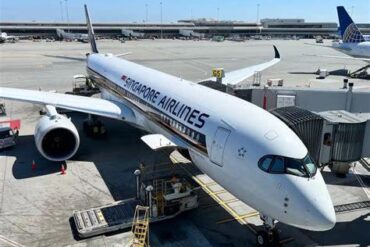
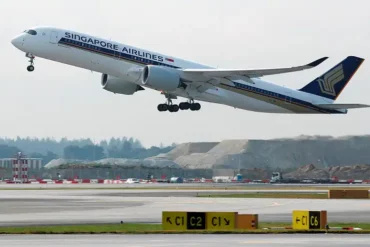
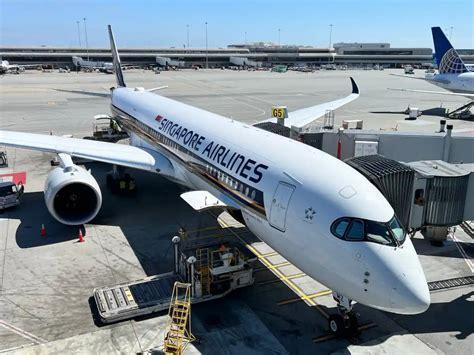
At the summit stands Singapore Airlines’ New York JFK to Singapore service, clocking a maximum block time of 19 hours 15 minutes. Operated daily by the Airbus A350-900ULR, this aircraft variant was engineered specifically for extreme range missions. The ULR model sacrifices some seating density to carry additional fuel, prioritizing range over volume.
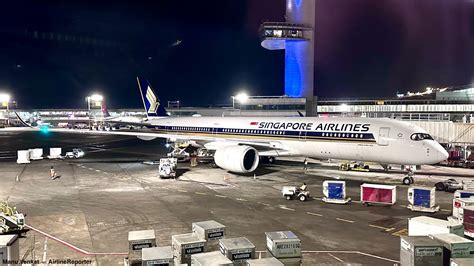
Its sister route from Newark to Singapore, at 19 hours 10 minutes, follows closely behind. These services are not merely technical achievements; they are business-driven connectors between two financial powerhouses. Demand skews heavily toward premium cabins, where lie-flat seating, advanced cabin humidity control, and optimized lighting cycles help mitigate circadian disruption.
Singapore Airlines also operates Los Angeles to Singapore (17h 50m) and San Francisco to Singapore (17h 40m), the latter competing directly with United Airlines’ double-daily Boeing 787-9 operations. The transpacific ultra-long-haul corridor remains one of the most commercially resilient segments in aviation.
Transpacific Titans: New York To Auckland (18h 10m)
The New York JFK to Auckland route ranks third globally at 18 hours 10 minutes. Operated by Air New Zealand three times weekly with the Boeing 787-9 and by Qantas five times weekly as part of its Sydney–Auckland–JFK routing, this link symbolizes post-pandemic long-haul ambition.
Air New Zealand carried over 53,000 round-trip passengers on the route in the year ending November 2025. However, its load factor hovered at 63.7%, suggesting measured demand relative to capacity. Qantas achieved an 80% seat factor, indicating stronger cabin optimization or more premium-heavy sales. Ultra-long-haul economics often hinge less on total passenger count and more on yield per seat.
Perth To London: The Kangaroo Route Reinvented (17h 50m)
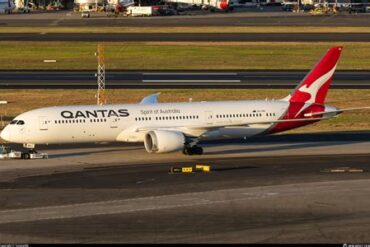
The romanticism of the historic Kangaroo Route endures in Qantas’ Perth to London Heathrow nonstop service. At 17 hours 50 minutes, it links Western Australia directly with Europe, bypassing Southeast Asian stopovers that once defined intercontinental travel.
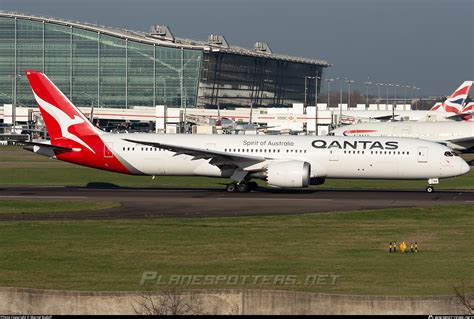
The Boeing 787-9 operates daily, its composite fuselage allowing higher cabin pressure and humidity than previous-generation jets. This translates into reduced passenger fatigue, a critical advantage when flying nearly three-quarters of a day in one continuous segment.
Beijing To Mexico City: A Rare Transpolar Contender (17h 55m)
Hainan Airlines’ Beijing Capital to Mexico City service briefly reaches 17 hours 55 minutes in March, although most rotations include a technical stop in Tijuana. When operated nonstop, it becomes one of the world’s most geographically fascinating routes, traversing polar airspace and linking two distant economic spheres rarely connected directly.
Such operations demand precise fuel calculations and close monitoring of winds aloft. Headwinds can dramatically extend westbound block times, pushing endurance limits for both crew and aircraft.
Dallas And Melbourne: Bridging The American South To Australia (17h 45m)
Qantas’ Dallas/Fort Worth to Melbourne service, operating three to four times weekly with the 787-9, clocks 17 hours 45 minutes. Dallas remains a strategic hub for onward connectivity across the United States, amplifying the route’s commercial viability.
The aircraft’s range capability enables full payload during favorable wind conditions, though weight restrictions can apply seasonally. Ultra-long-haul scheduling remains dynamic, influenced by atmospheric patterns in the jet stream.
Houston To Sydney: United’s Seasonal Marathon (17h 35m)
United Airlines’ Houston Intercontinental to Sydney nonstop, at 17 hours 35 minutes, stands as the carrier’s second-longest service. Initially year-round, it transitioned to seasonal operation following pandemic disruptions.
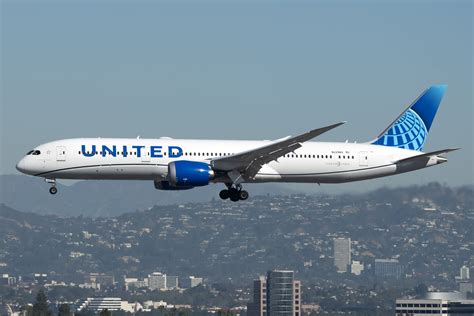
Load factors around 69% suggest the route occupies a delicate balance between prestige and profitability. Ultra-long-haul flights are expensive to operate, requiring crew rest compartments, enhanced catering logistics, and precise fuel management. Margins depend heavily on premium-class performance.
Delhi To New York: South Asia’s Direct Gateway (17h 35m)
The Delhi to New York JFK corridor, served by Air India’s Airbus A350-900 and American Airlines’ Boeing 787-9, reaches 17 hours 35 minutes. This route capitalizes on substantial diaspora traffic and business demand between India and the United States.
The A350’s advanced aerodynamics and Rolls-Royce Trent XWB engines allow efficient long-range cruising at high altitudes, reducing fuel burn per seat compared to older widebodies. These technological gains make such distances commercially viable without technical stops.
The Aircraft Behind The Endurance
The dominance of the Airbus A350 family and Boeing 787 Dreamliner is not accidental. Both platforms emphasize lightweight composite structures, next-generation turbofan engines, and optimized wing designs. Reduced fuel consumption extends range while maintaining twin-engine efficiency standards under ETOPS regulations, which govern extended operations over remote areas.
Cabin innovation also plays a decisive role. Improved air filtration systems refresh cabin air every few minutes. Higher cabin humidity reduces dehydration. Dynamic LED lighting simulates sunrise and sunset cycles to assist passenger adaptation across multiple time zones.
Ultra-Long-Haul Strategy In 2026 And Beyond
Airlines continue to evaluate additional ultra-long-haul ambitions. Qantas plans future Sydney to London Heathrow and New York JFK nonstop services using the Airbus A350-1000ULR under its “Project Sunrise.” Turkish Airlines has repeatedly signaled interest in Istanbul to Auckland nonstop once its A350-1000 fleet expands.
The defining characteristic of these routes is not simply duration, but strategic intent. They connect financial capitals directly, reduce travel time by several hours, and elevate brand prestige. In an era where efficiency and passenger experience intersect, ultra-long-haul flying has shifted from spectacle to calculated competitive advantage.
The 2026 ranking demonstrates that the ceiling currently sits just above 19 hours. Yet with incremental engine improvements, aerodynamic refinements, and further cabin optimization, the boundary may stretch even further. Aviation has always been a story of range—of shrinking distances and compressing geography. In 2026, that story continues at 35,000 feet, for nearly an entire day without touching the ground.