The geography of air travel has been quietly rewritten. What once required refueling stops, overnight layovers, or complicated multi-leg itineraries is now handled in a single, uninterrupted arc across the planet. In 2026, the longest nonstop international flights from the United States are no longer experimental—they are essential arteries linking continents, economies, and cultures with astonishing efficiency.
These routes stretch beyond 15 to nearly 19 hours, crossing oceans and time zones in one continuous journey. Yet what makes them compelling is not just their distance, but the strategy behind them. Airlines are carefully pairing next-generation aircraft, premium-heavy cabins, and carefully chosen hub cities to make these marathon flights both profitable and surprisingly comfortable.
The New Era of Ultra-Long-Haul Aviation
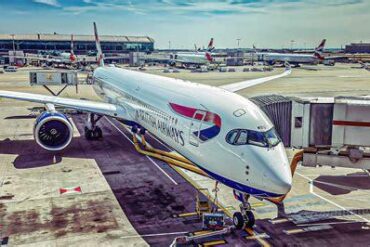
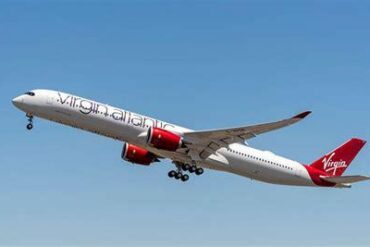
Ultra-long-haul flying is no longer about brute endurance; it is about precision. Airlines deploy aircraft like the Airbus A350-900ULR, Boeing 787-9 Dreamliner, and Airbus A350-1000, each chosen for its balance of fuel efficiency, range, and passenger comfort. Cabin layouts increasingly favor business and premium economy seats, reflecting the reality that travelers willing to spend nearly 19 hours in the air often demand—and pay for—more space.
This shift also signals a broader transformation. Instead of routing passengers through traditional hubs like Tokyo, Hong Kong, or London, airlines are bypassing them entirely, creating point-to-point global connectivity that saves time and reduces friction.
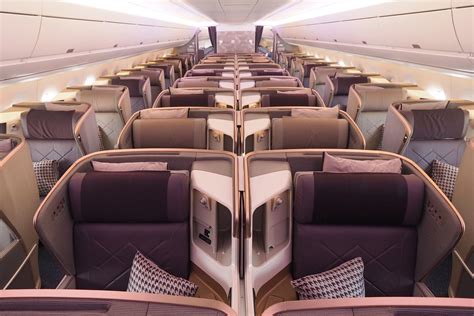
7. New York (JFK) – Manila: A Transpacific Evolution
Stretching approximately 7,400 nautical miles, Philippine Airlines’ nonstop service between New York and Manila represents both a technological and historical milestone. With a block time nearing 16 hours and 40 minutes eastbound, this route is a demanding test of endurance—for both aircraft and passengers.
What makes this flight particularly fascinating is its evolution. Before achieving nonstop status, the route relied on a Vancouver stopover, a reminder of the limitations that once defined long-haul aviation. The introduction of the Airbus A350 family, and later the larger A350-1000, transformed the equation entirely.
The aircraft itself tells a story. Configured with 382 seats across three classes, it balances capacity with long-haul comfort, signaling Philippine Airlines’ ambition to expand aggressively across North America. This route is no longer just about connecting two cities—it’s a symbol of how emerging long-haul markets are stepping confidently onto the global stage.
6. Dallas/Fort Worth – Sydney: The Power of Scale
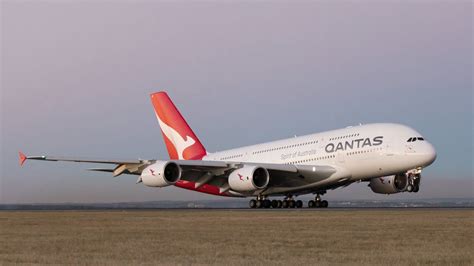
Covering roughly 7,450 nautical miles, Qantas’ Dallas to Sydney route stands out not just for its length, but for its sheer scale. Operated by the Airbus A380, it is one of the rare ultra-long-haul routes where size matters as much as range.
The flight time can stretch to 17 hours and 25 minutes, particularly on the westbound journey against prevailing winds. Yet Qantas deliberately deploys its largest aircraft here, signaling strong demand and a heavy reliance on premium traffic and connecting passengers.
Dallas is not an obvious gateway in the way Los Angeles or San Francisco might be. That’s precisely why it works. Positioned deep within the United States and tightly integrated with American Airlines’ domestic network, DFW acts as a powerful funnel, feeding passengers from across North America into a single transpacific departure point.
5. Houston – Sydney: The Dreamliner’s Sweet Spot
At approximately 7,460 nautical miles, United Airlines’ Houston to Sydney route is a textbook example of what the Boeing 787-9 Dreamliner was designed to achieve. With flight times approaching 17 hours and 30 minutes, it pushes the aircraft close to its operational limits—yet does so efficiently.
Houston’s inland location adds complexity. Unlike coastal hubs, it requires additional range and careful fuel management. But it also opens a new strategic advantage: direct connectivity for travelers across the central and eastern United States, bypassing the need to route through crowded West Coast airports.
The Dreamliner’s role here is critical. Its fuel efficiency, lighter composite structure, and passenger-friendly cabin pressure make such routes viable. Without it, a nonstop Houston–Sydney service would likely remain impractical.
4. Los Angeles – Singapore: A Route Reborn
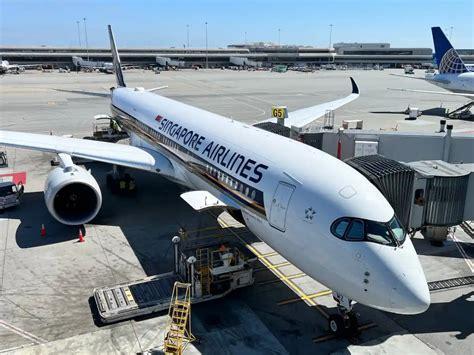
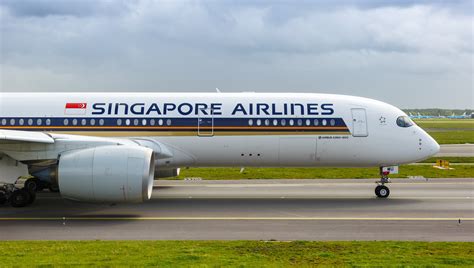
The 7,600-nautical-mile journey between Los Angeles and Singapore reflects a fascinating narrative of persistence and reinvention. Today’s nonstop service, operated by the Airbus A350-900, clocks in at around 16 hours and 20 minutes, but the route itself dates back decades.
In the 1980s, Singapore Airlines connected the two cities via Tokyo, using a Boeing 747. That routing wasn’t just a convenience—it was a necessity. Aircraft simply couldn’t fly the distance nonstop while remaining commercially viable.
Fast forward to today, and the nonstop version represents a triumph of engineering and market demand. It eliminates intermediate stops, shortens travel time, and offers a seamless experience between two major global cities. The route’s revival underscores how modern aircraft have unlocked previously impossible city pairs.
3. Auckland – New York (JFK): A Dual-Carrier Marathon
Spanning roughly 7,650 nautical miles, the Auckland–New York route is unique in this ranking. It is served by both Air New Zealand and Qantas, each leveraging the Boeing 787-9 to bridge one of the most remote city pairs on Earth.
Flight times vary significantly depending on direction, with the eastbound leg reaching up to 17 hours and 35 minutes. The sheer isolation of New Zealand makes this route especially significant—it provides a direct, uninterrupted link between the South Pacific and the U.S. East Coast.
Air New Zealand treats the route as a flagship nonstop service, while Qantas integrates it into a broader Sydney–Auckland–New York network. This dual approach highlights two different strategies: one focused on direct national connectivity, the other on multi-segment network optimization.
The route also hints at the future. Qantas’ Project Sunrise aims to eliminate the Auckland stop entirely, enabling nonstop flights from Australia’s east coast directly to New York. When that happens, even this already extraordinary journey may seem like a stepping stone.
2. Dallas/Fort Worth – Melbourne: Strategic Connectivity at Scale
At around 7,800 nautical miles, Qantas’ Dallas to Melbourne route pushes the boundaries of ultra-long-haul flying even further. Operated by the Boeing 787-9, it combines range, efficiency, and strategic positioning in a way few routes can match.
Flight durations can exceed 17 hours and 30 minutes, making it one of the longest operational sectors in the world. Yet its importance lies in connectivity. By linking Melbourne directly to Dallas, Qantas taps into a vast network of American Airlines connections, offering travelers seamless access to destinations across North America.
This route also diversifies Australia’s U.S. connectivity. Instead of relying solely on Sydney as the primary gateway, Melbourne gains its own direct link, redistributing passenger flows and strengthening the airline’s overall network resilience.

1. New York (JFK & Newark) – Singapore: The Pinnacle of Nonstop Flight
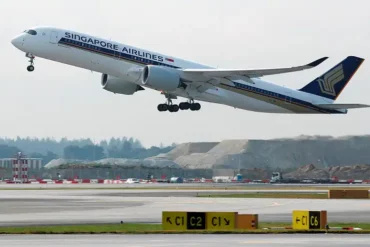
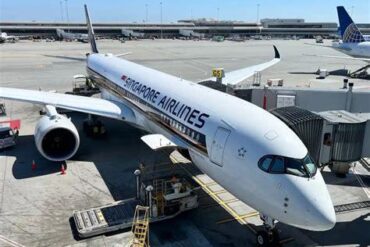
At the very top sits the undisputed champion: Singapore Airlines’ nonstop services from New York (JFK and Newark) to Singapore, covering approximately 8,250 nautical miles. With flight times approaching 18 hours and 45 minutes, these routes redefine the limits of commercial aviation.
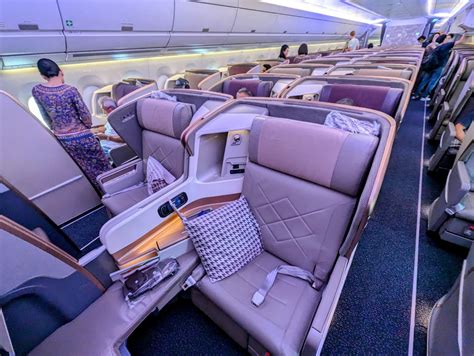
The aircraft behind this feat, the Airbus A350-900ULR (Ultra Long Range), is purpose-built for missions exactly like this. But what truly sets it apart is its configuration. Instead of maximizing passenger count, Singapore Airlines opted for a two-class layout with only Business Class and Premium Economy.
This decision reflects a clear economic reality: on flights this long, comfort becomes currency. Travelers are willing to pay more for space, privacy, and rest, and the airline has optimized every aspect of the cabin to meet those expectations.
Historically, Singapore Airlines has been here before. In 2004, it launched a nonstop Singapore–Newark route using the Airbus A340-500, then the longest flight in the world. That service was eventually discontinued, only to return stronger and more efficient with the A350ULR.
Today, these flights are not just long—they are icons of modern aviation, representing the culmination of decades of technological progress and strategic refinement.
What These Routes Reveal About the Future of Air Travel
The longest nonstop international flights from the United States are more than just endurance tests. They are a preview of where aviation is heading. Airlines are no longer constrained by traditional hub structures or aircraft limitations. Instead, they are crafting networks that prioritize directness, efficiency, and passenger experience.
Several patterns emerge clearly. First, aircraft specialization is becoming more pronounced, with models like the A350ULR tailored for extreme distances. Second, premium cabins dominate, reflecting the economics of ultra-long-haul travel. Third, strategic hubs like Dallas/Fort Worth are gaining importance, not because of geography alone, but because of connectivity.
Perhaps most importantly, these routes redefine what travelers expect. A journey that once required multiple stops can now be completed in a single flight—long, yes, but seamless.
And as aircraft technology continues to evolve, even these record-breaking routes may soon feel routine.