The Boeing 787 Dreamliner did not merely enter the aviation market—it redefined the economics and geography of long-haul travel. When the program was launched in 2004, backed by a landmark order from All Nippon Airways, the ambition was bold: enable airlines to operate ultra-long-haul routes efficiently with smaller aircraft, bypassing traditional hub-and-spoke constraints. Two decades later, that vision has matured into a network of flights stretching nearly halfway across the planet in a single journey.
Today, fueled by lightweight composite structures, advanced aerodynamics, and fuel-efficient engines, the 787 family has unlocked city pairs that were once commercially unviable. With global air travel projected to more than double by 2050, these ultra-long-haul routes are not outliers—they are a preview of aviation’s future.
What follows is a deep dive into the seven longest Boeing 787 Dreamliner routes in the world, ranked by distance and enriched with operational insight, strategic importance, and the subtle complexities that define flights lasting 17 to 18 hours.
7. San Francisco to Singapore – High-Capacity Transpacific Powerhouse
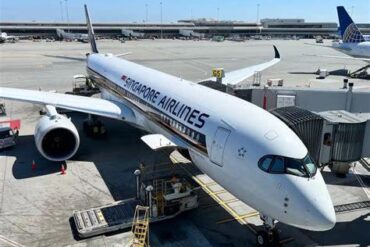
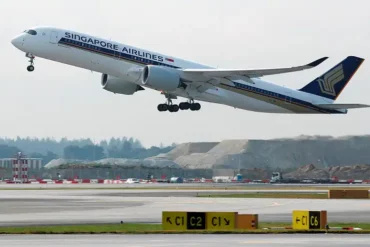
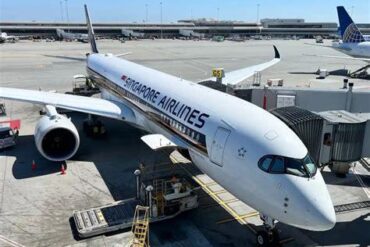
Spanning approximately 8,440 miles, the route between San Francisco and Singapore stands as a benchmark of high-density ultra-long-haul travel. Operated by Singapore Airlines using the Boeing 787-10, this service blends range with remarkable passenger capacity, a rare combination in this category.
Unlike many ultra-long-haul routes that prioritize exclusivity and premium demand, this corridor thrives on volume. With two daily departures in each direction, it delivers over 1.58 billion available seat miles annually, making it one of the most productive long-haul routes in the world despite ranking seventh in distance.
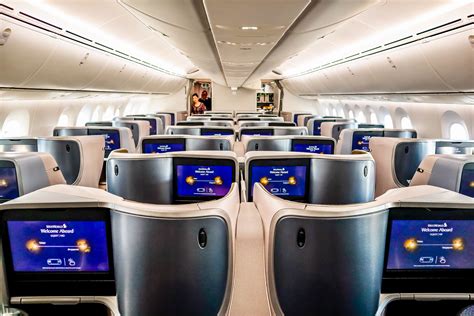
The secret lies in the aircraft configuration. The 787-10 variant used here accommodates over 330 passengers, including a substantial premium cabin. This enables airlines to maximize revenue across both business and leisure segments, connecting Silicon Valley’s innovation hub with Southeast Asia’s financial and logistics powerhouse.
6. Dallas/Fort Worth to Sydney – A Niche Ultra-Long-Haul Link
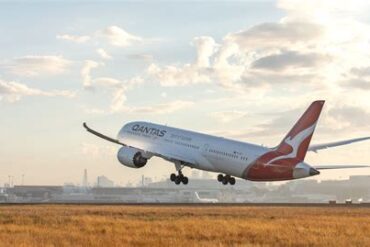
At 8,569 miles, the connection between Dallas/Fort Worth and Sydney is a study in operational precision rather than frequency. Operated by Qantas using the Boeing 787-9, this route runs just 19 times annually in each direction, underscoring its specialized role in the network.
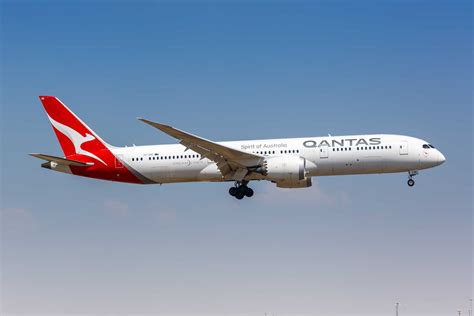
This is not a route designed for mass movement. Instead, it caters to premium travelers seeking direct connectivity between a major U.S. hub and Australia’s largest city. The limited frequency reflects the intense demands placed on aircraft utilization, crew scheduling, and maintenance cycles during flights that approach the upper limits of the 787-9’s range.
Despite its modest schedule, the route remains strategically significant. Dallas/Fort Worth serves as a critical hub, enabling seamless onward connections across North America, amplifying the value of this ultra-long-haul link.
5. Sydney to Houston – Strategic Gateway to North America
Stretching 8,587 miles, the Sydney–Houston route exemplifies how ultra-long-haul flights function as network connectors rather than standalone services. Operated with the Boeing 787-9, this flight bridges Australia with one of the most important aviation gateways in the southern United States.

With 154 annual flights in each direction, the route maintains a steady presence, offering nearly 340 million available seat miles per year. Yet its real strength lies in connectivity. Houston’s role as a major hub allows passengers to disperse efficiently across North America, transforming a single long-haul flight into a gateway to dozens of destinations.
This route demonstrates a key principle of Dreamliner operations: range alone is not enough—network integration determines success.
4. New York to Auckland – Chasing the Sun Across the Pacific
Few flights capture the imagination quite like the New York (JFK) to Auckland route. Covering 8,813 miles, this journey is among the longest continuous passenger flights in the world, often lasting around 18 hours.
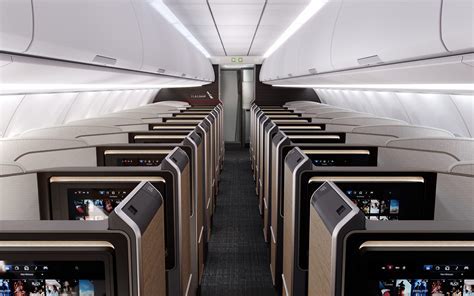
Operated by Air New Zealand, this route gained attention not just for its length but for its unique passenger experience. Travelers effectively chase daylight across time zones, creating an almost surreal sense of time distortion.
Launched in 2022 after pandemic-related delays, the route quickly became a flagship service. Early operational challenges—including payload restrictions due to strong headwinds—highlighted the delicate balance between fuel, cargo, and passenger weight on ultra-long-haul missions.
With over 360 annual flights, the service has matured into a reliable link between North America and New Zealand, proving that even the longest routes can achieve consistency with the right aircraft and planning.
3. Perth to Paris – Precision Engineering Meets European Demand
The Perth–Paris route, measuring 8,847 miles, showcases the Dreamliner’s ability to connect geographically isolated regions directly with major global capitals.
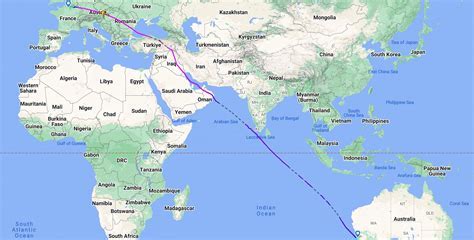
Operating with a balanced schedule of roughly 156–157 flights annually in each direction, this service highlights the subtle operational differences between outbound and inbound flights. Variations in wind patterns, time zones, and air traffic control constraints result in slight asymmetries in capacity and scheduling.
What makes this route particularly compelling is its role in linking Western Australia directly to continental Europe—a connection that once required multiple stops and significant travel time. Today, it is a seamless, non-stop journey enabled by the Dreamliner’s efficiency.
2. Melbourne to Dallas/Fort Worth – Battling the Jet Stream
At 8,973 miles, the Melbourne–Dallas/Fort Worth route is the second-longest Boeing 787 service in operation. Yet distance alone does not define its complexity. This route is heavily influenced by the jet stream dynamics over the Pacific Ocean, creating significant differences in flight duration depending on direction.
Flights traveling eastbound benefit from tailwinds, reducing journey times to approximately 15 hours and 45 minutes. Westbound flights, however, must contend with strong headwinds, extending durations beyond 17 hours.
This asymmetry demands meticulous planning. Airlines must account for fuel reserves, payload limitations, and crew duty times, all while maintaining schedule reliability. With around 193 annual flights in each direction, the route balances frequency with operational feasibility.
Notably, Qantas remains the sole operator, reinforcing its strategy of leveraging the Dreamliner to connect Australia directly with major U.S. hubs.
1. Perth to London Heathrow – The Ultimate Dreamliner Marathon
At the pinnacle lies the Perth to London Heathrow route, spanning an astonishing 8,988 miles. This is not just the longest Boeing 787 route—it is a symbol of aviation evolution.
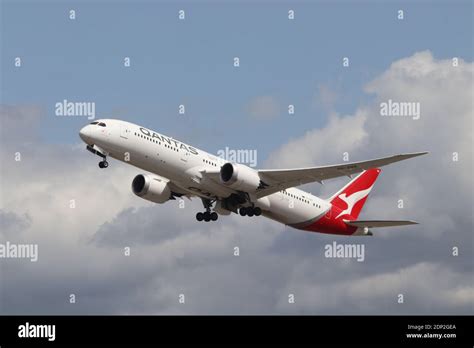
Historically known as part of the “Kangaroo Route,” travel between Australia and the United Kingdom once required multiple stops over several days. In 2018, Qantas transformed that journey into a non-stop 17-hour flight, rewriting the rules of long-haul travel.
Operating daily, this route offers over 700 million available seat miles annually, underscoring its importance despite the immense operational demands. Interestingly, flight times vary slightly by direction, with the eastbound leg benefiting from favorable winds.
Beyond the numbers, this route represents a psychological breakthrough. It demonstrates that distances once considered impractical are now routine, thanks to advances in aircraft design and airline strategy.
The Bigger Picture: Why These Routes Matter
These seven routes are more than engineering achievements—they are strategic tools shaping the future of global connectivity. The Boeing 787 enables airlines to:
- Bypass congested hubs, offering direct city-to-city travel
- Optimize capacity with right-sized aircraft
- Reduce operating costs while maintaining long-range capability
- Enhance passenger experience on ultra-long journeys
As demand for air travel continues to surge, the importance of such routes will only grow. Airlines are increasingly prioritizing efficiency, flexibility, and direct connectivity, all of which align perfectly with the Dreamliner’s design philosophy.
In a world where time is the ultimate currency, these ultra-long-haul flights are not just routes—they are competitive advantages, reshaping how people and economies connect across continents.
The Boeing 787 Dreamliner has proven that distance is no longer a barrier. It is merely a challenge waiting to be optimized.