Air traffic control remains one of the most demanding careers in aviation, but in 2026, it is also one of the industry’s most financially rewarding professions. Air traffic controller salaries can range from modest trainee wages to well above $200,000 for experienced professionals working at complex facilities. The difference between those figures is substantial, and it reflects how much certification, experience, facility complexity, location, and working hours influence compensation.
At first glance, the salary figures can make air traffic control look like a straightforward path to a six-figure career. The reality is more complicated. New controllers spend years moving through classroom instruction, simulation, on-the-job training, evaluations, and certification before reaching the compensation levels that attract the most attention. The training process is intentionally demanding because controllers make decisions that directly affect the safety and efficiency of the national airspace system.
For those who successfully complete the process, however, the financial rewards can become significant. Federal data puts the occupation’s median annual wage firmly in six-figure territory, while the Federal Aviation Administration has increased trainee compensation as it attempts to strengthen its hiring pipeline. In 2026, ATC pay is not simply a reward for seniority; it is increasingly an important tool for recruitment and retention.
What Does an Air Traffic Controller Do?
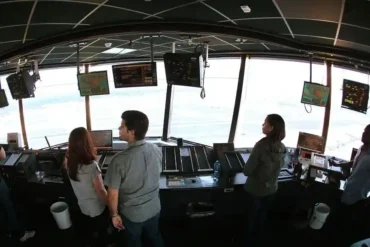
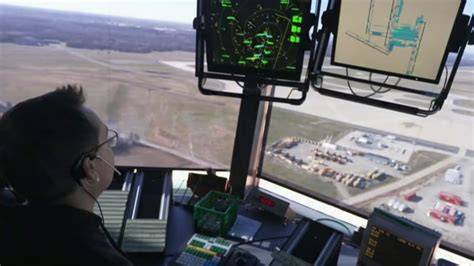
Air traffic controllers perform one of the most important safety functions in commercial aviation. Their responsibility extends far beyond watching aircraft on radar screens or communicating with pilots over radio frequencies. Depending on their assignment, controllers may manage aircraft movements on airport surfaces, coordinate departures and arrivals, sequence traffic around airports, or control aircraft traveling across large sections of the national airspace.
The work requires continuous concentration and an unusually strong ability to process information. Controllers must understand aircraft positions, altitudes, headings, speeds, weather conditions, runway availability, traffic volume, and potential conflicts, often simultaneously. When an aircraft encounters an emergency, weather changes suddenly, or a runway becomes unavailable, controllers must adapt immediately while maintaining precise communication with pilots and neighboring facilities.
This is why the profession carries a level of responsibility that few other civilian occupations can match. A controller’s decisions can affect hundreds of passengers at once, and mistakes can have serious consequences. The compensation structure therefore reflects not only education or years of service, but also the mental intensity, certification requirements, operational responsibility, and irregular schedules associated with the profession.
How Much Do Air Traffic Controllers Make in 2026?
The most useful way to understand air traffic controller salaries in 2026 is to look at the career as a progression rather than focus on a single headline figure. Trainees earn considerably less than certified controllers, while experienced professionals at high-level facilities can earn considerably more than the occupation’s median.
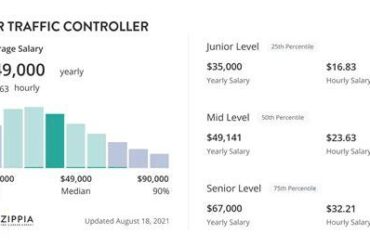
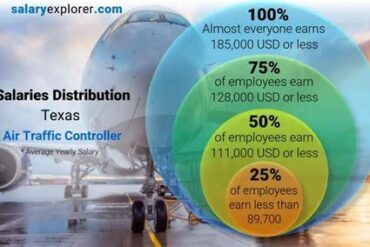
Federal labor data reported a median annual wage of $144,580 for air traffic controllers in May 2024. At the upper end of the distribution, the highest-paid 10% earned more than $210,410 annually. These figures provide an important benchmark, but they should not be interpreted as a guaranteed salary for every controller.
The FAA has also stated that, within three years of graduating from the academy, the average certified professional controller earns more than $160,000 per year. That figure demonstrates how rapidly compensation can increase after successful completion of training and certification.
A controller’s actual earnings can vary considerably because federal compensation incorporates factors such as locality pay and facility level. A controller working in a particularly busy metropolitan area may therefore earn more than someone performing a comparable role in a lower-cost region. Overtime and premium pay can further increase annual earnings.
Entry-Level Air Traffic Controller Salary
The path to a six-figure salary does not begin with a six-figure paycheck. Entry-level ATC trainees earn substantially less, particularly during their initial academy training.
The FAA’s current hiring pipeline indicates that academy trainees can begin at approximately $22.61 per hour during the initial training stage. Earlier trainee compensation had been closer to $30 per hour, making the precise entry rate an important consideration for applicants evaluating the career.
A current FAA entry-level announcement can also place the junior annual salary at approximately $47,026 before additional locality pay. The final amount can therefore vary depending on where the employee is assigned.
These numbers may seem surprisingly low compared with the $160,000-plus compensation associated with certified controllers. That difference is intentional. New employees are still learning fundamental procedures and have not yet assumed the complete responsibilities of certified professionals.
Once trainees successfully graduate from the academy, their compensation begins progressing as they move through facility-specific training. Each completed phase represents greater knowledge and operational responsibility, creating a pathway toward significantly higher earnings.
How FAA Air Traffic Control Training Works
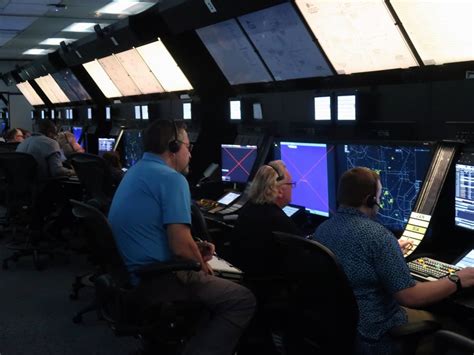
Becoming an air traffic controller requires considerably more than passing an initial hiring examination. The FAA training pipeline can take several years, and successful academy completion does not immediately result in full professional certification.
The process begins with foundational instruction covering essential aviation and air traffic concepts. Entry-level candidates take a 19-day virtual course that introduces the fundamentals before they progress to more specialized training. The course concludes with an examination, and candidates who do not successfully complete this stage cannot continue through the pipeline.
Trainees then move into option-specific instruction at the FAA Academy in Oklahoma City, where classroom lessons are combined with sophisticated simulations. Depending on their eventual assignment, trainees may prepare for tower operations, terminal radar approach control, or en route air traffic control.
Academy graduates are then assigned to facilities around the United States. This is where the transition from simulated environments to real operational traffic becomes particularly demanding. Developmental controllers receive additional classroom instruction, practice live positions, and undergo detailed evaluations from experienced personnel.
The field-training phase can take one to three years before a trainee achieves Certified Professional Controller status. Even then, training does not end. Controllers must continue completing recurrent training and maintaining proficiency throughout their careers.
Why Senior Controllers Earn Six Figures
The major jump in compensation occurs when controllers become fully certified and begin working independently in operational positions. At this point, salary reflects far more than simple employment tenure.
Certified Professional Controllers have demonstrated that they can safely manage live traffic under operational conditions. Their responsibilities can include handling dense traffic flows, coordinating with other control positions, responding to emergencies, and maintaining separation standards under rapidly changing circumstances.
Facility complexity is especially important. A controller working at a major airport or high-volume en route center may face substantially greater traffic demands than someone assigned to a smaller facility. The federal pay system recognizes these differences through facility-level compensation structures.
Schedules also contribute to earnings. Air traffic control is a 24-hour profession, and major facilities require coverage throughout nights, weekends, and holidays. Controllers may work rotating schedules, and overtime can become an important component of total annual compensation.
This means two controllers with similar professional experience can potentially receive very different annual incomes. Their facility, locality, schedule, overtime, and responsibilities can all influence the final number.
The Highest Air Traffic Controller Salaries in 2026
At the upper end of the profession, annual compensation can approach or exceed the $200,000 mark. The FAA’s 2026 pay structure establishes a legal compensation ceiling of $228,000 including locality pay for controller positions covered by the applicable system.
A current FAA management coordinator posting in Ronkonkoma, New York, illustrates how high compensation can become at the top end. The advertised salary range runs from approximately $181,423 to $228,000, including locality.
These positions demonstrate why published average salaries can sometimes understate the earning potential of experienced controllers. The highest compensation is concentrated among professionals working in demanding environments or advanced positions where the combination of certification, facility complexity, management responsibility, and locality produces substantial pay.
Nevertheless, reaching the upper end is not automatic. Controllers must successfully complete the training pipeline, maintain certification, and often build substantial operational experience before becoming eligible for the most demanding assignments.
Location Can Change ATC Compensation
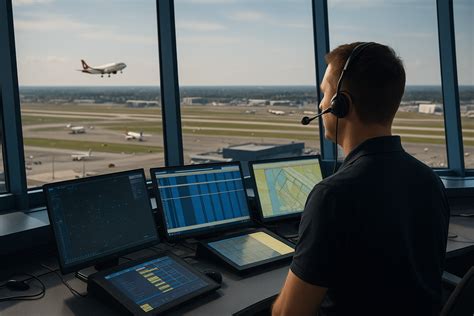
Geography plays an important role in federal compensation because locality pay adjusts salaries according to regional labor-market conditions. A controller working in an expensive metropolitan area can therefore receive more than a colleague in another part of the country.
This is particularly relevant when examining headline salary figures. A published base rate does not necessarily represent the final paycheck. Locality adjustments can materially increase compensation, while overtime and other forms of premium pay can push total annual earnings even higher.
Large metropolitan areas also tend to contain some of the most operationally demanding facilities. Airports and airspace surrounding major population centers can experience enormous traffic volumes, requiring controllers to manage complex sequences of arrivals and departures while coordinating with numerous other facilities.
As a result, where a controller works can matter almost as much as how long they have worked. Salary analysis that ignores locality and facility assignment therefore provides only a partial picture of the profession.
Why Controller Salaries Matter During the Staffing Shortage
The strong compensation available to experienced controllers becomes even more significant when viewed against the FAA’s continuing staffing challenges. The agency had approximately 14,500 certified controllers at the end of fiscal year 2025, compared with 14,264 at the end of 2024.
The numbers show progress, but they also underline the scale of the workforce challenge. The FAA’s 2025–2028 workforce plan calls for approximately 2,200 controller hires in fiscal year 2026 and 8,900 hires through 2028.
The agency has also sought funding to train as many as 2,500 new controllers in 2026. Increasing trainee compensation and maintaining strong salaries for certified professionals are therefore not merely benefits designed to make the occupation attractive. They are part of a broader strategy to strengthen the aviation workforce.
The problem is that money cannot instantly produce certified controllers. The training pipeline itself takes years, and capacity can be constrained by instructor shortages, academy limitations, and high failure rates. A larger applicant pool is useful, but applicants still have to successfully progress through every stage of training.
Is Air Traffic Control a High-Paying Career?
For candidates who can successfully navigate the training process, air traffic control can be an exceptionally well-paid federal career. The occupation offers a relatively unusual combination of paid training, strong long-term compensation, federal employment benefits, and the potential to exceed $200,000 at the upper end.
However, the salary comes with considerable demands. Candidates face strict eligibility requirements, medical and background screening, testing, extensive training, and a high-pressure operational environment. Controllers also have to accept schedules that can include nights, weekends, and holidays.
The profession therefore should not be evaluated solely by its median salary. The more meaningful question is whether the candidate is suited to the responsibilities that accompany that compensation.
For someone who enjoys structured procedures, rapid decision-making, aviation, and high levels of responsibility, the financial rewards can be compelling. For someone seeking predictable hours and a low-pressure workplace, the salary may not compensate for the demands of the job.
The Bottom Line on Air Traffic Controller Salaries in 2026
Air traffic controller salaries in 2026 span a remarkably wide range, beginning with trainee compensation in the tens of thousands of dollars and potentially rising beyond $200,000 for experienced professionals in demanding positions.
The most important transition occurs between trainee and certified controller. Early pay reflects the fact that employees are still learning, while later compensation reflects the expertise required to independently manage live aircraft movements and increasingly complex traffic environments.
The FAA’s reported average of more than $160,000 for certified professional controllers within three years of academy graduation shows just how quickly earnings can accelerate after successful training. Meanwhile, federal labor data places the occupation’s median wage at $144,580, with the highest-paid 10% exceeding $210,410.
Ultimately, these numbers explain why air traffic control continues to attract attention as one of aviation’s strongest-paying careers. Yet they also reveal something more important: high ATC salaries are closely tied to the difficulty of producing qualified controllers. The profession demands years of training, exceptional concentration, continuous proficiency, and a willingness to work when most people are asleep.
In 2026, compensation is consequently doing more than rewarding controllers for a difficult job. It is helping the FAA compete for the people needed to keep America’s increasingly busy airspace moving safely. The challenge ahead will be turning that financial incentive into a large enough pipeline of trained, certified professionals to close the staffing gap.