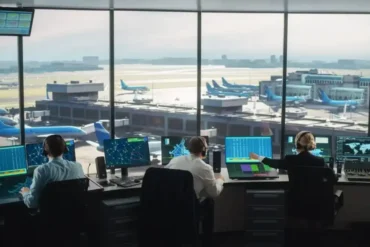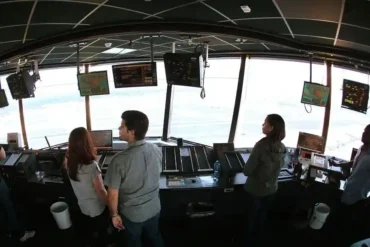
The modern aviation industry depends on one profession that rarely appears in glamorous airline advertisements yet carries the burden of global air travel every minute of the day: air traffic control. In 2026, the financial rewards for air traffic controllers have climbed to historic levels as governments and aviation authorities scramble to solve a worsening staffing crisis that is disrupting airports worldwide. At the busiest facilities on Earth, veteran controllers are now earning compensation packages that rival top engineering, finance, and legal careers, despite never stepping into the spotlight.
Behind every smooth landing at New York JFK, London Heathrow, Dubai International, or Atlanta Hartsfield-Jackson stands a controller making split-second decisions under relentless pressure. These professionals manage thousands of lives daily while coordinating increasingly crowded skies filled with commercial jets, cargo flights, military traffic, private aircraft, and weather diversions. Their salaries have surged not simply because of inflation, but because aviation authorities are running out of qualified people willing to tolerate the mental strain and brutal schedules required to keep airspace functioning safely.
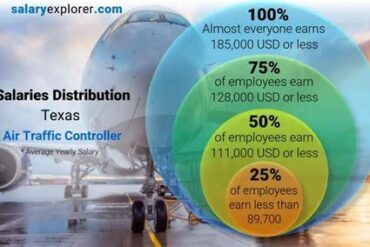
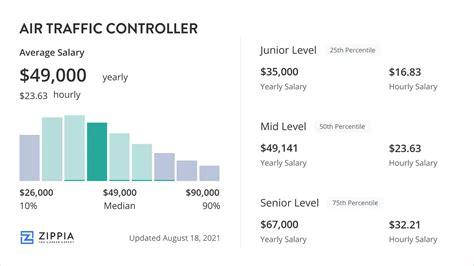
The numbers in 2026 reveal just how valuable experienced controllers have become. At the most complex facilities in the United States, senior controllers routinely earn well above $180,000 annually before overtime premiums are added. In countries facing severe staffing shortages, compensation packages have become even more aggressive, with retention bonuses, tax advantages, and overtime pay pushing total earnings to extraordinary levels.
The result is a profession that now sits among the highest-paid transportation careers in the world while simultaneously becoming one of the most exhausting.
Why Air Traffic Controllers Are Suddenly Earning More Than Ever
The explosive growth in controller salaries is directly tied to a global staffing emergency that aviation experts warn could last for the rest of the decade. Airlines expanded rapidly after the pandemic-era slowdown, but training pipelines for air traffic control never recovered at the same pace. Becoming fully certified at a major airport can take years of intense instruction, simulator work, and on-the-job qualification testing. Many trainees fail before reaching operational certification, leaving critical facilities dangerously understaffed.
In the United States alone, the Federal Aviation Administration entered 2026 short by roughly 3,500 controllers compared to operational targets. Similar shortages are affecting Europe, Australia, and parts of the Middle East. The consequences are visible daily through flight delays, congestion, mandatory overtime, and reduced scheduling flexibility for existing personnel.
Aviation authorities responded with the one tool capable of slowing the crisis immediately: money.
The FAA introduced targeted raises specifically for controllers rather than relying on standard federal pay adjustments. Retirement-eligible controllers began receiving offers equivalent to 20% of their base salary simply to remain employed another year. Academy trainee salaries were increased dramatically to attract younger candidates who previously avoided the profession because of the long training timeline and relatively modest starting pay.
What makes the situation remarkable is that controllers are no longer being compensated purely for technical expertise. They are increasingly being paid endurance wages — salaries designed to offset chronic fatigue, overnight schedules, and mandatory six-day workweeks.
How FAA Pay Works at America’s Busiest Airports
Air traffic control facilities in the United States are ranked on a complexity scale from Level 4 to Level 12. The higher the level, the more complicated the airspace and operational workload. Level 12 facilities represent the absolute peak of operational difficulty and naturally offer the highest pay bands.
Controllers working Level 12 operations handle immense traffic volumes, intersecting runways, severe weather reroutes, international arrivals, military coordination, and congested terminal airspace. Every instruction issued must be precise, immediate, and legally compliant. There is virtually no margin for error.
The FAA’s statutory compensation cap for controllers in 2026 stands at approximately $228,000 annually, including locality adjustments and overtime earnings. Many veteran controllers at top-tier facilities approach that limit regularly.
New York TRACON remains the highest-paying operational facility in the country. Controllers responsible for sequencing arrivals and departures into JFK, LaGuardia, and Newark routinely earn base salaries between $145,000 and $185,000 before overtime additions. The workload at this facility is legendary within aviation circles because it combines dense airline traffic with some of the most restrictive and weather-sensitive airspace in North America.
Southern California controllers managing Los Angeles International and surrounding airports are close behind, with many experienced personnel earning between $140,000 and $175,000 in base compensation. Chicago O’Hare controllers also rank among the nation’s highest earners due to the airport’s nonstop operational complexity and frequent weather disruptions.
Meanwhile, Atlanta controllers overseeing the world’s busiest airport continue earning substantial salaries despite slightly lower base ranges than New York or Los Angeles. The sheer movement volume at Atlanta requires controllers to maintain intense concentration for entire shifts while coordinating constant arrivals and departures with minimal spacing.
The Real Money Comes From Overtime and Premium Pay
Base salary figures alone dramatically underestimate what many controllers actually take home at the end of the year. Premium pay structures are where compensation escalates rapidly.
Air traffic control is a nonstop operation. Airports never truly sleep, which means controllers rotate through overnight shifts, weekends, federal holidays, and extended schedules that few professions could tolerate long term. Federal rules require premium pay for these difficult schedules, and the additional compensation accumulates quickly.
Night shifts typically include a differential bonus for hours worked between evening and early morning periods. Sunday shifts carry an additional premium. Holiday work is compensated at even higher rates. Once overtime begins, controllers frequently earn time-and-a-half pay rates that push annual income sharply upward.
Because staffing shortages remain severe, mandatory overtime has become standard practice at many major facilities. Controllers often work six-day schedules for extended periods simply to maintain operational coverage. Mid-career personnel who volunteer for additional shifts can hit the federal compensation ceiling long before reaching peak seniority.
This overtime structure explains why some FAA controllers now earn compensation packages comparable to senior airline captains despite never leaving the ground.
The paradox, however, is that these enormous earnings often come at a substantial personal cost.
The Psychological Toll Behind the Massive Salaries
Few professions require sustained concentration at the level demanded in air traffic control. A single lapse in attention can create catastrophic consequences within seconds. Controllers constantly track altitude separation, aircraft speed, fuel emergencies, weather systems, runway occupancy, restricted airspace, and pilot compliance simultaneously.
At major airports, traffic density leaves almost no room for mental fatigue.
Controllers frequently rotate between morning shifts, overnight shifts, and evening schedules within the same week. Sleep disruption becomes unavoidable. Research into aviation fatigue has repeatedly linked irregular schedules to cognitive impairment, stress disorders, and long-term health complications.
The profession’s financial rewards increasingly reflect these realities.
Many experienced controllers privately admit that the six-figure salaries compensate not only for technical expertise but for sacrificing weekends, holidays, family routines, and normal sleep patterns throughout their careers. Burnout rates remain high, particularly at Level 12 facilities where staffing shortages force continuous overtime assignments.
Ironically, the FAA’s compensation cap sometimes worsens operational problems. Once senior controllers reach the annual earnings ceiling, additional overtime hours can become uncompensated under federal rules. Managers occasionally remove their most experienced personnel from schedules late in the year because legally they can no longer receive additional pay.
That situation creates the bizarre reality where some of America’s busiest air traffic facilities become even more understaffed precisely because their veteran controllers worked too much earlier in the year.
International Air Traffic Controller Salaries in 2026
While the United States offers some of the highest earning potential, international competitors are becoming increasingly attractive because of superior work-life balance and tax structures.
Switzerland currently leads Europe in controller compensation. Controllers employed by Skyguide can earn compensation equivalent to roughly $268,000 USD annually. Although Switzerland carries a high cost of living, lower tax burdens and generous vacation policies significantly improve overall quality of life compared to heavily overtime-dependent FAA facilities.
In the United Kingdom, NATS controllers received salary increases tied to inflation adjustments and staffing retention programs. Senior personnel working London-area traffic continue earning among the highest aviation salaries in Europe, particularly at Swanwick and Heathrow operations.
Germany’s DFS controllers also remain highly compensated, especially at facilities managing Frankfurt’s immense international traffic volumes. German controllers benefit from stronger labor protections and more stable scheduling systems than many of their American counterparts.
Australia has aggressively increased wages through enterprise agreements covering the 2024–2027 period. Controllers there continue attracting global attention because their compensation packages combine competitive pay with comparatively sustainable scheduling.
The Middle East has emerged as perhaps the most financially competitive region for expatriate controllers. Dubai International Airport controllers often receive housing allowances, educational support, and tax-free salaries that dramatically increase effective take-home income. For many international recruits, the absence of income tax in the UAE transforms a nominally lower base salary into a stronger financial package than some FAA positions.
Why Controller Salaries Will Likely Keep Rising
The economics of air traffic control are being reshaped by demographics and training limitations. Large numbers of veteran controllers are nearing retirement age at the exact moment aviation demand continues rising worldwide. Replacing those personnel is extraordinarily difficult because the qualification process is so demanding.
Unlike many professions where staffing shortages can be solved quickly through recruitment drives, air traffic control has a hard bottleneck: training time.
A trainee cannot simply walk into a Level 12 facility after a few months of instruction. Major airports require years of practical development before a controller can safely handle high-density traffic independently. Even then, some trainees never fully certify.
This reality means governments have little choice but to continue raising salaries to retain experienced controllers while simultaneously attracting younger recruits into the pipeline.
Airlines are also indirectly contributing to upward wage pressure. Every delay caused by staffing shortages costs carriers money through crew displacement, fuel burn, gate conflicts, and passenger compensation claims. Political pressure intensifies whenever delays spiral during peak travel seasons, pushing governments toward even more aggressive retention strategies.
The result is a profession that has become financially indispensable to the global economy.
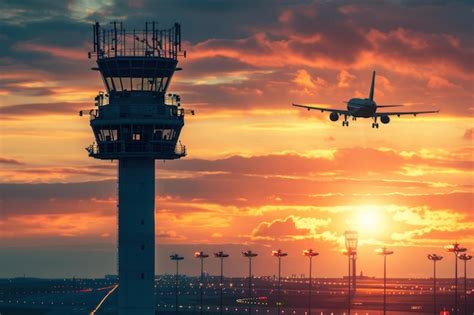
Is Air Traffic Control Still Worth It in 2026?
Financially, few careers offer the same earning potential without requiring medical school, corporate law credentials, or advanced engineering degrees. Experienced controllers at elite facilities can realistically approach or exceed $200,000 annually while maintaining strong pension systems and long-term job stability.
Yet the profession’s extraordinary compensation exists because the demands are equally extraordinary.
Controllers must maintain flawless decision-making while operating under constant fatigue, public scrutiny, and staffing shortages. Every shift involves enormous responsibility. Every mistake carries life-or-death consequences. Even highly experienced personnel eventually feel the cumulative effects of years spent rotating through overnight schedules and mandatory overtime cycles.
For younger candidates entering the field in 2026, the profession remains appealing because the financial barriers to entry have fallen significantly. Higher academy pay and stronger retention incentives make the career more accessible than it was only a few years ago.
Still, the industry faces a defining challenge. Aviation authorities can continue raising salaries indefinitely, but money alone cannot fully solve burnout, fatigue, and staffing instability. Until enough new controllers complete training to stabilize scheduling systems, the profession will remain one of the highest-paid yet most psychologically demanding careers in transportation.
That uncomfortable balance explains why air traffic controllers at the world’s busiest airports now earn such astonishing salaries. The aviation industry is no longer simply paying for skill. It is paying for endurance, sacrifice, and the ability to safely manage the relentless complexity of global air travel every single day.