Air traffic control remains one of the most intellectually demanding and operationally critical professions in global aviation, and in 2026, its compensation structure reflects that reality with striking clarity. Beneath the headline figures—often quoted in six-figure ranges—lies a layered and performance-driven pay system that evolves significantly over time. Controllers are not simply paid for tenure; they are compensated for precision, responsibility, complexity, and the ability to perform under relentless pressure.
The financial trajectory of an air traffic controller is less of a straight line and more of a steep ascent. Starting from relatively modest trainee wages, individuals who successfully navigate the rigorous training pipeline can see their income multiply within just a few years. This dynamic progression is one of the defining characteristics of the profession, distinguishing it from many other government roles that rely heavily on incremental pay increases.
By 2026, the conversation around salaries has expanded beyond individual earnings and into broader workforce strategy. Governments, particularly in the United States, are leveraging competitive pay structures not just to reward skill, but to address persistent staffing shortages that threaten operational efficiency across national airspace systems.
Understanding the High-Stakes Nature of Air Traffic Control
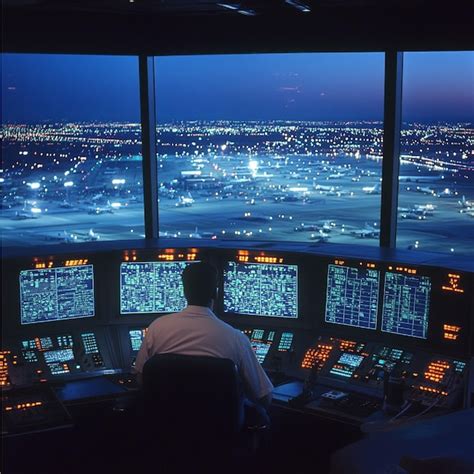
To fully grasp why salaries in this field are so substantial, it is essential to understand the environment in which controllers operate. Every instruction issued from a control tower or radar room has immediate consequences. Controllers are responsible for maintaining safe separation between aircraft, coordinating arrivals and departures, and adapting instantly to weather disruptions or emergencies.
This is not a profession where decisions can be delayed or revisited. The work demands continuous concentration, rapid cognitive processing, and absolute procedural accuracy. Unlike physically intensive jobs, the strain here is mental—sustained over long shifts that often include nights, weekends, and public holidays.
Despite structured work-hour regulations, including mandatory rest periods, the reality is that many controllers experience irregular schedules. The compensation model accounts for this through overtime pay, night differentials, and holiday premiums, all of which can significantly elevate annual earnings beyond base salary figures.
The Entry Pipeline: Where Salaries Begin
The journey into air traffic control starts with a surprisingly modest paycheck relative to the profession’s reputation. In 2026, trainees entering the FAA Academy earn approximately $22.61 per hour, a figure intentionally adjusted to balance accessibility with budget constraints.
At first glance, this may seem underwhelming for such a high-responsibility career path. However, this initial stage is better understood as a paid evaluation period rather than a long-term earning baseline. Candidates undergo intensive screening, including academic instruction and simulation-based assessments, where failure to meet standards results in immediate removal from the program.
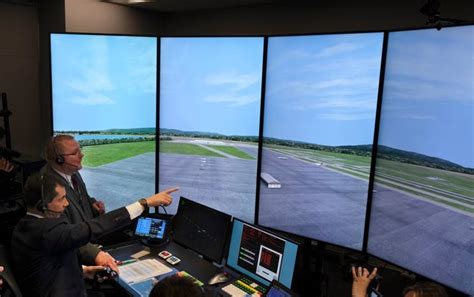
After completing the foundational phase, trainees transition into more specialized instruction tracks—tower, TRACON (Terminal Radar Approach Control), or enroute centers. During this time, they receive additional financial support, including housing stipends and per diem allowances, which partially offset the lower hourly wage.
From Trainee to Certified Professional: A Rapid Salary Climb
Once trainees graduate from the Academy and are assigned to operational facilities, their financial trajectory changes dramatically. They enter the role of developmental controllers, where pay increases are tied directly to training milestones and performance evaluations.
This phase typically lasts between one and three years, during which individuals progressively take on more complex responsibilities. Each certification step unlocks higher pay bands, creating a system where competence and experience are immediately rewarded rather than delayed.
It is during this period that salaries begin to approach—and often exceed—six figures. The transformation is striking: an individual who started at an entry-level wage can, within a relatively short timeframe, earn more than double or even triple their initial income.
Certified Controllers: Where Six Figures Become Standard
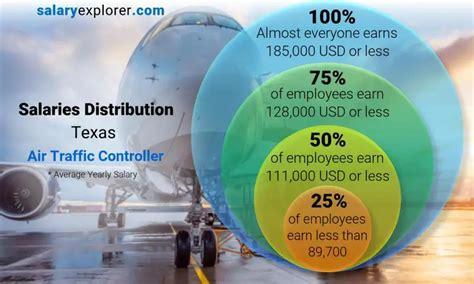
By the time a controller achieves Certified Professional Controller (CPC) status, the financial rewards become unmistakably substantial. In 2026, the average certified controller earns over $160,000 annually, a figure that reflects not just experience, but the complexity of the airspace they manage.
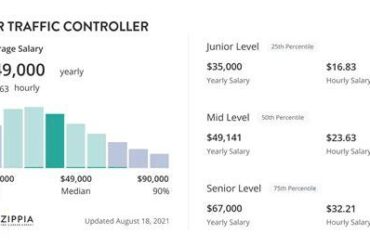
Federal labor data reinforces this trend, with median salaries hovering around $144,580, and the top 10% surpassing $210,000 per year. These numbers place air traffic controllers among the highest-paid public-sector professionals.
However, these figures are not uniform across the board. Compensation varies significantly depending on several factors:
- Facility level: Larger, busier airports and enroute centers offer higher pay due to increased complexity.
- Geographic location: Locality adjustments account for cost-of-living differences.
- Work schedule: Night shifts, overtime, and holiday work can dramatically increase total earnings.
This variability ensures that the pay structure remains aligned with both operational demands and individual contributions.
Top-Tier Earnings and Management Roles
At the upper end of the pay scale, air traffic controllers can achieve compensation levels that rival senior executives in other industries. Specialized roles, such as Air Traffic Control Management Coordinators, can command salaries ranging from $181,000 to $228,000, which is the قانونی cap for federal ATC pay in 2026.
These positions often involve overseeing complex traffic flows, coordinating between multiple facilities, and managing high-density airspace regions. The responsibilities extend beyond direct control duties into strategic decision-making, making them both highly demanding and exceptionally well-compensated.
It is worth noting that reaching this level requires not only years of experience but also a consistent record of operational excellence and leadership capability.
Why Air Traffic Controllers Are Paid So Well
The compensation structure is not arbitrary; it is a calculated response to the unique demands of the job. Several key factors justify the high salaries:
- Safety-critical responsibilities: Controllers directly impact the safety of thousands of passengers daily.
- High training costs: The investment required to train a single controller is substantial.
- Limited talent pool: Strict eligibility criteria reduce the number of qualified candidates.
- Operational stress: The mental demands and irregular schedules require significant resilience.
In essence, the pay reflects a simple equation: high stakes demand high rewards. Without competitive salaries, attracting and retaining talent in such a demanding field would be nearly impossible.

The Role of Salaries in Addressing Workforce Shortages
By 2026, the aviation industry is grappling with a persistent shortage of qualified air traffic controllers. This is not merely a staffing inconvenience—it is a systemic challenge that affects flight delays, route efficiency, and overall airspace capacity.
The FAA has responded with an ambitious hiring strategy, aiming to bring in thousands of new controllers over the next several years. Salary adjustments, particularly at the entry level, are a central component of this effort.
Higher trainee pay and strong long-term earning potential serve as powerful incentives, but they are only part of the solution. The bottleneck lies in the length and difficulty of the training process, which can take years to complete and has a relatively high attrition rate.
As a result, salaries function as both a recruitment tool and a retention mechanism, helping to stabilize a workforce that is essential to the functioning of modern aviation.
The Hidden Complexity Behind “Average Salary” Figures
Quoting a single average salary for air traffic controllers can be misleading. The profession’s pay structure is deeply nuanced, shaped by a combination of experience, certification level, facility assignment, and workload intensity.
For example, two controllers with similar years of experience may earn vastly different salaries if one works at a major international hub while the other is stationed at a smaller regional airport. Similarly, overtime opportunities can significantly skew annual earnings, making total compensation highly individualized.
This complexity is precisely what makes the profession so financially compelling. Rather than being capped by rigid pay scales, controllers have the opportunity to actively influence their income through performance and assignment choices.
Work-Life Balance and Financial Trade-Offs
While the financial rewards are substantial, they come with trade-offs that should not be overlooked. The demanding nature of the job often translates into irregular schedules, high stress levels, and limited flexibility.
Controllers frequently work rotating shifts that disrupt traditional sleep patterns, and the need for constant vigilance can lead to mental fatigue. The compensation, therefore, can be seen as both a reward and a form of compensation for lifestyle challenges.
For many professionals, the equation balances out: the combination of high pay, job stability, and a clear career progression outweighs the drawbacks. But it is not a role suited to everyone, and the rigorous selection process ensures that only those capable of handling the demands make it through.
A Career Defined by Responsibility and Reward
Air traffic control in 2026 stands as a powerful example of how compensation can be aligned with responsibility. It is a profession where every decision matters, every second counts, and every paycheck reflects the weight of that responsibility.
From modest beginnings as a trainee to the upper echelons of six-figure earnings, the career path offers a rare combination of financial growth, professional prestige, and operational significance. Yet, it demands unwavering focus, resilience, and a willingness to embrace a high-pressure environment.
The broader industry context only reinforces its importance. As global air travel continues to expand, the need for skilled controllers will remain critical. Salaries will likely continue to evolve, shaped by market forces, technological advancements, and the ongoing challenge of maintaining a robust workforce.
In the end, the numbers tell a compelling story—but they only capture part of the picture. Behind every salary figure is a professional managing the invisible highways of the sky, ensuring that millions of travelers reach their destinations safely every single day.