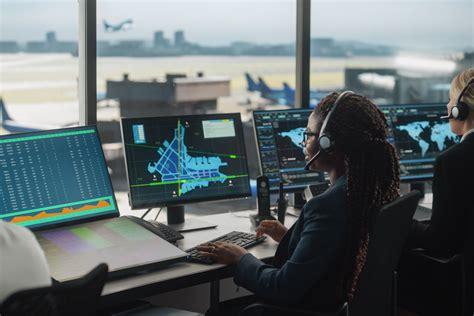
The United States is confronting a structural talent crisis in one of the most safety-critical professions in modern society: air traffic control. We now face a nationwide shortfall of thousands of certified air traffic controllers, and the consequences ripple far beyond delayed flights or crowded terminals. This shortage directly affects national safety, economic efficiency, and the reliability of the entire aviation ecosystem. The recent federal government shutdown exposed just how fragile this system has become, forcing highly trained professionals to work without pay and accelerating retirements across the workforce. For an occupation that demands perfect concentration, rapid decision-making, and emotional resilience, uncertainty over basic compensation is not merely inconvenient—it is corrosive to long-term recruitment and retention.
We see a profession that once symbolized stable federal service now competing in a labor market where younger workers prioritize financial predictability and career stability. When controllers were required to work through a prolonged shutdown without pay, the message absorbed by potential recruits was unmistakable: even critical national safety roles are not immune to political stalemate. Many experienced professionals chose retirement rather than continued exposure to institutional instability, and the pipeline of new entrants narrowed just as demand intensified.
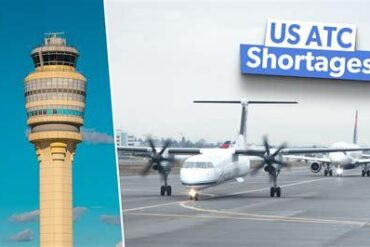
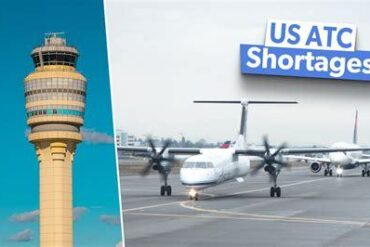
The Federal Aviation Administration now operates below its own staffing targets, with roughly 11,700 certified and trainee controllers nationwide and a deficit of approximately 4,000 compared to ideal operational levels. Over the coming years, the agency expects to hire nearly 9,000 new controllers while almost 7,000 approach retirement or attrition. We are witnessing a race against time, where the scale of departures threatens to outpace recruitment, even as air travel demand continues to rise.
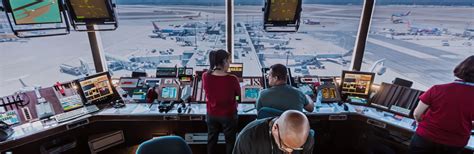
Why the U.S. Air Traffic Controller Shortage Has Become a National Risk
We must understand that air traffic control is not a job that can be rapidly scaled or improvised. Each controller represents years of training, screening, and supervised practice. Unlike many professions, there is no shortcut through experience curves or learning on the job without strict oversight. Every departure from the profession creates a gap that cannot be instantly replaced, especially in busier airspaces where only the most seasoned professionals are qualified to work.
This shortage creates operational stress throughout the aviation system. Flight delays become more frequent when staffing levels drop, not because controllers are slower, but because safety margins must be widened. Traffic flows are deliberately spaced further apart, ground holds become more common, and airport capacity effectively shrinks. What appears to passengers as “congestion” is often an invisible safety buffer created by an overstretched workforce.
At the institutional level, we observe the Department of Transportation and the FAA attempting to stabilize the pipeline through salary adjustments and hiring reforms. These efforts are not cosmetic. They represent recognition that air traffic control has shifted from a stable career channel into a strategic national workforce priority. The goal is not merely to fill vacancies but to preserve the integrity of the world’s safest airspace in an era of increasing air travel complexity.
Core Qualifications Required to Become an Air Traffic Controller
The barrier to entry is intentionally high. We are not recruiting generalists; we are selecting individuals whose cognitive performance under pressure exceeds ordinary professional standards. Eligibility to apply begins with U.S. citizenship and an age limit of under 31 at the time of application, a restriction designed to maximize the years of service after the lengthy training investment.
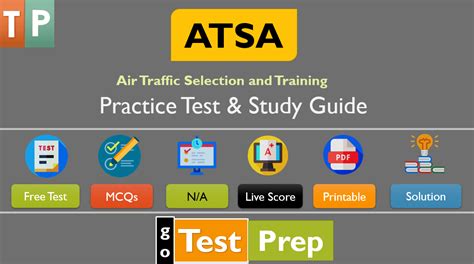
Applicants must demonstrate either progressive work experience, a bachelor’s degree, or a hybrid combination of post-secondary education and professional experience. Beyond baseline credentials, candidates must pass the FAA’s Air Traffic Controller Specialists Skills Assessment Battery, widely referred to as ATSA. This is not a knowledge exam. It is a psychometric evaluation that measures spatial awareness, prioritization speed, multitasking ability, and decision-making under simulated time pressure.
Crucially, this exam cannot be meaningfully “studied for” in a traditional sense. It is designed to surface innate cognitive suitability rather than rehearsed knowledge. Candidates who pass are notified quickly, but the victory is provisional. Comprehensive medical and background screenings follow, with disqualifiers that include specific visual correction methods and cardiovascular irregularities. Fewer than 10 percent of applicants advance far enough to enter formal training, reflecting the profession’s uncompromising standards.
The FAA Training Pipeline and Academy Experience
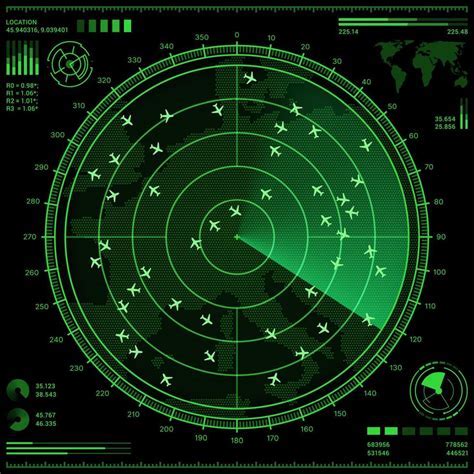
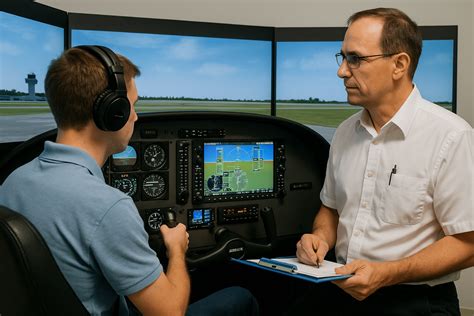
Those who advance enter the FAA Air Traffic Controller Academy in Oklahoma City, one of the most intensive technical training environments in the federal system. We see months of classroom instruction focusing on the architecture of the national airspace system, regulated separation standards, and aircraft performance principles. Trainees begin with physical tabletop airport models to internalize spatial relationships, then graduate to increasingly sophisticated radar and tower simulators.
Simulation is not a game. It is a controlled stress laboratory. Trainees are pushed to handle escalating traffic volumes, emergency scenarios, weather disruptions, and overlapping responsibilities. Communication training is central. Controllers must learn to speak with clarity, brevity, and precision, while decoding multiple radio transmissions and coordinating with adjacent control sectors in real time.
After academy graduation, trainees are assigned to live facilities, often beginning at lower-traffic towers or regional centers. There, they enter a multiyear apprenticeship under senior controllers. This phase typically lasts between two and four years, during which performance is continuously evaluated. Many candidates exit the profession at this stage, discovering that real-world operational stress exceeds even their considerable aptitude.
Alternative Paths Through FAA-Certified Collegiate Programs
We also recognize an alternative entry route: FAA-certified collegiate training programs. These specialized universities deliver standardized curricula that allow graduates to bypass portions of the Oklahoma City academy and move more quickly into field training. This pathway does not lower standards. Instead, it shifts part of the foundational training into academic environments with strong simulation infrastructures.
These programs represent a strategic effort to widen the recruitment funnel without compromising safety. They also help identify candidates earlier, allowing for more efficient resource allocation in federal training centers. However, even through collegiate pathways, the washout rate remains significant. The profession self-selects ruthlessly for resilience, precision, and emotional discipline.
Air Traffic Controller Salary, Benefits, and Long-Term Earning Potential
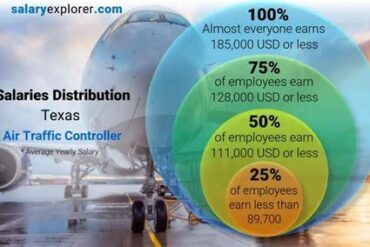
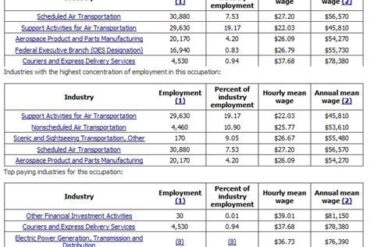
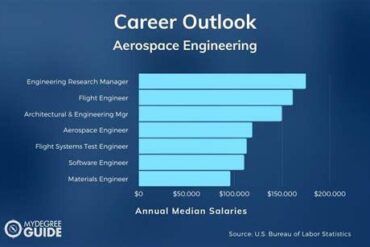
Compensation is one of the few aspects of the profession that can rival private-sector opportunities for individuals with similar cognitive and decision-making capabilities. The median annual wage for air traffic controllers stands at approximately $144,580, reflecting the skill intensity and responsibility of the role. However, we see significant variance across geography and facility type.
Controllers assigned to smaller regional airports early in their careers often earn closer to $60,000 annually. This stage should not be misinterpreted as stagnation; it is a developmental phase. As controllers achieve certifications for more complex environments and transfer to busier facilities, compensation accelerates sharply. High-traffic metropolitan facilities represent the financial and professional apex of the career ladder.
Beyond salary, federal benefits remain a major draw. We see strong retirement packages, healthcare coverage, and predictable advancement structures. Yet, the psychological cost of the role remains high. Controllers consistently describe the job as more cognitively demanding than piloting, because the controller carries responsibility for multiple aircraft simultaneously, rather than a single flight path mostly managed by automation.
Why This Career Remains One of America’s Most Critical Professions
Despite political disruptions and staffing challenges, air traffic control remains one of the most respected technical professions in public service. We are not simply guiding aircraft; we are orchestrating a living, breathing national transportation bloodstream. Every safe landing is a quiet triumph of mathematical spacing, rapid judgment, and disciplined teamwork.
The current shortage does not reflect a decline in the profession’s value. It reflects a lag between growing aviation demand and the time-intensive nature of building elite human capability. We are witnessing not the collapse of a system, but the strain of a highly specialized workforce under expanding operational demands.
The future of U.S. aviation safety depends on how effectively we restore confidence in this career path. When stability returns and recruitment aligns with the profession’s true importance, air traffic control will continue to stand as one of the most intellectually demanding and socially vital careers in the modern world.