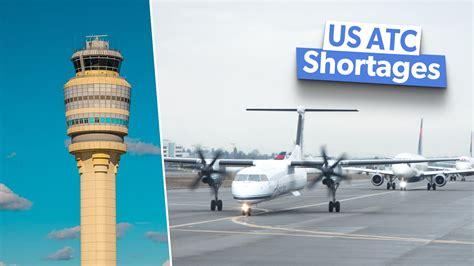
The struggle to maintain a robust air traffic control workforce has become one of the most pressing operational challenges in U.S. aviation. The strain is no longer an abstract policy concern tucked away in FAA reports—it affects every traveler facing cascading delays, every airline planning schedules around staffing gaps, and every controller pushed toward the limits of endurance. This article examines the roots of the shortage, the structural weaknesses that amplify it, and the efforts underway to rebuild a workforce essential to the national airspace system.
Understanding the Intensity of the Air Traffic Control Mission
Air traffic controllers guide more than 44,000 flights across the United States every day. Their job revolves around a single non-negotiable responsibility: keeping aircraft safely separated while ensuring an efficient flow of traffic. Although this mission sounds simple in principle, its execution requires razor-sharp situational awareness, real-time decision-making, and flawless communication.
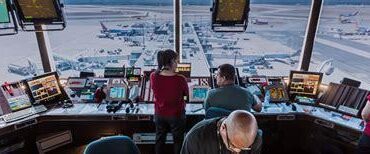
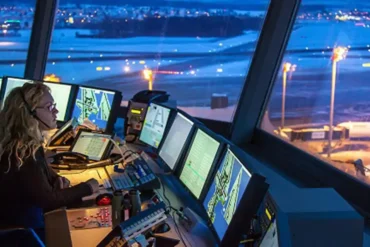
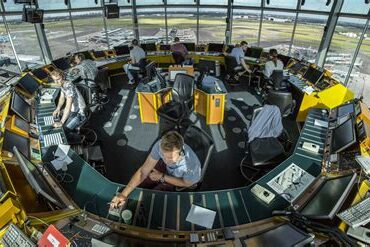
Controllers work within one of three facility types, each representing a distinct phase of flight. Airport towers oversee landings, takeoffs, and ground movements. Terminal Radar Approach Control facilities (TRACONs) manage aircraft as they climb after departure or descend on approach. En Route Centers, known as ARTCCs, direct the high-altitude cruise segment of thousands of flights at once. Across 313 FAA facilities—of which 46 are the large TRACONs and En Route Centers—workload varies dramatically, and so does staffing demand.
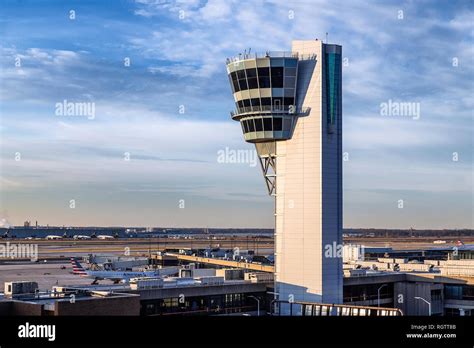
The FAA grades these facilities from Level 4 to Level 12 based on traffic volume and complexity. A small regional tower like Peoria may fall near the bottom of the scale. Level 12 facilities—Chicago O’Hare, New York LaGuardia, and Potomac TRACON—sit at the top, handling dense, intricate operations that make even seasoned controllers sweat.
Why the U.S. Is Running 3,000 Controllers Short
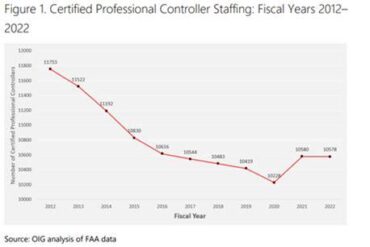
The FAA currently fields roughly 11,000 certified professional controllers (CPCs). According to agency estimates, that number sits about 3,000 below the level needed for stable operations. Not all facilities are equally affected; about 30% are more than 10% understaffed, while another 30% exceed required levels. The real pressure, however, sits in the high-impact facilities. Nineteen of the largest locations—many of them TRACONs—operate at staffing levels 15% or more below FAA targets. These facilities handle 27% of the nation’s commercial flights and are responsible for 40% of delays.
Understaffing doesn’t immediately endanger safety because controllers can slow down the system to maintain separation standards. Yet that slowdown has consequences. When the system was pushed during the last federal shutdown, staffing-related issues accounted for half of all delays, up from the typical 5%. More worrying is the possibility of heightened risk: investigators have not ruled out controller staffing as a contributor to the January 2025 mid-air collision near Washington National Airport that killed 67 people.
The Decade of Missed Hiring Targets
From 2013 to 2023 the FAA hired only two-thirds of the controllers needed to keep pace with retirements and attrition. This hiring gap shrank the controller workforce by 13% between 2010 and 2024, despite increasing traffic and growing system complexity.

Several external events derailed hiring pipelines. Two government shutdowns—2013 and 2018–2019—froze hiring, halted training, and idled academies. Budget sequestration, imposed in 2013, cut discretionary spending across federal agencies, including the FAA. And the COVID-19 pandemic created the most disruptive shock of all. According to a federal safety review, the combination of these events forced the FAA to pause hiring more than a year and suspend training for two full years.
The National Academy of Sciences (NAS), in its 2024 report The Air Traffic Controller Workforce Imperative, acknowledged that many of these crises were beyond FAA’s control. Yet the panel emphasized that the agency failed to articulate a forceful recovery plan until 2023–2024. The criticism extends implicitly to the Office of Management and Budget and Congress, which often constrained the FAA’s funding flexibility.
Training Capacity: The Bottleneck That Chokes Growth
Becoming a certified air traffic controller involves two major phases: classroom instruction at the FAA Academy in Oklahoma City and on-site training at the facility where the trainee will eventually work. Both phases are struggling under capacity limits.
The FAA Academy, the gateway into the profession, faces staff shortages and insufficient classroom capacity. Many trainees fail out or drop out under the intense curriculum, which narrows the pipeline further. Proposals to authorize a second Academy have stalled in Congress, with Oklahoma lawmakers objecting to any effort they fear could redirect funding away from their state.
After leaving the Academy, trainees enter a demanding on-the-job training period that can last 18 months to more than four years for the highest-level facilities. Here, the system hits another choke point: senior controllers must supervise trainees while simultaneously handling traffic. In many understaffed facilities, senior controllers are already stretched thin, leaving trainees with insufficient practice time. This dynamic drives up washout rates and slows certification timelines.
NAS highlighted two trends that point toward deepening structural challenges: rising failure rates at individual facilities and longer certification timelines at major centers. In some locations, an unhealthy internal culture compounds the issue. A recent investigative report described systematic hazing of new trainees at a large facility, creating a hostile environment that discourages completion.
Management Strains and Operational Decisions
The NAS report also called out management inefficiencies. The FAA has sometimes failed to transfer personnel from overstaffed to understaffed locations, reinforcing imbalances that drag on system performance. The agency also relies heavily on mandatory overtime, an exhausting practice that risks burnout and fatigue—two conditions that can imperil both safety and retention.
Steps the FAA Is Taking to Strengthen the Workforce
The 2025 Controller Workforce Plan (CWP) outlines the FAA’s commitment to hire at least 8,900 new controllers (CPCs and CPC-ITs) by 2028—an increase of 1,500 over the previous year’s goal. While ambitious, this surge is projected to raise the net headcount by only around 1,000 controllers due to retirements and attrition.

Still, several initiatives show promise. The FAA is broadening recruitment strategies and expanding incentives to keep existing controllers in the system longer. Controllers eligible for retirement now receive significant retention bonuses, a critical lever at a time when many highly experienced veterans are leaving.
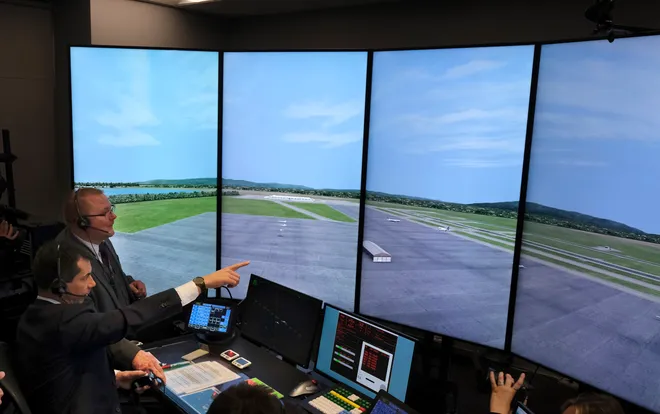
Advanced training technology is another bright spot. Tower simulation systems are being deployed across 95 facilities, allowing trainees to practice complex scenarios without taxing real-world operations. The FAA is also expanding partnerships with accredited colleges, enabling students to complete foundational training and bypass parts of the Academy pipeline.
The biggest question mark is funding. Historically, Congress has granted authority for reforms but withheld adequate financial backing. The FAA will need sustained fiscal support from both congressional appropriators and OMB to rebuild its workforce and reduce structural vulnerabilities.
The Larger Consequences of Running a Thinner System
The controller shortage does more than cause delays. It reduces the nation’s airspace capacity, constrains airline schedules, and shrinks buffers that should make the system resilient to weather, emergencies, or mechanical failures. When the system has no slack, minor disruptions ripple into network-wide slowdowns. That brittleness is increasingly visible: more ground stops, more cancellations, more headlines warning travelers to brace for unpredictability.
The greatest risk sits at the intersection of workload and fatigue. While the FAA maintains strict safety protocols, a system that relies heavily on overtime and reduced staffing leaves little margin for human error. Controllers describe the job as a mental marathon requiring relentless focus. When facilities operate chronically below optimal staffing levels, the cognitive load on individuals grows.
This is why the January 2025 mid-air collision rattled the aviation community so deeply. Although the investigation is ongoing, the possibility that staffing may have played a role underscores how operational stress can intersect with tragedy.
Rebuilding the Workforce Is Central to America’s Aviation Future
As demand for air travel continues to grow and airlines add more complex operations, the need for a stable, well-staffed controller workforce becomes even more urgent. Strengthening the pipeline requires more than one hiring surge. It demands sustained training capacity, modernized facilities, strong incentives for retention, and management agility to rebalance staffing where it is most needed.
The FAA’s current plans mark an encouraging shift, but the next few years will test the agency’s ability to deliver measurable improvements. Without substantial progress, the nation risks operating a world-leading airspace system with increasingly fragile foundations. The goal is not simply to fill vacancies—it is to restore a level of staffing that protects safety, supports growth, and keeps the national airspace system resilient in the face of rising demands.
The complexity of the problem reflects the complexity of the system itself. Yet it is clear that solving the controller shortage is not optional. It is essential to the future of U.S. aviation, and the work to fix it will shape how efficiently—and how safely—the country can fly for decades to come.