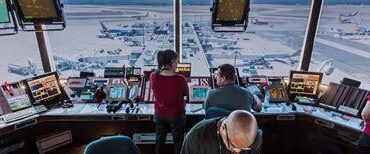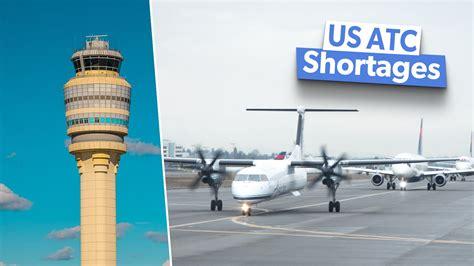
The United States aviation system is approaching a breaking point, and the warning signs are no longer subtle. A deepening shortage of air traffic controllers within the Federal Aviation Administration (FAA) is no longer just a staffing issue—it is rapidly evolving into a systemic vulnerability with far-reaching consequences for safety, efficiency, and public confidence. As air travel demand rebounds and surges beyond pre-pandemic levels, the imbalance between workforce capacity and operational demand has become dangerously pronounced.
For decades, the FAA has operated under mounting pressure, but today’s conditions reveal a stark reality: fewer controllers are managing exponentially more aircraft. Compared to 1981, the system now relies on roughly 25% fewer certified controllers while handling more than three times the volume of flights. This widening gap has created an environment where operational strain is not the exception—it is the norm.
A System Under Strain: The Scale of the Shortage
Across the National Airspace System, the staffing deficit is no longer confined to isolated facilities. More than 40% of terminal facilities are currently understaffed, and among the 30 busiest air traffic hubs in the country, 19 are operating below 85% of their required staffing levels. These same facilities account for over 40% of all recorded flight delays, revealing a direct correlation between workforce shortages and system inefficiency.
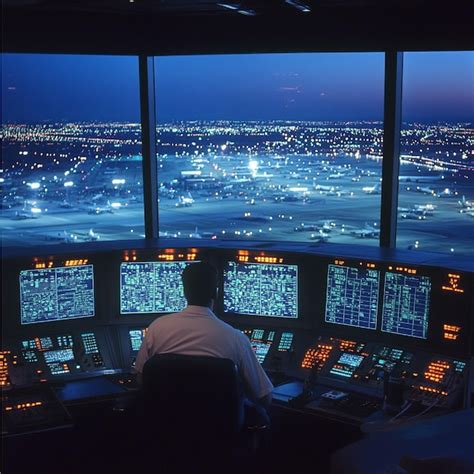
Controllers are increasingly required to manage overlapping responsibilities, often juggling multiple traffic streams simultaneously. This “overloaded position” state has become alarmingly common, pushing human performance to its limits. The implications are not just operational—they are deeply human, involving fatigue, stress, and cognitive overload in one of the most safety-critical professions in the world.
When Pressure Turns Dangerous: Safety Risks in Focus
The consequences of chronic understaffing are not theoretical. Historical data reveals that more than 5,100 aviation accidents include narratives where air traffic control was cited as a contributing factor. Among these, 159 were fatal, underscoring the real-world stakes of systemic strain.
One of the most sobering examples remains the 1991 runway collision involving SkyWest Airlines Flight 5569 and USAir Flight 1493, which resulted in 34 fatalities. Investigations highlighted how controller workload and situational complexity played a role in the tragedy. These patterns have persisted, with modern incidents reflecting similar underlying conditions.
More recently, a catastrophic midair collision scenario over the Potomac River demonstrated the dangers of managing mixed traffic types—helicopters and fixed-wing aircraft—within congested airspace. In that case, 67 lives were lost, further reinforcing how overloaded systems can fail with devastating consequences.
The LaGuardia Wake-Up Call
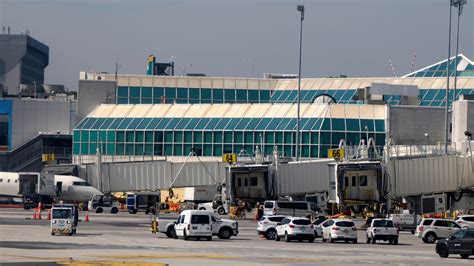
The fatal incident at LaGuardia Airport on March 22 has reignited urgent debate حول controller staffing levels. During the event, an Air Canada flight on final approach collided with a fire truck that had been cleared to cross the runway. The resulting crash claimed the lives of both pilots and sent shockwaves through the aviation community.
While investigations are ongoing, early indications suggest that workload and staffing limitations may have contributed to the breakdown in coordination. This tragedy highlights a critical vulnerability: when staffing levels fall below operational demands, even routine procedures can become high-risk scenarios.
A Broken Pipeline: Why Reinforcements Aren’t Arriving
The most troubling aspect of the FAA’s staffing crisis is not just the shortage itself, but the inability to fix it. The pipeline for training new air traffic controllers is widely regarded as “mathematically broken,” with attrition rates undermining recruitment efforts at every stage.
Out of tens of thousands of applicants each year, only a small fraction progress to the FAA Academy. From there, nearly one-third fail to complete training, and only about 61% ultimately achieve full certification. The entire process can take more than five years, meaning that even aggressive hiring today cannot deliver immediate relief.
In practical terms, only about 2% of applicants successfully become certified controllers. This bottleneck ensures that staffing gains remain marginal, with annual net increases often barely offsetting retirements and attrition.
Barriers to Entry: The Demanding Path to Certification
Becoming an air traffic controller in the United States is an exceptionally rigorous process, designed to ensure that only the most capable individuals enter the profession. Candidates must meet strict eligibility criteria, including citizenship requirements, age limits, medical fitness, and security clearances.
They must also pass specialized assessments that evaluate cognitive abilities, decision-making skills, and communication proficiency under pressure. Even after acceptance, trainees face intense academic and practical challenges that test their ability to operate in high-stakes environments where precision is non-negotiable.
While these standards are essential for safety, they also contribute to the limited throughput of new controllers entering the workforce. The balance between maintaining excellence and expanding capacity remains one of the FAA’s most complex challenges.

The Ripple Effect: Delays, Disruptions, and Economic Impact
The immediate impact of the staffing crisis is visible to passengers in the form of delays, cancellations, and unpredictable travel experiences. However, the broader consequences extend far beyond inconvenience. Airlines face increased operational costs, airports struggle with congestion, and the entire aviation ecosystem absorbs the inefficiencies.
As delays compound, they create cascading disruptions across the network, affecting not just individual flights but entire schedules. In a system as interconnected as modern aviation, even minor bottlenecks can trigger widespread ripple effects.
A System at a Crossroads
The FAA’s air traffic control shortage represents a critical inflection point for American aviation. Without decisive action to reform recruitment pipelines, accelerate training, and address workforce sustainability, the system risks entering a cycle of chronic instability.
The stakes are unmistakably high. Aviation safety has long been built on layers of redundancy and precision, but those safeguards depend on human expertise at their core. When that foundation is stretched too thin, the margin for error narrows—and the consequences become increasingly severe.
The path forward demands urgency, innovation, and a willingness to rethink long-standing processes. Because in the skies above, there is no room for compromise.