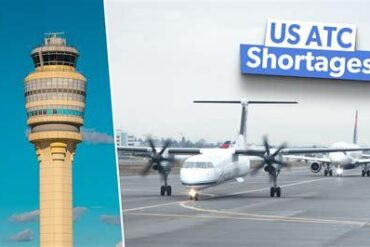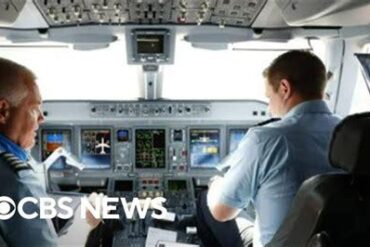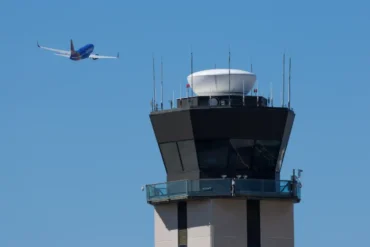
The United States is confronting a serious air traffic controller shortage, and the Federal Aviation Administration is responding with an unconventional strategy that signals a shift in how critical aviation roles are filled. With a deficit estimated at 3,500 controllers, the agency is no longer relying solely on traditional recruitment pipelines. Instead, it is turning toward a demographic often overlooked in federal hiring: gamers.
At the center of this initiative is a newly announced hiring window opening at midnight on April 17, backed by the US Department of Transportation. The campaign reflects a growing recognition that modern skill sets—particularly those developed in fast-paced, high-stakes gaming environments—may align surprisingly well with the cognitive demands of air traffic control. The message is direct and deliberate: this is not entertainment, but the skills are transferable.
The urgency behind this approach is grounded in operational reality. Air travel demand continues to surge, while staffing levels struggle to keep pace. Even with over 11,000 active controllers and roughly 4,000 trainees in the pipeline, the system remains under strain. The FAA’s challenge is not just hiring more people—it is finding individuals capable of thriving in one of the most mentally demanding professions in transportation.
Why Gamers Are Emerging as Ideal Air Traffic Controller Candidates
The FAA’s pivot toward gaming culture is not a gimmick—it is rooted in measurable competencies. Modern video games demand split-second decision-making, spatial awareness, and the ability to track multiple moving elements simultaneously. These are the same core skills required in air traffic control, where a single lapse in judgment can have cascading consequences.
Transportation Secretary Sean Duffy emphasized that adapting recruitment strategies is essential to reaching a new generation. By focusing on individuals who have honed their reflexes and cognitive flexibility in digital environments, the FAA aims to tap into a previously underutilized talent pool.
Unlike traditional career paths, this initiative does not prioritize formal academic credentials. A college degree is not required, marking a significant departure from conventional expectations. Instead, candidates are evaluated based on aptitude, including their ability to process complex information under pressure, maintain focus, and execute precise communication.
A Streamlined Hiring Pipeline with Faster Career Entry
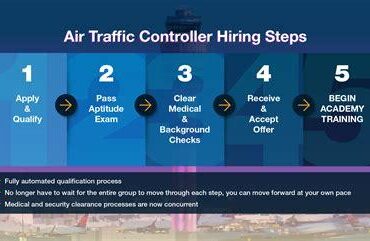
Beyond redefining candidate profiles, the FAA has made substantial improvements to its hiring process. Historically criticized for its length and complexity, the pipeline has been accelerated by several months, allowing qualified applicants to enter training more quickly. This efficiency is partly due to faster relocation to the FAA Academy in Oklahoma City and a 15% increase in available instructors.
The path to becoming an air traffic controller remains rigorous. Applicants must pass a series of aptitude assessments, medical evaluations, and security clearances. Those who advance undergo intensive training at the FAA Academy, where hands-on simulation replicates real-world scenarios with remarkable accuracy.
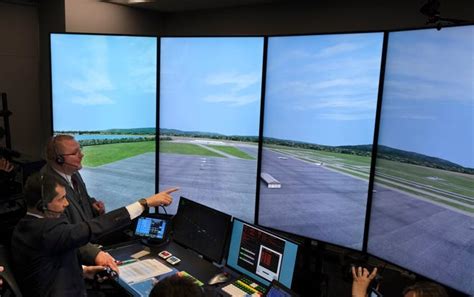
This training is not only immersive but also paid, reducing financial barriers for candidates. After graduation, controllers enter on-the-job training at assigned facilities across the country, where they continue to develop under supervision before achieving full certification.
High Stakes, High Rewards: A Career with Six-Figure Potential
The demands of air traffic control are matched by its rewards. Within approximately three years, successful controllers can earn six-figure salaries, reflecting both the complexity of the role and the level of responsibility involved. The job requires unwavering concentration, adaptability, and resilience, often during irregular shifts that include nights and holidays.
Despite these challenges, the profession offers a level of career stability and progression that few fields can match. As aviation continues to expand, the need for skilled controllers will only intensify, making this a strategically important workforce for national infrastructure.
Meeting Demand While Safeguarding Aviation Safety
The broader implications of the staffing shortage extend beyond hiring metrics. Reports indicate that thousands of aviation incidents have involved air traffic control as a contributing factor, underscoring the importance of adequate staffing levels in maintaining safety standards. While not all incidents are directly attributable to workforce shortages, the correlation highlights the risks of an overstretched system.
The FAA’s recruitment campaign aims to address this issue proactively. With expectations of around 8,000 applicants during the current hiring window, the agency is optimistic about filling available training slots. Last year, nearly every seat at the FAA Academy was occupied, signaling strong interest despite the profession’s demanding nature.
Redefining the Future of Air Traffic Control Recruitment
This initiative represents more than a temporary solution—it reflects a broader evolution in how critical skills are identified and valued. By recognizing the relevance of gaming-derived abilities, the FAA is challenging outdated assumptions about what qualifies someone for high-responsibility roles.
The requirements remain clear: applicants must be US citizens, under the age of 31, and capable of clear, precise communication in English. Yet within those parameters, the definition of a qualified candidate has expanded dramatically.
In a system where precision and timing are everything, the ability to think several moves ahead is no longer confined to traditional training grounds. Whether learned in a cockpit simulator or a digital battlefield, those instincts may now guide the next generation of professionals responsible for keeping America’s skies safe.