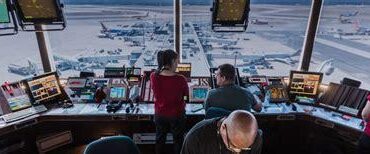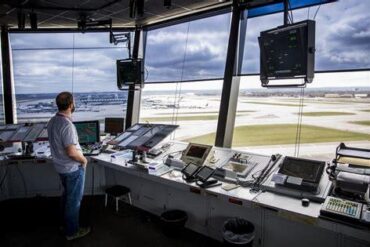
For millions of travelers, flight delays have become an accepted part of modern air travel. Departure boards flicker with gate changes, pilots apologize for “ATC flow restrictions,” and passengers sit trapped on taxiways wondering how a country capable of launching Mars rovers still struggles to move airplanes on time. Behind those routine frustrations lies a far more alarming reality: the United States air traffic control system has been operating on infrastructure so old, fragmented, and unreliable that aviation officials now describe parts of it as effectively unmaintainable.
The Federal Aviation Administration’s sweeping Brand New Air Traffic Control System initiative, known internally as BNATCS, is not simply another modernization project. It is an emergency reconstruction effort triggered by mounting system failures, dangerous runway incursions, and a catastrophic January 2025 midair collision near Washington Reagan National Airport that killed 67 people. The accident shattered years of bureaucratic inertia and exposed how dangerously dependent America’s aviation network had become on analog technology designed for a completely different era of flight.
For decades, the FAA attempted to modernize through the much-publicized NextGen program, a sprawling 20-year initiative intended to transform the national airspace into a digitally connected system powered by satellite navigation and advanced automation. Billions were spent. Expectations soared. Yet internal assessments eventually revealed that NextGen achieved only 16% of its projected benefits. Controllers continued relying on aging radar systems, fragmented software platforms, and deteriorating copper communications lines that frequently failed under modern traffic loads.
The consequences are now visible across the country every day. A single equipment malfunction in New York can ripple through the national airspace system within minutes, delaying flights from Miami to Seattle. Controllers forced to operate with degraded data increase aircraft spacing dramatically, reducing airport throughput and creating gridlock in already congested corridors.
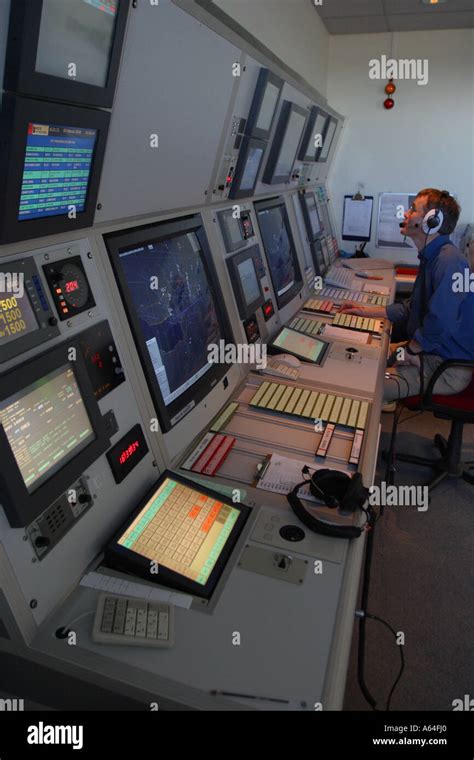
The public typically sees only the surface-level symptoms. An Air France flight aborting takeoff at Los Angeles International Airport. A Frontier Airlines jet slamming on its brakes to avoid another aircraft crossing the runway. Flights held at gates despite clear skies nationwide. But underneath those incidents sits a deeply fragile technological backbone that aviation experts increasingly feared could suffer systemic collapse without immediate intervention.
America’s Air Traffic Network Was Quietly Decaying
The FAA oversees one of the most complex transportation systems ever built, coordinating roughly 45,000 flights and nearly three million passengers every day. Yet much of the infrastructure supporting that operation belongs to the technological world of the 1980s.
At the center of the crisis are 138 separate telecommunications systems responsible for connecting radar facilities, control towers, automation platforms, and aircraft communications networks. Shockingly, 51 of those systems have officially been classified as unsustainable because replacement parts no longer exist in commercial markets or government inventories. Some components require technicians to salvage pieces from retired equipment simply to keep systems operational for another few months.
This “run-to-failure” approach gradually became normalized within the agency. Equipment remained in service until breakdowns forced emergency repairs. The result has been a steady rise in equipment-related delays across major aviation hubs.
Travelers now experience three-hour delays at roughly four times the frequency seen three decades ago. While weather still disrupts operations, aging infrastructure increasingly acts as the hidden force multiplying congestion nationwide.
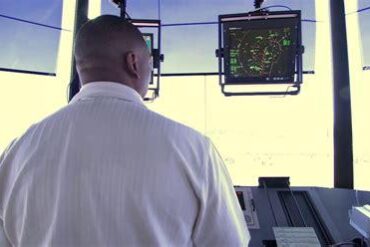
Controllers working with degraded systems often have no choice but to increase aircraft separation distances substantially. In busy sectors near New York, Chicago, or Atlanta, aircraft may be spaced an additional 20 miles apart simply because the underlying surveillance data lacks sufficient reliability for tighter sequencing. That reduction in capacity quickly cascades into missed departure slots, airborne holding patterns, and nationwide traffic management restrictions.
The crisis became impossible to ignore after repeated near-miss incidents placed public attention squarely on air traffic safety. Investigators found that aging communications systems, fragmented data platforms, and inconsistent surveillance feeds were contributing to controller workload during already stressful traffic periods.
The FAA’s 612 Radar Systems Became a Safety Liability
Perhaps the most startling revelation inside the FAA overhaul is the condition of the nation’s radar infrastructure. Across the United States, 612 radar systems remain in active use, many operating well beyond their intended service lives.
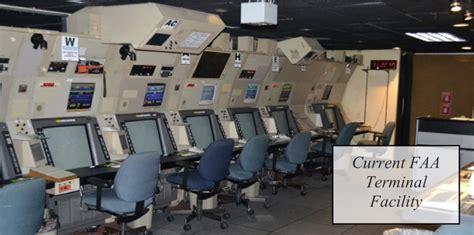
Some radar units date back to the Reagan administration. Vacuum tubes, outdated circuit boards, and aging analog electronics continue powering critical surveillance functions despite decades of technological advancement elsewhere in aviation.
The challenge is not merely age. It is fragmentation.
The FAA currently manages 14 separate radar configurations spread across regional facilities. Each requires different maintenance procedures, specialized training, unique spare parts inventories, and custom troubleshooting expertise. A technician experienced on one radar platform may be unable to repair another system hundreds of miles away.
That operational complexity dramatically increases outage durations whenever failures occur. In some cases, controllers must rely on backup surveillance systems while technicians scramble to locate obsolete replacement parts.
The January 2025 Washington DCA collision fundamentally changed the political environment surrounding modernization. Investigators concluded that aging surveillance architecture lacked the precision and resilience necessary for increasingly crowded urban airspace. The tragedy became the defining catalyst behind BNATCS, transforming modernization from a slow-moving bureaucratic project into an emergency national infrastructure mission.
To address the radar crisis, the FAA awarded major contracts to RTX and Indra to standardize and replace legacy systems by June 2028. The goal is to consolidate 14 incompatible architectures into a unified modern platform capable of delivering high-fidelity tracking across all sectors of controlled airspace.
Unlike older mechanical and analog-based systems, the new radar infrastructure uses solid-state technology designed for greater reliability, faster processing speeds, and improved resistance to interference or component failure. Standardization also simplifies maintenance logistics, allowing technicians nationwide to work from consistent operational frameworks rather than navigating a maze of incompatible legacy systems.
Copper Wiring Became One of Aviation’s Biggest Hidden Problems
Few passengers realize that vast portions of America’s air traffic system still rely on analog copper telecommunications wiring. Hidden beneath airport facilities, buried along infrastructure corridors, and woven through control centers, these aging copper networks became one of the FAA’s greatest vulnerabilities.
Copper systems struggle to handle modern aviation’s massive data requirements. Bandwidth limitations, electromagnetic interference, and signal degradation create persistent reliability issues that directly affect flight operations.
During periods of heavy traffic, even small communication delays force controllers to build larger buffers between aircraft movements. Every additional mile of separation reduces system efficiency and increases congestion across busy routes.
The BNATCS overhaul replaces those legacy copper networks with high-capacity fiber optic infrastructure managed under Peraton, the FAA’s designated prime integrator for the project.
Fiber optics represent far more than a routine technology upgrade. They fundamentally change how aviation data moves through the national airspace system.
Instead of transmitting electrical signals vulnerable to interference, fiber networks use light pulses capable of carrying enormous quantities of information at near-instantaneous speeds. High-resolution surveillance data, weather updates, flight trajectories, runway status information, and controller communications can flow continuously without the latency issues plaguing older analog systems.
The operational implications are enormous. Faster, cleaner, and more reliable data transmission allows controllers to safely reduce spacing between aircraft, increasing throughput at congested airports while improving safety margins simultaneously.
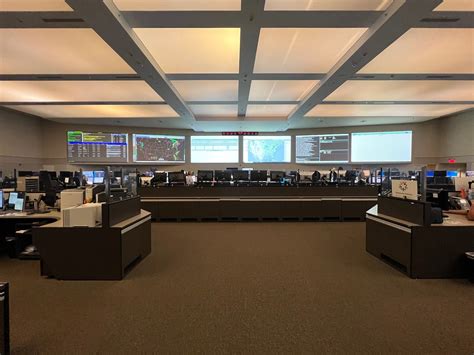
Another advantage lies in scalability. Copper infrastructure often requires physically replacing cables to expand capacity. Fiber systems can accommodate future upgrades through software and network enhancements without tearing apart entire facilities again.
For an aviation industry preparing for rising passenger demand, advanced automation tools, drone integration, and increasingly complex traffic patterns, that flexibility is critical.
Why the NextGen Program Failed So Spectacularly
The FAA’s current emergency overhaul cannot be understood without examining the collapse of NextGen, the modernization initiative originally intended to prevent today’s crisis.
Launched with enormous ambition, NextGen promised satellite-based navigation, digital communications, streamlined routing, fuel savings, reduced delays, and higher airspace capacity. It was marketed as the future of American aviation.
Instead, the program became trapped in endless integration challenges, fragmented procurement strategies, and incompatible legacy systems that resisted seamless modernization.
Rather than replacing old infrastructure wholesale, NextGen attempted incremental upgrades layered atop decades-old architecture. The result resembled a patchwork system where advanced digital tools still depended on aging analog foundations beneath them.
Controllers frequently found themselves bridging gaps between disconnected systems manually. Data synchronization problems persisted. Modern software struggled to interface cleanly with obsolete hardware. Many promised efficiencies never materialized outside limited test environments.
By the early 2020s, aviation insiders increasingly recognized that NextGen’s gradual modernization strategy had failed to keep pace with operational realities. Equipment continued aging faster than upgrades could compensate.
Then came the January 2025 collision near Washington DCA.
That accident destroyed whatever political patience remained for incremental reform. Lawmakers, regulators, and industry leaders concluded that piecemeal modernization was no longer viable. The FAA needed a full-scale replacement strategy capable of rebuilding the national airspace system rapidly and cohesively.
BNATCS emerged directly from that realization.
Unlike NextGen, which relied heavily on distributed upgrades across multiple contractors and timelines, BNATCS adopts a centralized “prime integrator” approach led by Peraton. The intent is to ensure every major component operates within a synchronized architecture from the outset rather than evolving as disconnected technological islands.
The Common Automation Platform Could Transform Air Traffic Control
One of the most important elements of the overhaul involves replacing the fragmented ERAM and STARS automation systems with a unified Common Automation Platform, known as CAP.
For years, controllers managing en route airspace and terminal operations worked within separate digital environments. Aircraft transitioning from high-altitude cruise sectors into airport arrival corridors often required manual coordination between systems that did not fully integrate.
That fragmentation increased controller workload and created opportunities for communication breakdowns during busy traffic periods.
The CAP system eliminates those digital boundaries by creating a continuous operational picture from takeoff to landing. Aircraft data remains unified across every phase of flight, providing controllers with a single synchronized information stream rather than disconnected snapshots.
This unified architecture enables significantly more advanced automation capabilities. AI-assisted conflict detection tools can analyze aircraft trajectories in real time, identifying potential runway incursions or loss-of-separation events earlier than legacy systems allowed.
The technology also improves predictive traffic management. Controllers gain better visibility into developing congestion patterns, weather reroutes, and sequencing conflicts before they escalate into major delays.
As air traffic volumes continue rising, these capabilities become essential rather than optional. The FAA expects substantial growth in passenger demand through the late 2020s, while future integration of drones, advanced air mobility aircraft, and increasingly crowded urban corridors will place even greater strain on the system.
Without a unified automation platform, the existing fragmented infrastructure would struggle to handle that complexity safely.
The Price Tag Is Massive but the Cost of Failure Is Far Worse
Congress initially approved $12.5 billion to launch the BNATCS initiative, allowing the FAA to begin infrastructure replacement and award major contracts. Yet that figure represents only the opening phase of a much larger financial commitment.
Current estimates place total program costs between $30 billion and $32 billion.
Critics naturally question whether such spending is justified. But aviation officials increasingly argue the opposite problem exists: the United States delayed modernization so long that emergency replacement now costs dramatically more than proactive investment would have.
The economic consequences of continued system failures already ripple throughout the airline industry daily. Delays increase fuel burn, disrupt crew scheduling, reduce aircraft utilization, and create cascading operational losses affecting airlines, airports, and passengers alike.
Even more importantly, safety risks have become impossible to ignore.
The 2025 DCA collision permanently altered the conversation around FAA infrastructure. What was once framed as a technology modernization effort is now viewed through the lens of systemic risk reduction. Every aging radar left in service, every failing telecom circuit, and every obsolete automation platform carries consequences extending far beyond inconvenience.
Industry analysts believe a fully modernized BNATCS network could eventually pay for itself through operational efficiencies, reduced delays, lower fuel consumption, and increased airport throughput during adverse weather conditions.
But achieving that outcome depends on maintaining political momentum. The FAA’s aggressive June 2028 target leaves little margin for funding delays or procurement slowdowns. Aviation infrastructure projects historically stretch far beyond original schedules, and skeptics remain unconvinced the government can execute such a complex transformation within three years.
Still, the pressure driving BNATCS is unlike anything the FAA has faced in decades. The agency is no longer modernizing for convenience or efficiency alone. It is racing against the physical deterioration of systems that millions of passengers unknowingly depend upon every single day.
America’s skies remain among the busiest in the world. Keeping them safe now depends on whether the FAA can replace the decaying technological skeleton beneath the aviation system before the next failure becomes another national tragedy.