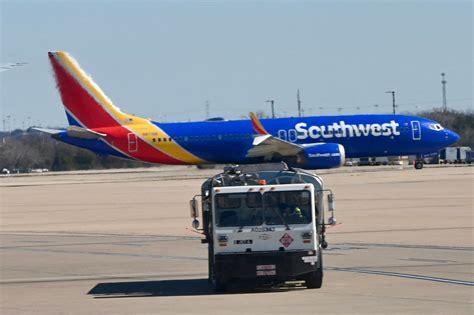
Two Southwest Airlines flights came dangerously close to a midair collision over Nashville International Airport, raising urgent questions about air traffic control reliability, staffing shortages, and systemic vulnerabilities in U.S. aviation safety. What unfolded in the skies above Tennessee was not a mechanical failure or pilot error—but a breakdown in the very system designed to prevent such incidents.
A Routine Go-Around Turns Into a High-Risk Conflict
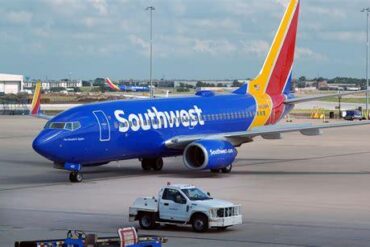
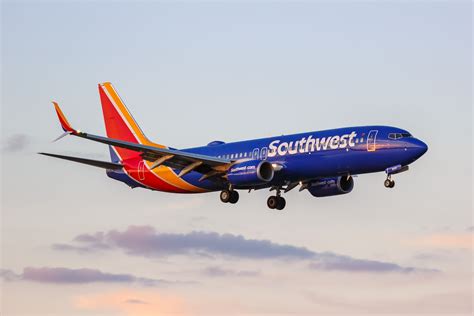
The incident began with Flight WN507, operated by a Boeing 737 MAX 8, executing a go-around after encountering unstable wind conditions during its approach. Go-arounds are standard safety maneuvers, designed to give pilots a second chance at a stable landing. However, what followed was anything but routine.
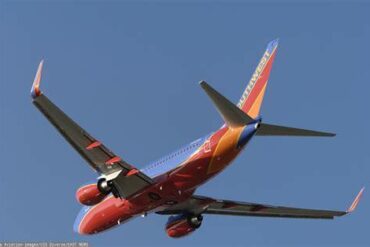
Air Traffic Control (ATC) instructed the aircraft to turn right after aborting its landing attempt—an instruction that inadvertently directed it into the flight path of another departing Southwest aircraft, Flight WN1152, a Boeing 737-700. That second aircraft had just taken off from a parallel runway, climbing directly into the conflict zone created by the ATC directive.
Within moments, two commercial jets carrying hundreds of passengers were converging at high speed, separated by only about 500 vertical feet—half the minimum required safe distance.
Seconds From Disaster: How Close Was Too Close
Flight tracking data revealed the severity of the near miss. The aircraft were not merely in proximity—they were on intersecting trajectories. At cruising speeds during climb and approach phases, even a few seconds of delay in corrective action could have resulted in catastrophe.
The danger was amplified by the geometry of the situation. One aircraft was ascending rapidly after takeoff, while the other was maneuvering laterally during a go-around. This combination creates unpredictable closure rates and reduces the margin for human reaction.
Audio recordings captured from ATC communications later confirmed the confusion. The controller’s instruction, though routine in tone, failed to account for the simultaneous departure on the parallel runway—a lapse that proved nearly fatal.
TCAS Intervention: The Last Line of Defense
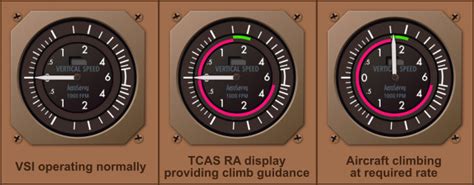
The crisis was ultimately averted not by ATC correction, but by onboard technology. Both aircraft were equipped with the Traffic Collision Avoidance System (TCAS), an autonomous system designed to detect and resolve potential midair conflicts.
As the jets closed in on each other, TCAS issued Resolution Advisories (RAs) to both flight crews. These advisories provided clear, immediate instructions—one aircraft was commanded to climb, while the other was directed to descend.
Pilots are rigorously trained to prioritize TCAS over ATC instructions in such scenarios. The system operates independently, using transponder data to calculate collision risk in real time. In this case, it worked exactly as intended, creating vertical separation just moments before the aircraft paths would have intersected.
A Pattern of Close Calls in U.S. Airspace
This incident is not an isolated anomaly. It follows a troubling trend of increasing near misses across the United States. Notably, it comes in the aftermath of the fatal crash of American Airlines Flight 5342 crash near Ronald Reagan Washington National Airport, which claimed 67 lives and intensified scrutiny on aviation safety systems.
Despite heightened awareness, similar incidents continue to occur. Nashville itself has experienced multiple close calls within a year, suggesting localized strain on ATC resources. Nationally, the pattern is even more concerning, pointing toward systemic issues rather than isolated human error.
The Staffing Crisis Behind the Radar Screens
At the core of the issue lies a persistent and worsening shortage of air traffic controllers. The Federal Aviation Administration (FAA) is currently operating with approximately 3,500 fewer certified controllers than its own staffing targets require.
This shortage is not new—it is the result of decades of underinvestment and attrition. Today, the U.S. manages roughly three times the volume of air traffic it handled in 1981, yet employs about 25% fewer controllers. The imbalance has forced remaining personnel into grueling schedules, often working six-day weeks with shifts extending up to 10 hours.
Fatigue, cognitive overload, and high-stress conditions are inevitable consequences. These human factors significantly increase the likelihood of operational errors—such as the misjudgment that nearly caused the Nashville collision.
Investigations Underway, But Solutions Lag Behind
The FAA has launched a formal investigation into the Nashville incident, focusing on controller actions, communication protocols, and staffing levels at the airport. Early statements confirm that the instruction given to Flight WN507 placed it directly into the path of the departing aircraft.
Parallel inquiries by the National Transportation Safety Board (NTSB) are expected to examine broader systemic issues, including whether current procedures adequately account for high-density traffic environments.
However, investigations alone do not resolve the underlying problems. Previous inquiries, including those following the 2025 crash, have identified similar risks—yet implementation of corrective measures has been slow and fragmented.
A System Under Strain: The Future of Flight Safety
The Nashville near-miss underscores a critical reality: modern aviation safety increasingly relies on redundancy. When one layer fails—in this case, air traffic control—another must compensate. TCAS performed flawlessly, but it was never intended to serve as the primary safeguard.
As air travel demand continues to rise, the margin for error shrinks. Without substantial investment in staffing, training, and technological modernization, incidents like this may become more frequent—and eventually, less forgiving.
For passengers, the skies remain statistically safe. But beneath that reassurance lies a system operating closer to its limits than many realize. The events over Nashville serve as a stark warning: the infrastructure supporting global aviation is only as strong as its most strained component.