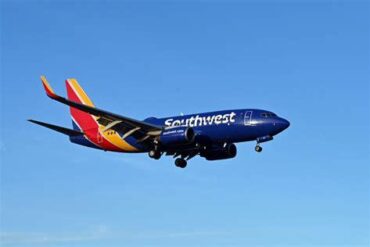
On Monday, June 2, 2025, a routine Southwest Airlines flight from New York LaGuardia (LGA) to Dallas Love Field (DAL) was abruptly diverted to Nashville International Airport (BNA) following a chilling mid-air bomb threat. The aircraft, operating as Flight WN2556, was flying a typical commercial route when an anonymous call triggered a full-scale security protocol, halting its journey and leaving passengers stranded for hours under intense law enforcement scrutiny.
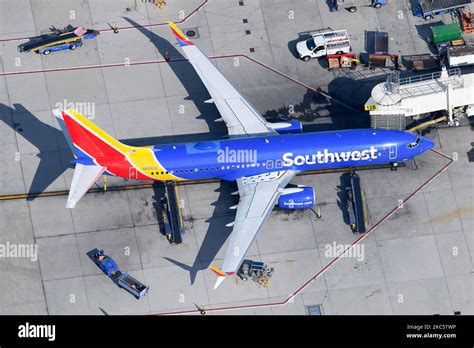
The flight, carried out aboard a Boeing 737-800 registered N8652B, had no initial indication of trouble. Passengers were told the plane would be making a fuel stop in Nashville — a common tactic to avoid panic during unfolding in-flight emergencies. However, reality quickly surfaced when a fleet of heavily armed officers in tactical gear boarded the aircraft, instructing passengers to remain still with heads down as they detained a single male individual suspected in the incident.
Southwest Airlines Bomb Threat: Passenger Detained at Gunpoint
Eyewitness accounts and video footage revealed the severity of the situation onboard WN2556. At least eight law enforcement personnel stormed the cabin, their presence starkly contrasting the initial narrative of a “routine fuel stop.” The detained passenger, whose identity remains officially undisclosed, was escorted off the aircraft, and his belongings were thoroughly searched inside the plane.
The response came after reports indicated that a bomb threat had been phoned in during the flight — not by the passenger himself, but allegedly by his spouse. Despite the call reportedly being recanted shortly before landing in Nashville, aviation security protocols demanded that the threat be treated as credible. Authorities, therefore, launched a comprehensive inspection operation that kept the aircraft grounded for almost four hours.
No Explosives Found, But Serious Security Procedures Enforced
During the prolonged ground operation at Nashville International Airport, passengers remained on board or under surveillance as bomb squads, K-9 units, and federal agents secured the aircraft. The absence of any explosive materials was eventually confirmed, but law enforcement adhered strictly to established protocols that prioritize safety over speed.
Southwest Airlines issued a brief statement confirming the diversion was for security reasons. However, federal agencies — including the TSA, FBI, and ICE — have yet to release details about the nature of the call, the suspected motive, or whether any federal charges will be filed. In the meantime, speculation has circulated online suggesting that the diversion could have been used as a pretext for detaining the individual by immigration authorities, but no such claims have been verified.
Law Enforcement and Passenger Safety Protocols
Standard aviation threat response procedures dictate minimal passenger movement during onboard detainments, particularly in cases where an explosive device is suspected. Law enforcement agencies often operate on limited information and must make critical decisions quickly to ensure public safety. While inconveniences such as lengthy delays or abrupt diversions are frustrating to travelers, they are sometimes unavoidable in the face of potential catastrophe.
In the case of WN2556, tactical teams acted swiftly to neutralize any immediate threat and secure the aircraft without incident. Following the all-clear, passengers were finally released and offered a $100 Southwest Airlines travel voucher as compensation for their ordeal. For many, however, the traumatic memory of the armed takedown and extended uncertainty far outweighed any financial apology.
Bomb Threat Allegedly Made by Spouse: Unconfirmed Reports Circulate
According to local journalist Nick Beres, the bomb threat was allegedly made by the detained man’s spouse. While this remains unverified by law enforcement, the report has fueled intense public speculation. If true, the incident raises serious questions about how third-party threats — even if retracted — can rapidly escalate into federal security events.
Such calls, regardless of intent, activate stringent safety measures that leave airlines little choice but to divert and investigate. Law enforcement agencies must treat any such claim as a valid threat until conclusively disproven. Even recanted or false claims carry legal consequences, potentially ranging from criminal charges for false reporting to more complex federal implications, especially when international or immigration concerns are involved.
Broader Context: Recent Bomb Threats in U.S. Aviation
The Southwest incident is not isolated. A wave of bomb threats targeting commercial flights in May and June 2025 highlights the persistent challenges airlines face in balancing customer service with uncompromising safety.
Hawaiian Airlines Flight Bomb Threat
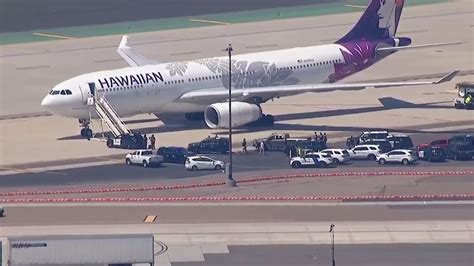
On May 20, 2025, a scheduled Hawaiian Airlines flight from San Diego to Honolulu faced a similar scare. The Airbus A330 was preparing for takeoff when authorities were alerted to a bomb threat. The aircraft was moved to a secure area of the tarmac where K-9 units and emergency responders carried out a comprehensive security sweep. Passengers were evacuated under direct supervision, and operations at San Diego International Airport faced brief disruption as a result.
American Airlines Security Incident
Just five days earlier, on May 15, 2025, American Airlines Flight 2484 experienced a bomb threat while still on the ground at Dallas-Fort Worth International Airport. This Boeing 737-800, bound for New York LaGuardia, was surrounded by emergency vehicles after a passenger allegedly overheard a conversation referencing a bomb. Airport police acted swiftly, isolating the aircraft and evacuating all 180 passengers for detailed questioning. The Federal Aviation Administration issued a partial ground stop, delaying multiple flights and underscoring the seriousness of such reports.
These recent episodes underscore a critical reality: even the mere mention of an explosive can trigger cascading emergency responses involving multiple agencies, costly delays, and widespread alarm. Airlines and airport authorities operate within a fragile ecosystem where safety is paramount and ambiguity is unacceptable.
The Fallout: Aviation Security, Passenger Trust, and Policy Implications
The diversion of Southwest Flight WN2556 to Nashville reveals the high-stakes nature of modern air travel security. In a post-9/11 and post-COVID world, threats — whether genuine or not — receive zero-tolerance responses. However, these protocols also test the patience and confidence of the flying public. With passengers subjected to hours-long delays, in-flight panic, and post-incident confusion, airlines must carefully manage communications, accountability, and compensation.
For Southwest Airlines, an incident like this presents a PR challenge. While the carrier followed safety protocols effectively, the initial misleading claim of a fuel stop instead of a bomb threat raised eyebrows. Transparency, even when limited by federal investigations, remains crucial to maintaining customer trust.
At a policy level, repeated threats point toward a growing need for technological upgrades in threat detection, real-time passenger risk assessment, and possibly more rigorous pre-flight vetting of high-alert individuals. The challenge remains how to do so without infringing on civil liberties or overburdening already stretched airport infrastructure.
Conclusion: A Flight No One Will Forget
Southwest Flight WN2556’s diversion to Nashville may have ended without physical harm, but its psychological and operational consequences will linger. For the passengers who lived through four hours of tactical lockdown, for the man detained under suspicion, and for the airline’s staff who managed the chaos, the event will not soon be forgotten.
As investigators continue their probe, one fact remains indisputable: the balance between freedom of movement and security assurance grows ever more delicate. In an age of instantaneous communication and heightened threat sensitivity, airlines must navigate not just the skies, but a minefield of evolving security expectations.
Until more is known, the industry will watch closely — and passengers will board with cautious optimism, aware that even the safest flights can face unforeseen turbulence.