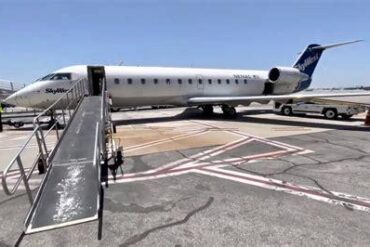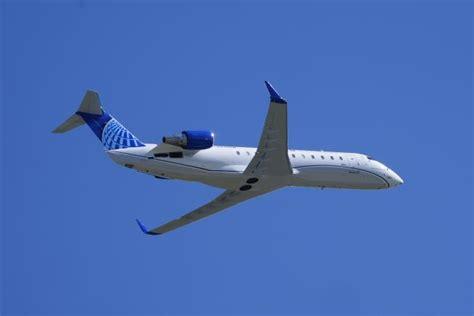
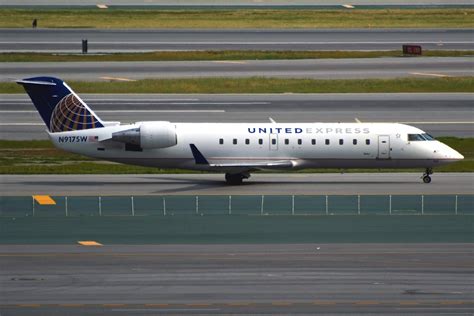
On the evening of Sunday, May 5, SkyWest Flight 5690, operating under the United Express banner, was forced to make an emergency landing at Waco Regional Airport in Texas after encountering severe turbulence mid-flight. The aircraft, a Bombardier CRJ-200, was en route from Springfield-Branson National Airport in Missouri to George Bush Intercontinental Airport in Houston when the incident occurred.
The turbulence injured five passengers, all of whom were transported to the hospital for medical evaluation. While their injuries were described as minor, the event has once again raised serious questions about turbulence response protocols and the preparedness of regional carriers to handle in-flight emergencies.
SkyWest 5690: A Routine Flight Turns Critical
SkyWest Flight 5690 departed Springfield-Branson at 4:48 p.m. CT, carrying 29 passengers and three crew members aboard the compact twin-engine CRJ-200. The aircraft, designed for short-haul regional routes, is a staple of domestic aviation in the United States, often used by major carriers through code-sharing agreements like the one between SkyWest Airlines and United Airlines.
There was no indication of trouble at takeoff or during the early stages of the flight. However, somewhere en route—exact location undisclosed by SkyWest—the aircraft encountered unexpectedly violent turbulence. The severity was enough to trigger onboard injuries and require an immediate diversion to the nearest suitable airport: Waco Regional.
Upon landing, Waco Fire Department responded with five units and 13 personnel, providing medical assistance and assessing the damage. According to Acting Fire Chief Robby Bergerson, emergency protocols were swiftly enacted. The flight landed safely, and SkyWest’s response team dispatched a replacement aircraft, which took off from Waco at 1:17 a.m. CT on Monday to complete the journey to Houston.
Regional Aircraft and Turbulence: A Dangerous Equation
The Bombardier CRJ-200 is a reliable aircraft with a strong safety record. However, its smaller fuselage and lighter weight make it more susceptible to the effects of turbulence compared to larger commercial jets. In this case, the physical impact of turbulence was severe enough to send multiple passengers to the hospital, despite the short duration of the flight.
This incident illustrates the disproportionate risk turbulence poses to regional aircraft. While turbulence is a known and generally manageable hazard in aviation, rapid vertical shifts in air pressure and wind speed can cause dramatic altitude deviations, especially for jets operating below 30,000 feet.
Passenger Experience and Emergency Response
While none of the injuries were life-threatening, the experience left passengers shaken. SkyWest and United Airlines issued statements emphasizing their commitment to passenger safety and coordination with emergency services. Yet, such assurances often follow rather than precede proactive safety measures.
In the aftermath of the event, medical personnel evaluated all onboard. The five passengers who were hospitalized were later discharged with minor physical trauma—a fortunate outcome, though not without implications for aviation safety policies.
A Broader Pattern of In-Flight Disruptions
SkyWest 5690’s emergency diversion is just one in a string of recent aviation incidents drawing attention to the need for more robust safety infrastructures and crew training across commercial and regional air services.
- On Saturday, a FedEx cargo plane from Newark to Indianapolis struck a bird shortly after takeoff, resulting in an emergency return.
- A day prior, a Delta Air Lines flight returned to Atlanta after the crew detected possible smoke in the aircraft.
- Earlier in the same week, an American Airlines flight from New York to New Delhi was diverted to Rome due to a bomb threat.
These events, while disparate in cause, are united in their potential for escalation. In each case, quick thinking by flight crews and emergency responders prevented worse outcomes. But they collectively hint at gaps in predictive safety systems, maintenance practices, and incident readiness, especially in non-major hubs like Waco.
FAA Oversight and Future Implications
The Federal Aviation Administration (FAA) has increasingly prioritized turbulence detection and real-time flight path adjustments via advanced weather tracking systems. However, regional carriers often lack the resources or aircraft sophistication to implement these systems to the same extent as major airlines. The FAA has not yet issued a formal investigation into SkyWest 5690, but such action is highly likely given the nature of the event and the injuries reported.
From a regulatory standpoint, the question is twofold:
- Should regional carriers be mandated to enhance their turbulence detection and avoidance capabilities?
- And should crew safety briefings and response training be standardized and enforced with greater stringency for these smaller operations?
The Psychological Toll on Passengers and Crew
While much attention rightly falls on the physical injuries sustained, it is critical to consider the psychological effects of in-flight emergencies. Sudden turbulence can induce acute anxiety, panic, and long-term flight aversion among passengers. Crews are also affected, especially if they are required to perform under physically dangerous and emotionally intense conditions.
The mental aftermath of such events should be addressed with post-incident counseling services and medical follow-ups. Airlines like United and SkyWest must invest not only in hardware and engineering but also in human resilience protocols.
Operational Transparency and Media Responsibility
The news of SkyWest 5690’s diversion was first broken by Mirna Alsharif and Josh Cradduck of NBC News, with contributions from Joe Kottke. Their report provided the essential chronology but omitted broader implications. In a climate where aviation safety is under increasing scrutiny, both carriers and media organizations bear a responsibility to ensure that truth, context, and consequence are given equal attention.
Unfortunately, many post-incident communications default to non-committal language, focusing on corporate reassurances rather than answering public concerns about safety trends, pilot training, or aircraft limitations.
What This Means for the Future of Regional Aviation
SkyWest Flight 5690 is a cautionary tale that transcends its immediate details. It calls attention to a systemic gap in preparedness for mid-air turbulence across the regional airline industry. These smaller carriers form the backbone of America’s domestic flight infrastructure, especially for cities and towns with no access to major hubs. Yet, they often operate under disproportionate constraints in budget, equipment, and FAA oversight.
With demand for air travel increasing, and climate-induced turbulence patterns becoming more erratic, we must insist on stronger standards across all tiers of commercial aviation. Emergency response drills, technological investment, and crew training must be uniformly enforced to ensure that size does not determine safety.
Until then, passengers aboard flights like SkyWest 5690 will continue to serve as unwitting test cases in a safety system still playing catch-up.