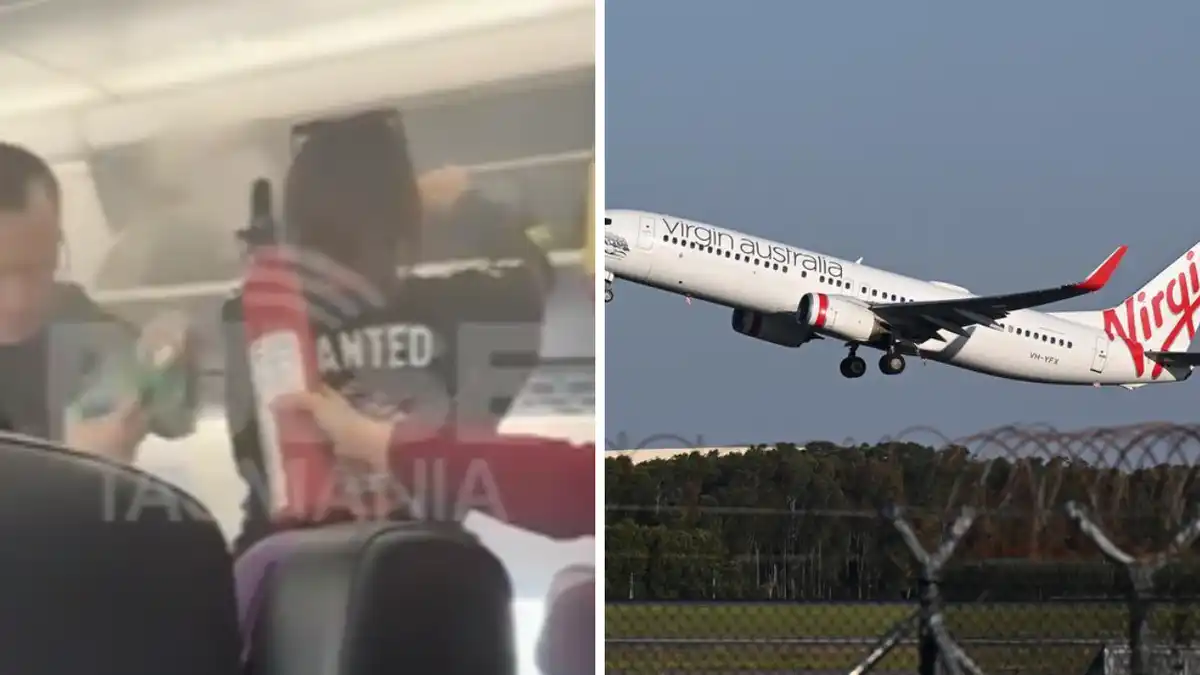
On the morning of July 22, 2025, what was meant to be a routine domestic flight from Sydney to Hobart turned into an emergency response scenario aboard Virgin Australia flight VA1528. The culprit: a lithium-ion battery suspected to have ignited inside a passenger’s carry-on baggage. While the aircraft managed a safe landing, the incident is a stark reminder of the escalating risks associated with battery-powered personal electronics in flight.
A Routine Flight Disrupted by Fire
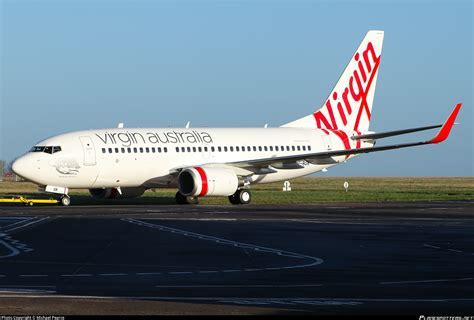
Virgin Australia Flight VA1528 departed from Sydney Kingsford Smith Airport (SYD) at 07:40 local time, running approximately 20 minutes behind its scheduled departure. The Boeing 737-800, tail number VH-YFY, cruised uneventfully for most of its journey until it neared descent into Hobart Airport (HBA). According to witnesses and reports compiled by the Aviation Herald and ABC Australia, passengers and crew noticed smoke and an unusual smell about ten minutes before landing.
“They were about 10 minutes out from landing when (…) they were made aware of some smoke and a bit of a funny smell coming from one of the overhead lockers,” stated Sam McCambridge, an airport car rental employee who spoke with an arriving passenger.
The smoke was soon traced to an overhead locker, where a suspected lithium battery had begun to overheat and possibly ignite. The flight crew declared an emergency while the cabin crew quickly moved into action with onboard fire extinguishers, successfully containing the blaze before it could escalate further.
Professional Crew Response Prevented Disaster
The rapid and effective response from Virgin Australia’s cabin crew likely prevented what could have become a catastrophic in-flight fire. Lithium-ion battery fires, especially those caused by thermal runaway, are notoriously difficult to extinguish and can spread rapidly if not handled immediately. On this occasion, the cabin crew’s use of fire containment protocols and swift communication with the cockpit ensured that the situation did not spiral out of control.
Upon landing at 09:11, emergency responders were already in place. Firefighters boarded the aircraft and carefully removed the offending bag from the cabin. While the fire itself had been extinguished, one individual required medical attention for suspected smoke inhalation. Virgin Australia confirmed that all passengers disembarked safely, with paramedics clearing the crew of any health concerns.
“Safety is always our highest priority. We appreciate the swift and professional response of our flight and cabin crew, as well as the support of Airservices Australia firefighters,” a Virgin Australia spokesperson told the media.
Operational Fallout and Flight Delays
Though the flight landed safely, the consequences rippled through Virgin Australia’s schedule. The aircraft involved, VH-YFY, was taken out of service immediately upon landing and has remained grounded since. Its scheduled return trip—Flight VA1531 from Hobart to Sydney—was delayed by nearly five hours. Instead of its planned 09:55 departure, the replacement aircraft, VH-YFV, didn’t leave until 14:56.
Additionally, the aircraft had been scheduled for another rotation later that day to Melbourne (Flight VA866), which had to be canceled entirely due to the jet’s unavailability.
Flight Delay Summary:
- VA1531 (HBA–SYD): Delayed 5 hours
- VA866 (SYD–MEL): Cancelled
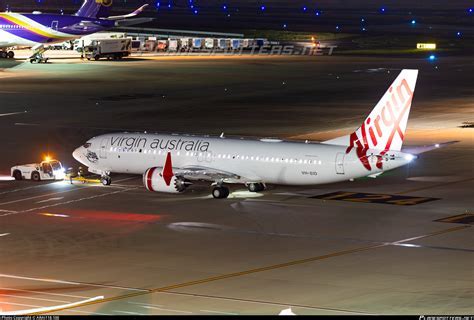
These disruptions not only impacted passenger travel plans but also posed logistical challenges for aircraft allocation and crew management. Virgin Australia’s operations team worked quickly to minimize the domino effect, but the consequences of a single battery incident proved far-reaching.
Lithium Batteries and Their Growing Risk Profile in Aviation
The incident aboard VA1528 is not an isolated case. The aviation industry globally has been grappling with an uptick in battery-related fires. Lithium-ion batteries, while efficient and compact, can be extremely volatile under certain conditions, especially during thermal runaway, which is a chain reaction resulting in heat, gas release, and fire.
Several key factors make these batteries hazardous in-flight:
- Pressure and Temperature Variations in the cabin can accelerate internal faults.
- Short-circuiting or puncturing from mishandling or defective products.
- Overcharging or physical impact inside overstuffed bags.
In January 2025, an Air Busan Airbus A321-200 was destroyed on the tarmac in South Korea after a lithium battery fire ignited uncontrollably. These high-profile events have forced carriers and regulators to reevaluate their safety standards and fire mitigation strategies.
Virgin Australia’s Lithium Battery Policy
Virgin Australia’s policy regarding batteries attempts to minimize risk by restricting certain behaviors. As per their guidelines:
- Spare/loose batteries (including power banks) must be in carry-on baggage only.
- All batteries must be protected against short circuits — either by being kept in original packaging, plastic pouches, or with taped terminals.
- Checked baggage cannot contain these loose batteries.
Despite these regulations, enforcement largely depends on passenger compliance and the attentiveness of ground staff. In many cases, passengers are either unaware of the rules or attempt to bypass them. Even one unprotected battery can present a serious hazard mid-flight.
Calls for Stricter Controls and Innovation
The VA1528 incident has reignited discussions among aviation safety experts, regulators, and airline executives about the adequacy of current safety practices.
A few suggestions gaining traction include:
- Mandatory inspections of carry-on luggage using advanced imaging to detect battery types.
- Limiting the number of personal electronic devices or power banks a passenger can carry.
- Deployment of fire containment bags onboard aircraft, now adopted by several international airlines.
- Integration of temperature sensors and smart alerts in overhead bins to detect early heat signatures.
“We’re reaching a tipping point. The proliferation of personal electronics means battery safety has to evolve beyond passive regulations,” said Dr. Ian Chalmers, a transport safety researcher at the University of New South Wales.
Regulatory Landscape and Industry Response
Globally, regulatory bodies like ICAO, FAA, and EASA have already issued various advisories, especially after a 2016 ban on bulk shipments of lithium batteries in passenger aircraft cargo holds. Yet in-cabin risks from individual devices remain largely within the airlines’ purview.
Airlines worldwide are implementing technological solutions and ramping up crew training, but more robust passenger education and screening is necessary. Virgin Australia’s swift crew action showcases that preparedness works—but reaction alone may not suffice in future, more aggressive scenarios.
Lessons Learned from VA1528
Flight VA1528’s safe landing is a testament to professional emergency management, but it also exposes critical vulnerabilities in current passenger safety models. With modern travelers routinely carrying multiple power-hungry devices—smartphones, tablets, cameras, headphones, e-cigarettes—the risk factor has exponentially grown.
The aviation industry must now:
- Intensify passenger education on lithium battery hazards.
- Enhance onboard fire detection and suppression technologies.
- Work in unison with regulators to develop next-gen safety standards.
These aren’t just policy issues—they’re matters of life and death in a sealed pressurized tube 30,000 feet above ground.
Conclusion
The lithium battery fire aboard Virgin Australia Flight VA1528 is not merely a headline—it’s a harbinger. In an age where electronics dominate travel, the aviation sector must aggressively evolve its safety protocols. The professionalism of Virgin Australia’s crew and the successful containment of the fire should be applauded, but the industry cannot afford complacency.
This incident has laid bare the urgency to address lithium battery threats with proactive, technology-driven, and globally harmonized solutions. As incidents rise, so too must our response.
FAQs
What caused the fire on Virgin Australia Flight VA1528?
The fire is suspected to have originated from an overheating lithium battery inside a passenger’s overhead luggage, though this has not been officially confirmed.
Was anyone injured during the incident?
One individual was treated for suspected smoke inhalation, and all other passengers and crew were cleared by paramedics.
How did the crew respond to the fire?
The cabin crew immediately extinguished the fire using onboard equipment, and the pilots declared an emergency to prepare for a prioritized landing.
What regulations exist for lithium batteries on Virgin Australia flights?
Loose batteries and power banks must be stored in carry-on baggage only, with terminals protected against short circuits. Checked baggage cannot contain these items.
What can passengers do to reduce fire risks when flying?
Passengers should:
- Avoid packing loose batteries in checked luggage.
- Use protective cases or original packaging for all battery devices.
- Disclose all battery-powered devices when requested during boarding.
The skies are only as safe as the diligence of every flier—and the lessons of VA1528 must not be forgotten.