Modern air travel quietly depends on a fragile miracle: millions of lithium-ion batteries sharing sealed aluminum tubes at 35,000 feet. Phones, tablets, laptops, cameras, and the power banks that keep them alive have become as essential to passengers as passports. Yet behind this convenience lies a chemistry that airlines have grown increasingly wary of. The question is no longer whether power bank rules will tighten, but how far and how fast these bans will spread worldwide.
Airlines have tolerated power banks for years because the alternative was unrealistic. Passengers expect connectivity, productivity, and entertainment on long flights. What has changed is not technology alone, but risk tolerance. A series of incidents has forced airlines to confront an uncomfortable truth: a single overheated battery can overwhelm even modern cabin safety systems. This shift in thinking is now reshaping policies across continents.
The conversation moved decisively in early 2026, when major carriers stopped quietly “recommending caution” and started issuing explicit bans. These are not symbolic gestures. They reflect a growing belief that lithium-ion fire risk has crossed a threshold where prevention must replace mitigation. In aviation, that is a profound pivot.
Why Lithium-Ion Batteries Have Become an Aviation Flashpoint
Lithium-ion batteries store remarkable amounts of energy in small spaces. That efficiency is also their weakness. Under stress—manufacturing defects, physical damage, overcharging, or internal short circuits—they can enter thermal runaway, a chain reaction that produces intense heat, flames, and toxic smoke. Once ignited, these fires are notoriously difficult to extinguish.
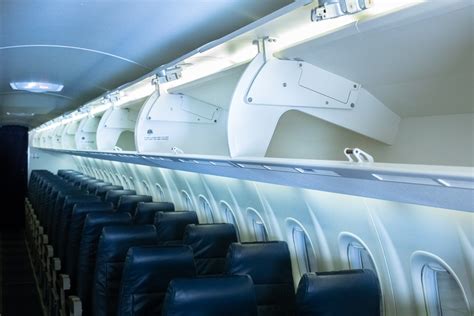
Inside an aircraft cabin, the danger multiplies. Confined spaces, overhead bins filled with combustible materials, and limited access during turbulence create conditions where seconds matter. Fire containment bags and halon extinguishers help, but they are responses, not solutions. Airlines increasingly recognize that preventing ignition is safer than fighting flames mid-air.
Regulators have long restricted spare lithium batteries in checked baggage, yet cabin usage remained largely unchallenged. Recent incidents shattered that equilibrium. Fire investigations repeatedly traced ignition sources to power banks stored in overhead compartments, where heat buildup often goes unnoticed until it is too late.
Korean Air’s Ban Signals a New Industry Phase
Korean Air’s decision to ban in-flight power bank usage beginning January 26, 2026, marks a watershed moment. The policy extends across the Hanjin Group, affecting Air Busan, Air Seoul, Asiana, and Jin Air. Passengers may still carry power banks onboard, but using them during flight is now prohibited.
The language used by the airline matters. The emphasis on “enhanced safety measures” reflects a shift from passenger convenience toward systemic risk reduction. Korean Air acknowledged that in-flight battery fires are occurring more frequently, a statement few global carriers would have made so plainly a decade ago.
This ban did not appear overnight. The airline had already introduced insulation tape at gates, fire-containment equipment onboard, and temperature-sensitive bin indicators. Banning usage was the final step after layered defenses proved insufficient. In aviation logic, when redundancy fails, elimination follows.
Lufthansa’s Restrictions Show Europe Is Not Far Behind
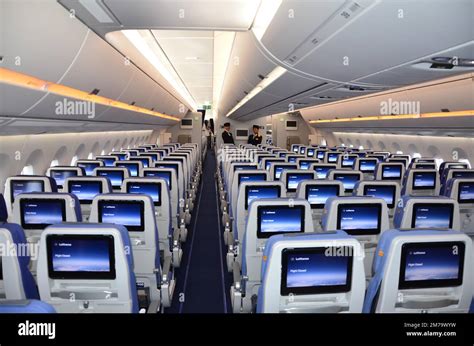
Europe’s response arrived swiftly. Lufthansa implemented similar restrictions in mid-January, banning the charging of power banks using both onboard outlets and seat power. The policy extends across the Lufthansa Group, reinforcing the idea that regional standards are forming rather than isolated airline rules.
Notably, Lufthansa carved out an exception for approved personal medical devices. This nuance matters. It suggests airlines are not reacting emotionally but carefully balancing safety with essential passenger needs. Even so, the message is clear: discretionary electronics no longer outweigh fire risk.
When flag carriers with conservative safety cultures align on policy, others pay attention. Industry observers increasingly see these bans as early indicators of a broader regulatory convergence, rather than isolated airline experiments.
High-Profile Fires Changed the Risk Equation
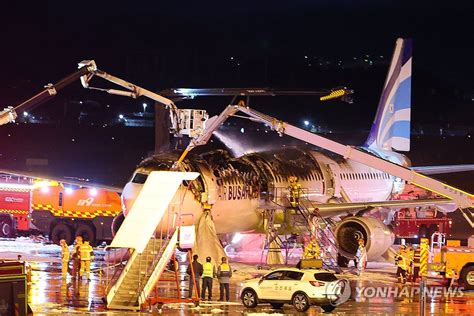
The catalyst for this global rethink was not abstract modeling but real aircraft damage. The Air Busan Flight 391 fire in January 2025 remains the most cited example. An Airbus A321 was destroyed on the ground after a suspected battery ignited in an overhead locker. Only timing prevented fatalities.
That incident exposed a chilling reality. Composite airframes, while lighter and stronger, can suffer catastrophic structural damage from sustained internal fires. The aircraft never left the ground, yet it was a total loss. Had the same fire occurred during cruise, containment options would have been far narrower.
Since then, smaller incidents—smoldering bags, smoke events, emergency landings—have accumulated quietly. Individually manageable, collectively alarming. Airlines now view power banks not as benign accessories, but as unpredictable energy sources with asymmetric consequences.
Will Power Bank Bans Become a Global Standard?
A global ban is no longer speculative. It is increasingly probable. Aviation thrives on harmonization, and once enough major carriers adopt similar rules, regulators often follow. The International Civil Aviation Organization has already intensified lithium battery guidance, and national authorities tend to align rather than fragment.
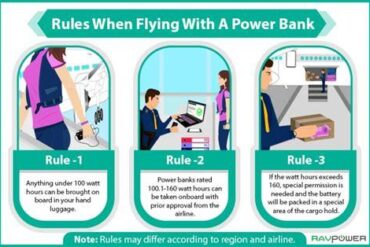
Passengers may see a future where power banks are allowed only in carry-on baggage, capped at stricter watt-hour limits, and barred from use in flight. Aircraft manufacturers may respond by improving built-in charging systems, reducing reliance on personal batteries altogether.
This is not an anti-technology backlash. It is aviation doing what it always does after enough data accumulates: quietly rewriting the rules to keep rare events from becoming tragedies. Power banks made modern travel easier. Now they are forcing the industry to rethink where convenience ends and unacceptable risk begins.