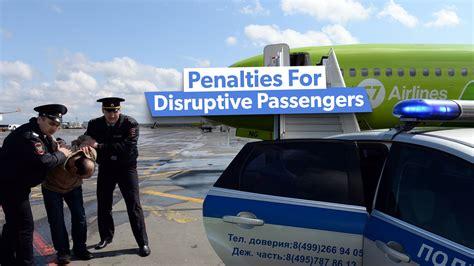
France has taken a decisive stance against unruly airline passengers, setting a new benchmark in aviation enforcement across Europe. With disruptive incidents on the rise, authorities have introduced sweeping penalties, including fines up to $23,000 and flight bans extending to four years, sending a clear signal that misbehavior in the skies will no longer be tolerated.
A Rising Crisis in the Skies
In recent years, the airline industry has witnessed an alarming surge in passenger misconduct. From physical altercations to refusal to comply with safety protocols, such incidents not only endanger lives but severely impact flight operations. The International Air Transport Association (IATA) disclosed a staggering 53,538 incident reports in 2024 alone—equating to one unruly passenger per 395 flights. These disruptions have escalated beyond isolated outbursts, reflecting a widespread behavioral issue that demands urgent policy intervention.
Most commonly, offenders refuse to follow crew instructions, use prohibited electronic devices, and engage in verbal or physical aggression. The implications are dire—not only compromising onboard safety but also leading to emergency landings, missed connections, and significant financial losses.
France’s Decree No. 2025-1063: A Legal Turning Point
Effective from November 8, 2025, France’s new legislative measure—Decree No. 2025-1063—empowers aviation authorities to take administrative action against disruptive passengers. The regulation, published in the nation’s Official Journal, provides a robust enforcement mechanism by:
- Introducing fines of $11,560 (€10,000) for single infractions
- Raising penalties up to $23,000 (€20,000) for repeat offenders
- Imposing boarding bans of up to four years
This new regime supplements existing criminal codes, which already allow for imprisonment up to five years and fines reaching $86,520 (€75,000) for the gravest violations. A key element is the creation of a centralized behavioral database, enabling airlines to flag offenders directly to regulatory authorities. This proactive tracking system is designed to ensure that high-risk individuals face swift and proportionate consequences.
The Cost of Disruption: Financial Toll on Airlines
Unruly behavior doesn’t just disturb flight order—it incurs massive financial setbacks. From additional fuel expenses to unexpected overnight accommodations, diversions prompted by disruptive passengers ripple across entire flight networks. According to Eurocontrol, estimated costs for diversions can vary drastically:
- Regional flights (<1,500 km): $8,075 to $91,138
- Continental flights (1,500–3,000 km) (Low-cost carriers): $5,678 to $144,200
- Continental flights (Mainline operators): $9,230 to $118,115
- Intercontinental flights (>3,000 km): $31,150 to $421,080
These figures reflect not only the operational expenses but also reputational damage, crew rescheduling, and customer compensation under EU261. While the European Court of Justice acknowledges that extreme passenger behavior constitutes “extraordinary circumstances,” airlines are still held accountable if they fail to mitigate foreseeable risks, such as boarding intoxicated individuals or over-serving alcohol.
The European Perspective: A Growing Continent-Wide Concern
France’s new policy aligns with a broader European pattern of escalating passenger misconduct. The European Union Aviation Safety Agency (EASA) reports between 200 and 500 onboard incidents each month, with a striking 70% involving aggression. More troubling is the statistic that one flight every three hours within the EU is impacted by passenger misbehavior, often compromising safety and forcing unscheduled landings.
European regulators and carriers alike have grown increasingly vocal about the need for standardized deterrents. The unpredictability of air rage demands not only legal responses but prevention through education and enforcement. France’s firm legal approach could act as a precedent for harmonized EU policy in the near future.
Ministerial Message: A Strong Political Signal
French Minister of Transport, Philippe Tabarot, encapsulated the urgency of the issue, stating:
“The safety of passengers and crews is our top priority. Disruptive behavior on board aircraft is not acceptable. They endanger flight safety and compromise the working conditions of flight crews.”
Tabarot emphasized that the decree ensures “rapid, fair, and proportionate repression”—a direct acknowledgment of the frustration felt by both flight crews and passengers. The policy is meant not only to punish but to deter future violations through visible, enforceable consequences.
Industry Reactions: Ryanair Takes Its Own Action
France is not acting alone. Other carriers are stepping up enforcement independently. Earlier this year, Ryanair initiated legal proceedings against a passenger whose behavior caused a costly diversion of Flight FR7124 from Dublin to Lanzarote in April 2024. The aircraft was forced to land in Porto, resulting in $17,300 (€15,000) in unexpected expenses. Passengers were stranded overnight and lost a day of vacation—an operational nightmare for any low-cost airline.
In response, Ryanair introduced a £500 ($650) fine for any passenger forcibly removed from a flight. The airline has warned that additional civil claims may follow, depending on the disruption’s severity. Such proactive policies underline the aviation industry’s increasing willingness to shift costs onto offenders, no longer absorbing losses as operational inevitabilities.
Why It Matters: Restoring Order in an Age of Air Rage
The skies are no longer immune to the societal pressures brewing on the ground. From post-pandemic stress to increased alcohol consumption, experts cite a range of factors contributing to rising air rage. But excuses no longer suffice. The aviation sector demands order, predictability, and safety. France’s policy recognizes that while empathy and awareness campaigns are useful, legal deterrents are essential to reestablish boundaries.
By adopting clear thresholds of tolerance, backed by real financial and personal consequences, the French government sets a powerful example. It recognizes that passenger freedom aboard aircraft must be balanced against the collective safety and dignity of all on board.
What Comes Next: Broader International Implications
France’s move could inspire a wave of policy reforms across Europe and beyond. The success of the framework will depend on effective implementation, including data sharing across carriers, training flight crews on enforcement protocols, and consistent application of sanctions. There’s also a growing call for cross-border cooperation, where offenders banned in one country are flagged across international carriers.
Aviation is by nature a global enterprise. For any legal framework to truly deter misbehavior, it must be recognized beyond national borders. Already, IATA has encouraged member airlines to support broader sanction systems. A global unruly passenger database, much like France’s new domestic model, could be the next frontier.
Conclusion: The Era of Tolerance Has Ended
The French government’s decisive policy marks a critical shift in aviation governance. It reflects a growing consensus that passenger misbehavior—once treated as a nuisance—is now seen as a severe threat to public safety and commercial viability. With clear monetary penalties, flight bans, and legal consequences, France is not only protecting its aviation ecosystem but redefining acceptable conduct at 30,000 feet.
As passenger volumes rise post-pandemic and the industry faces mounting pressures, such legal frameworks may well define the next era of air travel—one where courtesy is not optional, and order is enforced not by suggestion, but by law.