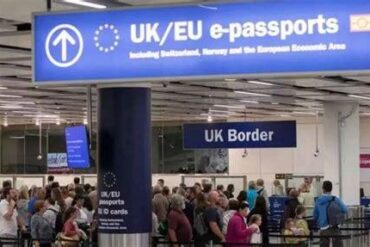
The UK Foreign Office has recently released a significant travel advisory for British passport holders planning trips to Europe, raising alarms about potential restrictions that could bar them from entering the continent for as long as three years. This advisory comes in the wake of Brexit, which fundamentally altered the landscape of travel regulations for UK nationals. With the cessation of unrestricted travel within EU member states, British citizens must now navigate a complex set of rules, particularly concerning the Schengen Area, which encompasses many of Europe’s most popular destinations.
Under the new regulations, while UK nationals can still travel to countries within the Schengen Area without a visa, they are now subject to a strict 90-day visa-free limit within any rolling 180-day period. This means that British travelers can only spend a cumulative total of 90 days in the Schengen Area without needing a visa, emphasizing the importance of meticulous planning and time management when embarking on trips to Europe.
The clock for this 90-day period begins ticking upon entry into any Schengen country and pauses when the traveler exits. The 180-day window operates as a rolling period, meaning that any time spent in the region over the past six months counts toward the 90-day limit. For instance, if a traveler spends 10 days in the Schengen Area and then moves to another destination within the same zone for an additional 7 days, their total time spent will amount to 17 days. Even if they temporarily leave for a non-Schengen country and return, all time within the Schengen Area is cumulative.
To illustrate further, consider a scenario where a UK traveler enters the Schengen Area, enjoys a stay of 10 days, returns to the UK for 5 days, and subsequently re-enters the Schengen Area for another 7 days. In this case, despite leaving the Schengen Area briefly, the total count remains 17 days, underscoring the need for travelers to monitor their duration of stay closely. Exceeding this limit can lead to serious consequences, including hefty fines, deportation, and even a travel ban of up to three years.
The UK government’s advisory underscores the critical nature of adhering to the 90-day rule. Overstaying not only disrupts travel plans but also limits access to a vast network of European countries, which many British citizens have enjoyed visiting without restriction in the past. The European Union comprises numerous nations, including Austria, Belgium, Bulgaria, Croatia, Cyprus, the Czech Republic, Denmark, Estonia, Finland, France, Germany, Greece, Hungary, Ireland, Italy, Latvia, Lithuania, Luxembourg, Malta, the Netherlands, Poland, Portugal, Romania, Slovakia, Slovenia, Spain, and Sweden. Notably, the Schengen Area also includes several non-EU countries, such as Iceland and Switzerland, further expanding travel opportunities for UK nationals.
The changes following Brexit have made it imperative for UK travelers to fully comprehend the new regulations governing their journeys to Europe. As travel bans can significantly affect future plans, British passport holders must be diligent in tracking their time spent in the Schengen Area. By strictly adhering to the 90-day limit within the 180-day timeframe, UK travelers can continue to explore the rich cultural tapestry of Europe. However, careful planning and management of their travel schedules are essential to avoid potential pitfalls.
Moreover, with the complexities introduced by these new rules, it’s advisable for travelers to utilize digital tools and applications designed to help keep track of their travel durations. Such tools can provide reminders and alerts when nearing the limit, ensuring that travelers remain informed about their status and can adjust their plans accordingly.
In addition to monitoring days spent within the Schengen Area, travelers should also stay updated on any changes to travel advisories, health regulations, and entry requirements that may arise due to evolving political climates or public health concerns. The global landscape continues to shift, and understanding these factors can make a substantial difference in the ease and enjoyment of travel.
Traveling to Europe remains an enriching experience, filled with opportunities for exploration and adventure. From the romantic canals of Venice to the historic streets of Paris, the allure of European destinations is undeniable. However, the joy of travel should not be overshadowed by the fear of penalties or restrictions. By being aware of the new travel rules and taking proactive steps to manage their stays, British tourists can ensure that their experiences in Europe remain memorable for all the right reasons.
As the travel landscape continues to evolve post-Brexit, it is crucial for British passport holders to remain vigilant and informed. The stakes are high, and the implications of overstaying can be far-reaching, affecting not just current travel plans but potentially future trips as well. Understanding the nuances of the Schengen Area regulations will empower UK travelers to navigate this new terrain successfully, allowing them to enjoy all that Europe has to offer without unnecessary complications.
In conclusion, the UK Foreign Office’s warning serves as a vital reminder for British tourists to approach their travels to Europe with care and consideration. By respecting the new rules and keeping a close eye on their travel days, UK nationals can continue to experience the wonders of the continent without the looming threat of travel bans or legal repercussions. Awareness and preparation will be key in ensuring a seamless travel experience in this post-Brexit era.