For most of aviation history, a nonstop passenger flight between Australia and continental Europe existed more as an engineering ambition than a practical commercial reality. The vast distance separating the two regions created one of the most challenging missions in global aviation. Airlines could connect Australian cities with Europe, but almost every journey required a stop through major international hubs in Asia or the Middle East.
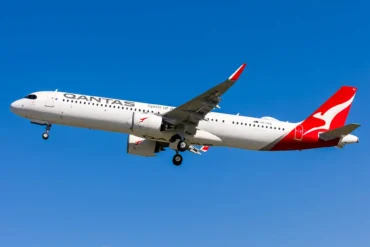
Today, one airline has managed to break that pattern. Qantas is currently the only airline operating a nonstop passenger service between Australia and continental Europe, with its seasonal Perth to Rome route connecting Western Australia directly with Italy. The achievement represents far more than simply having a long-range aircraft. It is the result of a rare combination of geographic advantage, aircraft technology, carefully selected markets, and disciplined network planning.
The uniqueness of Qantas’ nonstop Europe service highlights an important reality about modern long-haul aviation. Although aircraft have become dramatically more capable, the economics of ultra-long-haul flying remain extremely demanding. A route must not only be technically possible but also commercially sustainable. Many airlines could theoretically operate similar missions, but few have the right combination of aircraft, airport location, and passenger demand to justify the investment.
The story of Qantas’ Perth to Rome flight demonstrates why geography still matters in aviation. Even in an era of advanced composite aircraft and highly efficient engines, the shortest path between two continents can determine whether a route succeeds or fails.
Perth’s Geographic Advantage Makes Nonstop Australia-Europe Flights Possible
The most important factor behind Qantas’ unique position is Perth’s location on Australia’s western coast. Unlike Sydney, Melbourne, and Brisbane, Perth is significantly closer to Europe, reducing the distance that aircraft must travel across the Indian Ocean and Eurasian airspace.
This geographic advantage creates the foundation for the airline’s nonstop European operations. The distance between Perth and Rome is approximately 8,300 miles (13,350 kilometers), while flights from Australia’s eastern cities are much longer.
Sydney to Rome measures roughly 10,155 miles (16,342 kilometers), Melbourne to Rome is approximately 9,932 miles (15,984 kilometers), and Brisbane to Rome reaches around 10,025 miles (16,134 kilometers). Those additional miles may appear relatively small on a global map, but in ultra-long-haul aviation, they create major operational challenges.
A few hundred extra miles can mean reduced passenger capacity, less cargo capability, higher fuel requirements, and limited flexibility during unfavorable weather conditions. Aircraft operating at the edge of their range cannot simply add more fuel indefinitely because additional fuel increases weight and reduces efficiency.
Perth’s position effectively removes the final barrier that prevents today’s aircraft from connecting Australia directly with continental Europe. The city acts as Australia’s natural gateway for westbound ultra-long-haul flights.
The same advantage allowed Qantas to launch its historic Perth to London nonstop service in 2018, becoming the first airline to connect Australia and Europe directly with scheduled passenger flights. That achievement proved that Western Australia could support a new generation of long-distance aviation.
However, geography alone does not guarantee success. Perth is not the largest Australian city and does not generate the same passenger volumes as Sydney or Melbourne. Qantas needed another crucial ingredient: an aircraft capable of completing the mission efficiently.
The Boeing 787-9 Dreamliner Enables Qantas’ Ultra-Long-Haul Strategy
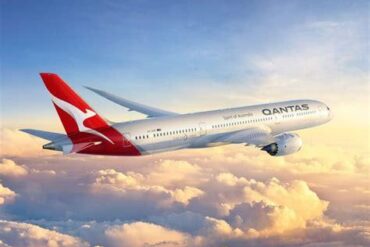
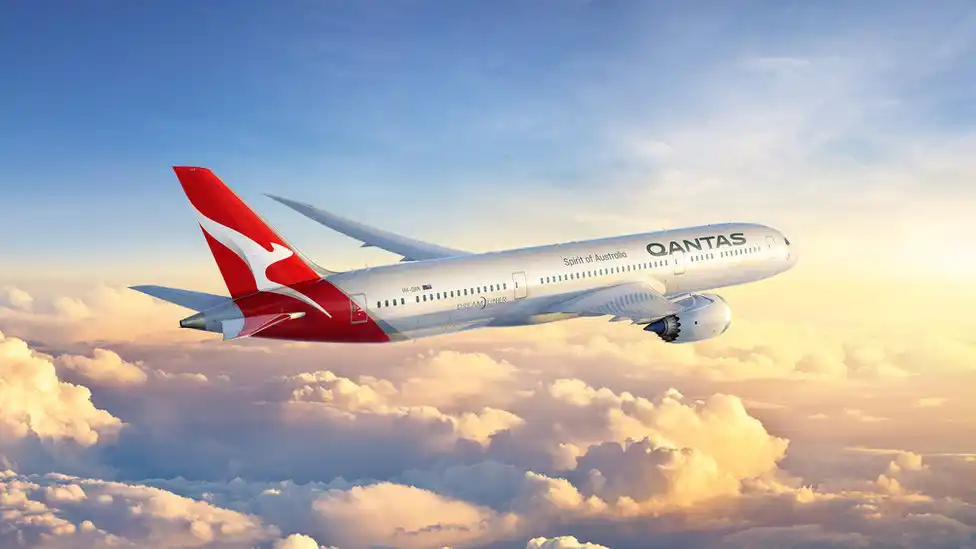
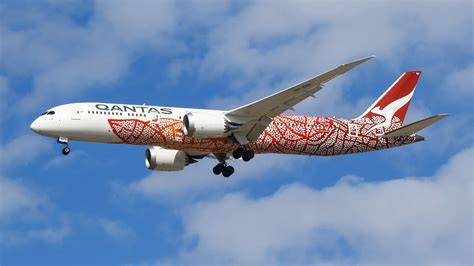
The second major reason Qantas can operate nonstop flights between Australia and continental Europe is the capability of the Boeing 787-9 Dreamliner.
Unlike larger aircraft designed primarily for high passenger capacity, the 787-9 was created for efficiency and long-range flexibility. Its lightweight composite structure, aerodynamic design, and fuel-efficient engines allow airlines to operate routes that would have been impossible or financially unattractive with older aircraft.
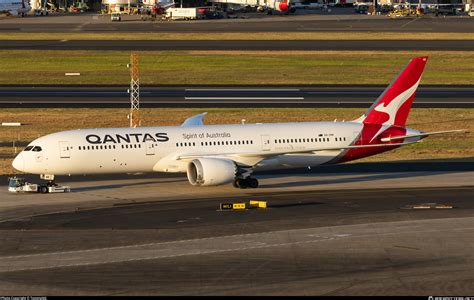
Qantas configures its 787-9 fleet with 236 seats, including 42 business class seats, 28 premium economy seats, and 166 economy seats. The relatively smaller cabin compared with aircraft such as the Airbus A380 or Boeing 777-300ER helps reduce weight and allows the aircraft to maintain the fuel reserves required for extremely long sectors.
The Dreamliner is powered by General Electric GEnx engines, which provide significant fuel efficiency improvements compared with previous-generation widebody aircraft. Every percentage point of fuel savings matters when an aircraft is flying close to its maximum range for more than 15 hours.
Passenger comfort is also an important consideration. Long flights require more than just technical capability. Qantas designed its Dreamliner cabins with improved humidity levels, lower cabin altitude, larger windows, and enhanced environmental systems to reduce fatigue during journeys approaching 16 hours.
Despite these advantages, the aircraft still operates within strict limits. Ultra-long-haul flights must account for changing winds, weather systems, air traffic restrictions, alternate airport requirements, and mandatory fuel reserves.
This explains why Qantas carefully selects which European destinations can support nonstop operations. Not every city can justify such a demanding route, even with a capable aircraft.
Why Other Airlines Prefer One-Stop Flights Through Global Hubs
The lack of competing nonstop flights does not mean there is insufficient demand between Australia and Europe. Millions of passengers travel between the regions every year. The difference is that most airlines believe hub-based connections provide stronger economics than ultra-long-haul nonstop operations.
Major international carriers including Emirates, Qatar Airways, Singapore Airlines, Cathay Pacific, and Turkish Airlines have built highly successful networks based around strategic connecting hubs.
Instead of flying one extremely long sector, these airlines divide the journey into two shorter flights. For example, passengers from Australia may connect through Dubai, Doha, Singapore, Hong Kong, or Istanbul before continuing to Europe.
This approach provides several advantages. Aircraft can be scheduled more efficiently, crews can operate within more conventional working limits, and airlines can combine passengers from multiple origins before distributing them across Europe.
A passenger flying from Sydney, Melbourne, Brisbane, or Adelaide can connect through the same international hub and continue to dozens of European destinations. A single nonstop Perth service, by contrast, primarily serves passengers traveling to one specific destination.
The hub model also allows airlines to maintain better aircraft utilization. A long-range aircraft spending 16 hours flying between two cities has fewer opportunities to operate additional flights during the same period.
For European airlines, the challenge is even greater. A carrier based in cities such as Paris, Frankfurt, or Rome would need to dedicate aircraft to an extremely long route while relying heavily on demand from Perth alone. Without a strong domestic Australian network feeding the flight, achieving consistently high load factors becomes difficult.
Qantas succeeds because Perth is not simply a destination. It is also a strategic point in Australia’s international network.
Why Rome Became Qantas’ Ideal Continental Europe Destination
Qantas’ decision to operate nonstop flights to Rome was not accidental. The route represents a carefully targeted opportunity where aircraft capability and passenger demand align.
The airline launched the Perth to Rome service in 2022, creating the first nonstop passenger connection between Australia and continental Europe. Rather than operating the route throughout the entire year, Qantas designed it around periods of stronger travel demand.
The European summer season creates particularly strong demand from Australian travelers visiting Italy. Rome also functions as a major gateway, allowing passengers to continue onward throughout Europe through existing transport connections.
For 2026, Qantas expanded the service by increasing flights from three weekly operations to four weekly flights during the season. The expansion reflects continued interest while maintaining the seasonal structure needed for profitability.
This approach demonstrates how Qantas manages ultra-long-haul flying. The airline is not attempting to create a worldwide network of nonstop Europe routes from Australia. Instead, it focuses on destinations where demand is strong enough to support the aircraft commitment.
The airline previously operated a nonstop Perth to Paris service, but later adjusted the route strategy and returned to a Singapore connection. The change showed that even Qantas must carefully evaluate whether a nonstop service provides enough commercial value compared with traditional hub operations.
Project Sunrise Could Transform Australia’s Future European Connections
While Perth currently holds the unique position of enabling nonstop flights from Australia to continental Europe, Qantas has much larger ambitions.
The airline’s Project Sunrise program aims to introduce nonstop flights from Sydney and Melbourne to major international destinations using specially configured Airbus A350-1000 aircraft.
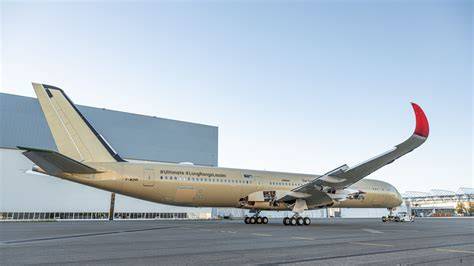
These aircraft are designed specifically for missions exceeding 20 hours, representing a major step beyond today’s Boeing 787-9 operations. Additional fuel capacity, efficient Rolls-Royce Trent XWB engines, and advanced aerodynamic improvements will allow Qantas to explore routes previously considered impossible.
Project Sunrise is expected to transform the concept of Australian long-haul travel. Instead of passengers from Sydney or Melbourne connecting through Singapore, Doha, or Dubai, future travelers could potentially fly directly to European destinations.
The program also includes research into passenger wellbeing during extremely long flights. Qantas has explored cabin design, lighting schedules, meal timing, and onboard movement areas to reduce the physical effects of journeys lasting more than 20 hours.
If successful, Project Sunrise could reduce Perth’s unique advantage. Sydney and Melbourne would gain the ability to compete directly in the ultra-long-haul market.
However, until those aircraft enter service and prove commercially viable, Perth remains Australia’s only realistic launch point for nonstop continental European flights.
Will Another Airline Challenge Qantas’ Nonstop Europe Position?
For the foreseeable future, Qantas is likely to remain the only airline operating nonstop passenger flights between Australia and continental Europe.
The reason is not simply that other airlines lack suitable aircraft. The challenge is that nonstop ultra-long-haul flying requires a rare balance between technology, geography, and market demand.
Perth provides the geographic advantage. The Boeing 787-9 provides the technical capability. Rome provides the seasonal passenger demand. Remove any one of those elements, and the business case becomes far more difficult.
Future aircraft developments could eventually change the market. New generations of ultra-long-range aircraft may allow more airlines to reconsider direct Australia-Europe services. However, most carriers will continue to evaluate nonstop flights against the proven economics of established global hubs.
Qantas’ Perth to Rome route remains a remarkable example of modern aviation’s limits being pushed carefully rather than recklessly. It proves that nonstop flights between distant continents are possible, but also shows why they remain rare.
The route exists because everything came together at the right moment: a strategically located airport, a highly efficient aircraft, and a market willing to support one of the world’s longest passenger flights. Until the next generation of aircraft changes the equation, Qantas will continue to hold a unique place in global aviation as the airline connecting Australia directly with continental Europe.