Continental Airlines stood as one of the most dynamic and resilient carriers in American aviation history. Born from modest beginnings as Varney Speed Lines in 1934, it evolved through decades of expansion, adversity, innovation, and eventually, integration into United Airlines in 2012. With a reputation for premium service and operational reinvention, Continental’s legacy remains embedded in the evolution of modern air travel.
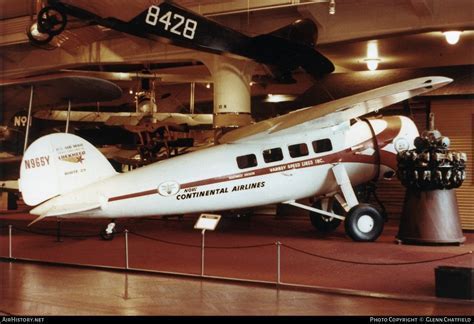
Founded in May 1934 by aviation pioneers Walter Varney and Louis Mueller, Varney Speed Lines initiated service across the Southwestern U.S. with Lockheed Vega aircraft, flying short-haul routes between Pueblo, Colorado and El Paso, Texas. By 1936, Robert F. Six had invested $90,000 into the company and began transforming it from a regional courier into a national player. Under his leadership, the airline rebranded to Continental Air Lines in 1937 and moved its headquarters to Denver, symbolizing broader ambitions.
During World War II, Continental supported the U.S. military by converting and modifying B-17s, B-29s, and P-51s for combat use, an effort that positioned it for postwar expansion. The airline returned to civilian service with a modernized fleet that included Douglas DC-3s and Convair pressurized aircraft, signifying a move toward larger-scale commercial operations. In 1955, the acquisition of Pioneer Air Lines added 16 cities and catalyzed a fivefold growth under President Harding Lawrence.
By the late 1950s, Continental had introduced the Vickers Viscount turboprop — branded as the “Jet Power Viscount II” — and became an early adopter of the Douglas DC‑7B, offering long-range flights with improved passenger amenities. This period marked the airline’s first use of economy excursion fares, a forerunner to modern pricing strategies.
The jet age of the 1960s saw Continental Airlines deploy Boeing 707-124s, adopting “progressive maintenance” techniques that minimized aircraft downtime and maximized reliability. The carrier also expanded its narrow-body fleet with DC‑9s and Boeing 727s, while phasing out older piston and turboprop planes. The company’s branding renaissance came in 1968 with Saul Bass’s striking “Golden Tails” livery and the slogan, “The Airline That Pride Built.”
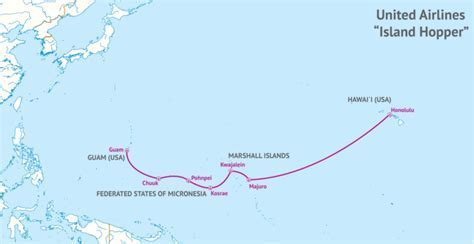
In the Pacific, Continental launched Air Micronesia in 1968, connecting remote islands such as Truk, Yap, and Ponape to Guam and Honolulu via the legendary Island Hopper service. This move solidified the airline’s strategic niche in the Pacific basin.
The 1970s represented both innovation and turbulence. In 1970, Continental became only the second U.S. airline to operate the Boeing 747 domestically, introducing a Polynesian-themed upper-deck lounge dubbed the “Polynesian Pub.” The wide-body McDonnell Douglas DC‑10 entered service in 1972, and Denver became a central hub. Post-deregulation in 1978, Continental quickly expanded its network with new domestic and international routes, including service from Los Angeles to Taipei and South Pacific operations through Australia and New Zealand.
But challenges emerged: The tragic DC‑10 crash of Flight 191 in 1979 led to a temporary grounding, deeply affecting the airline’s Hawaii-bound operations. Nevertheless, Continental merged with Texas International Airlines in 1982, relocating its headquarters to Houston and launching the Travel Bank frequent-flyer program.
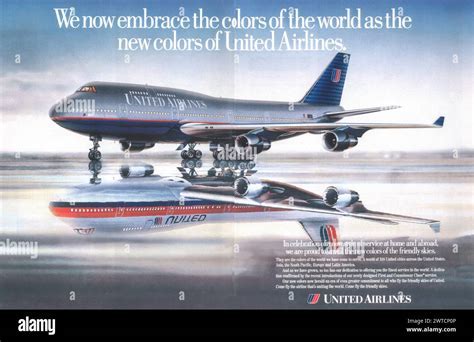
The 1980s were marked by radical transformation and labor unrest. Following the 1981 takeover by Texas Air Corporation under Frank Lorenzo, Continental filed for Chapter 11 bankruptcy in 1983, slashed labor costs, and re-emerged profitable by 1984. The acquisition of PeopleExpress, Frontier, and New York Air in the mid-1980s briefly made Continental the sixth-largest airline globally. By 1987, the airline had unveiled its OnePass frequent-flyer program, formed an alliance with SAS, and introduced its iconic blue and gray globe livery, replacing First Class with BusinessFirst — a premium product that gained wide industry acclaim.
The 1990s began with instability as SAS gained control, but Gulf War-induced economic turmoil pushed Continental into a second bankruptcy in 1990. Emerging under new ownership — Air Partners and Air Canada — the airline appointed Gordon Bethune as CEO in 1994. Bethune’s “Go Forward Plan” focused on employee morale, customer satisfaction, and operational discipline. Continental began phasing into an all-Boeing fleet, garnering multiple J.D. Power awards for customer service. It expanded into Europe and Asia and launched interline e-ticketing — a pioneering move.
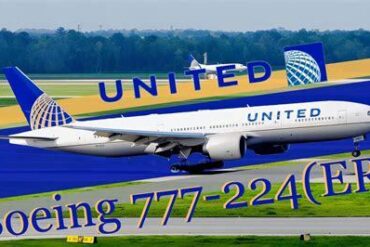
The arrival of Boeing 777-200ERs in 1998 enabled new long-haul services such as Newark–Zurich and Cleveland–London. Continental also established ties with Copa Airlines and Northwest, reinforcing its international strategy.
The 2000s were marked by global ambition. In 2001, Continental launched its first ultra-long-haul flight: Newark–Hong Kong, a 16+ hour nonstop that tested aircraft endurance and passenger comfort. Joining SkyTeam in 2004 enabled deeper codeshare connections, especially into Asia. Between 2005 and 2007, the airline introduced routes to Beijing, Mumbai, and New Delhi, positioning Newark as a critical East Coast hub for transpacific travel.
Mergers loomed. Talks with United Airlines began in 2008, driven by rising fuel costs and economic uncertainty. That same year, Continental began phasing out older Boeing 737-300s and -500s, and started transitioning to Star Alliance, severing ties with SkyTeam.
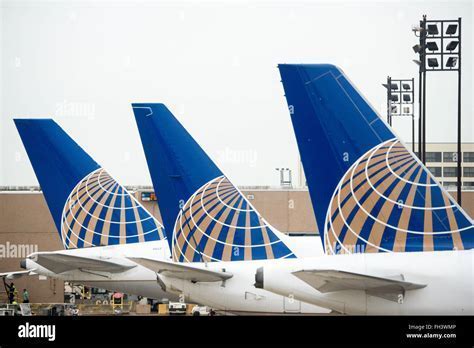
In 2009, Continental became the first U.S. airline to test a commercial biofuel-powered flight, highlighting its sustainability focus. As global markets tightened, strategic consolidation accelerated. In 2010, the merger with United Airlines was finalized under the United Continental Holdings banner, and the combined airline adopted Continental’s globe logo and Houston-based management style.
By March 3, 2012, the Continental name officially disappeared as FAA certification merged both carriers into one. While the brand ceased to exist, its DNA endured in the new United’s fleet structure, transpacific expertise, and loyalty programs.
Legacy and Industry Impact
Continental Airlines leaves behind a formidable legacy of customer service innovation, technical leadership, and adaptability. Its story mirrors the larger history of U.S. aviation — from regulated airmail routes to post-deregulation hyper-competition and, finally, megacarrier consolidation. It pioneered:
- Island-hopping Pacific service through Air Micronesia
- BusinessFirst, which reshaped premium international travel
- E-ticketing and interline technologies ahead of competitors
- Sustainable aviation initiatives through biofuel trials
Continental’s historical figures — from Robert Six and Gordon Bethune to Frank Lorenzo and Jeff Smisek — each played transformative roles, for better or worse. Its frequent-flyer program OnePass influenced loyalty strategy, and its hubs, especially Houston Intercontinental and Newark, remain critical to United’s present-day operations.
The airline may no longer exist, but the legacy of Continental Airlines is etched into aviation’s modern blueprint, embodying both the triumphs and trials of an industry in constant flux.