Located in the historic Ford Building in Balboa Park, the San Diego Air & Space Museum (SDASM) stands as a monumental tribute to human ingenuity in aviation and aerospace. Since its founding in 1961, it has evolved from a modest collection into a world-class institution, now a proud Smithsonian Affiliate and fully accredited by the American Alliance of Museums. Its coordinates—32.7262°N, –117.1543°W—anchor it as a destination for aerospace enthusiasts, historians, and families seeking inspiration through flight.
Originally conceived during the Cold War era, when the space race gripped American imagination, the museum’s mission has always been educational, technological, and commemorative. Over the decades, it has come to represent not only a curated record of machines and missions but also a resilient spirit shaped by catastrophe and community rebuilding.
A Tumultuous Beginning and Rebirth Through Community Grit
What began as the San Diego Aerospace Museum opened its doors in 1963 within the old Food & Beverage Building from the 1915 Panama-California Exposition. By 1965, it had relocated to the Electrical Building, and for more than a decade, it showcased historic airframes and educational programs. However, this chapter ended in devastation on February 22, 1978, when arson gutted the museum, annihilating rare aircraft like the Beecraft Wee Bee, Queen Bee, and a Spirit of St. Louis reproduction.
The tragedy catalyzed a profound mobilization across San Diego. Citizens, veterans, and aviation aficionados rallied to fund and support the museum’s rebirth. Their efforts bore fruit on June 28, 1980, when the museum triumphantly reopened in the Ford Building, a marvel of Streamline Moderne architecture built for the 1935 California Pacific International Exposition. The space was not only restored but reimagined, with new reproductions of the Spirit of St. Louis and Wee Bee, asserting that history could be both remembered and remade.

Core Galleries and Iconic Artifacts
The museum’s interior is organized into thematic galleries that take visitors through over a century of aeronautical innovation.
Theodore Gildred Rotunda
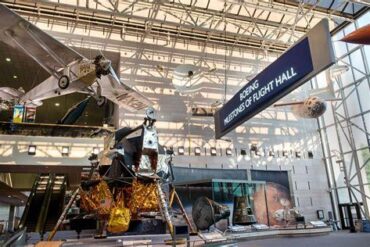
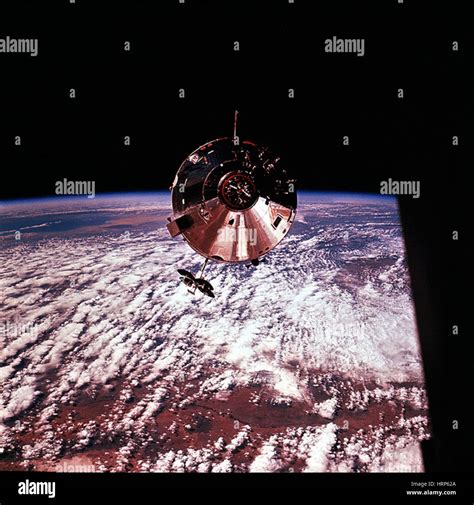
This central hub is home to one of SDASM’s crown jewels: the Apollo 9 Command Module “Gumdrop”, the very spacecraft that tested the lunar module rendezvous techniques critical to the Apollo moon landings. Alongside it are a reproduction of the Curtiss A-1 Triad—the Navy’s first aircraft—and the Montgomery Evergreen glider, representing early Californian aviation.
World War I Gallery
With immersive dioramas, this section recreates the feel of a Western Front airfield, complete with a tented command post and interactive exhibits like synchronization gear demos. Aircraft include reproductions of the Albatros D.Va and Fokker Dr.I, the latter famously piloted by the Red Baron, as well as authentic fighters like the SPAD S.VII and Nieuport 28.
Golden Age of Flight Gallery
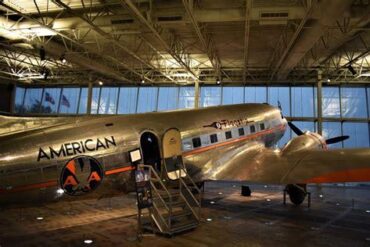
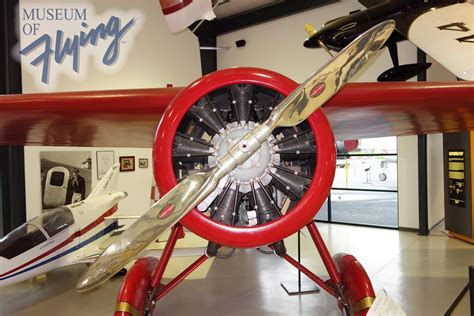
Spanning the 1920s and 1930s, this gallery features a Lockheed Vega replica, flown by pioneers like Amelia Earhart, and a bright yellow Piper J-3 Cub, emblematic of pre-war civilian aviation. Exhibits such as a Pacific Southwest Airlines (PSA) stewardess uniform and a Flight 182 memorial offer poignant reflections on aviation culture and tragedy.
World War II Gallery
This section is a tribute to industrial ingenuity under fire. Standout displays include a P-51D Mustang, a USS Yorktown mock-up housing dive bombers like the SBD Dauntless and F6F Hellcat, and a Horten Ho 229 replica—Nazi Germany’s futuristic flying wing. Key powerplants such as the Rolls-Royce Merlin 62 and Junkers Jumo 004B-1 illustrate technological arms races.
Modern Jet & Space Age Gallery
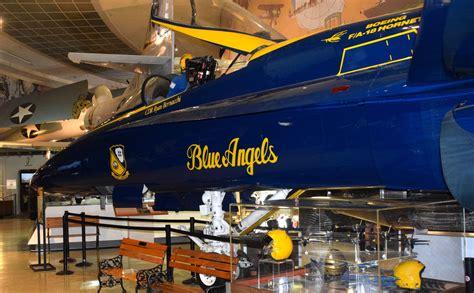
From supersonic jets to orbital mechanics, this gallery features the Blue Angels F/A-18A, a Douglas A-4B Skyhawk, and satellite tech like the GPS-12. Replica modules from Gemini and Apollo missions link jet propulsion to the vacuum of space, underscoring the transition from atmospheric to extraterrestrial exploration.

Edwin D. McKellar Pavilion of Flight
This spacious hangar highlights large aircraft including a Consolidated PBY-5A Catalina, McDonnell Douglas F-4 Phantom II, and a Wee Bee replica, which at 21.5 inches tall, was once the world’s smallest piloted aircraft. Visitors can also find a MiG-17, Ford Trimotor, and a Bell AH-1E Cobra.
Outdoor Displays
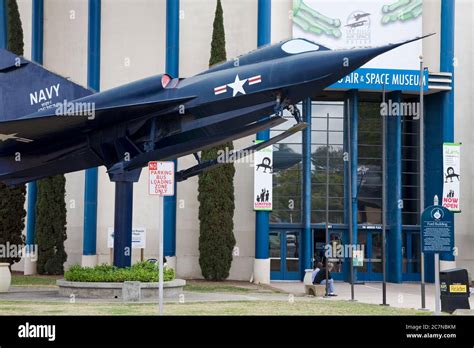
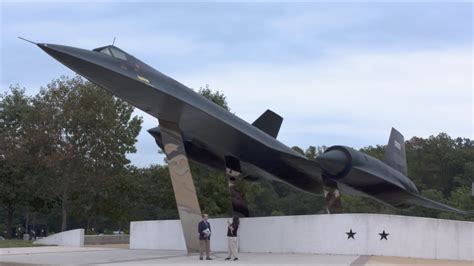
The museum’s grounds host two extremely rare aircraft: a Lockheed A-12 Oxcart, precursor to the SR-71 Blackbird, and the Convair YF2Y-1 Sea Dart, a supersonic seaplane prototype. Their unusual designs and limited production status make them cornerstones of experimental aviation history.
The Gillespie Field Annex: Top Gun Tech and Cold War Relics
Located in El Cajon, the Gillespie Field Annex is an extension of the museum, serving as a storage and restoration site as well as an open-air gallery. Here, visitors encounter an F-14 Tomcat—used in the blockbuster “Top Gun: Maverick“—alongside an F-16 Fighting Falcon, a Bell UH-1 Iroquois, and rare Cold War missiles like the SM-65 Atlas ICBM.
The annex also features the Ryan X-13 Vertijet, a vertical takeoff jet that foreshadowed VTOL designs like the Harrier. Restoration labs here work on sensitive conservation projects, breathing new life into aircraft that once defined the cutting edge.

Collections, Archives, and Facilities
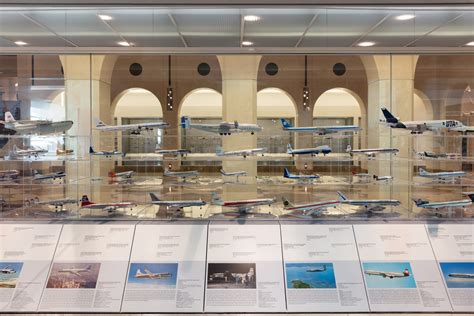
SDASM’s value is not limited to its physical aircraft. Its on-site library and archives boast the third-largest aviation photographic and document collection in the U.S. Researchers can delve into blueprints, journals, mission records, and aeronautical patents. Restoration workshops at both museum sites employ skilled volunteers and staff who rebuild everything from biplane struts to space capsule heat shields.
Educational Outreach and Special Events
True to its mission, the museum fosters education through lecture series, STEM-based youth programs, and immersive camps. Its Pavilion of Flight is also available for private events, including corporate functions and weddings, allowing attendees to dine beneath warbirds and mooncraft.
Annual highlights include the International Air & Space Hall of Fame inductions, honoring trailblazers from Chuck Yeager to Elon Musk, and rotating exhibits that explore themes like Women Airforce Service Pilots (WASP) or California’s contributions to lunar exploration.
Conclusion: A Testament to Flight and Resilience
The San Diego Air & Space Museum is not merely a collection of static displays. It is a living chronicle of aviation’s past, present, and future. From early gliders to hypersonic jets, from the ashes of arson to international recognition, it exemplifies how a museum can serve as both a memorial and a launchpad for curiosity. Through meticulous restoration, strategic partnerships, and an enduring commitment to education, SDASM ensures that the story of flight remains ever in motion.