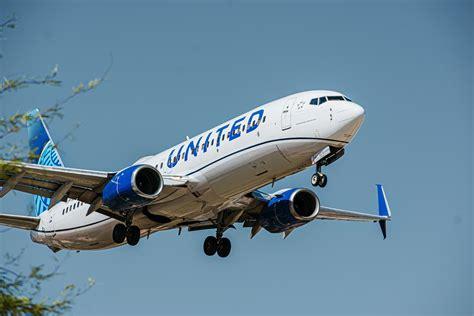
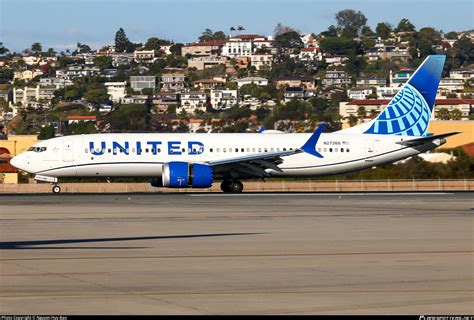
A routine short-haul flight over California turned into a moment of heightened scrutiny for aviation safety after a United Airlines Boeing 737-800 reportedly encountered a suspected drone while descending into San Diego International Airport (SAN). The incident, which occurred during the critical final phase of flight, underscores a growing concern within the aviation industry: the unpredictable presence of small unmanned aircraft in controlled airspace.
United Flight 1980, operating from San Francisco International Airport (SFO), was nearing its destination shortly after 8:00 a.m. local time when the flight crew observed what they described as a small, red, shiny object at approximately 3,000 feet. Despite the unusual sighting, the aircraft continued its approach and landed safely without declaring an emergency, and all passengers disembarked normally.
What makes this event stand out is not disruption or damage—but the altitude and location of the sighting. At 3,000 feet, the object was far above the legal operating ceiling for most consumer drones and directly within a busy commercial arrival corridor, raising serious questions about airspace compliance and risk exposure.
Safe Landing, Serious Questions: What Happened on Final Approach
The flight carried 48 passengers and six crew members, a typical load for the short intra-state journey. According to official statements, no injuries were reported, and a detailed inspection by United’s maintenance team found no visible damage to the aircraft.
However, the exchange between the pilots and air traffic control paints a vivid picture of uncertainty. When asked to describe the object, the pilot reportedly responded that it was “too small to tell”, noting only its color and reflective appearance. This ambiguity highlights a key challenge: even trained professionals with optimal vantage points may struggle to identify fast-moving, compact objects in crowded airspace.
The absence of immediate consequences does not diminish the seriousness of the encounter. Aviation safety often hinges on near-misses and anomalies, not just accidents. Each unexplained object becomes a data point in a larger pattern that regulators and airlines cannot afford to ignore.
Why a Drone at 3,000 Feet Is a Big Deal
Under Federal Aviation Administration (FAA) guidelines, most drones are restricted to a maximum altitude of 400 feet, unless operators receive special authorization. Controlled airspace near airports imposes even stricter limitations, requiring coordination with air traffic control systems.
A drone—or any unidentified object—at 3,000 feet represents a clear deviation from these rules. More importantly, it places the object directly in the path of descending aircraft, where pilots are managing speed, configuration, and alignment with limited room for evasive action.
This altitude is not just a number; it is part of a carefully managed vertical corridor designed to maintain safe separation between aircraft. Introducing an untracked object into this environment is akin to placing an obstacle on a high-speed highway with no warning signs.
The Unique Threat Profile of Drones vs. Bird Strikes
Commercial aviation has long been engineered to withstand bird strikes, a known and statistically modeled hazard. Drones, however, introduce a fundamentally different risk profile.
Unlike birds, drones are composed of rigid materials—including metals, dense plastics, electric motors, and lithium-ion batteries. These components behave very differently upon impact, potentially causing more concentrated and severe damage.
A drone strike could affect an aircraft in several critical ways:
- Cockpit windshield damage, risking pilot visibility and safety
- Engine ingestion, where hard components could damage internal systems
- Wing or control surface impact, potentially altering aerodynamics
- Sensor disruption, affecting navigation and instrumentation
- Battery-related fire hazards, introducing thermal risks not seen with organic material
Even in cases where no damage occurs, the psychological and operational impact on pilots during high-workload phases like landing can be significant.
A Rare but Escalating Aviation Safety Challenge
Confirmed drone collisions with manned aircraft remain extremely rare, particularly involving commercial airliners. Most documented incidents have involved helicopters, which operate at lower altitudes and are inherently more exposed to drone traffic.
However, rarity does not equate to insignificance. The increasing affordability and accessibility of drones have led to a steady rise in unauthorized flights near airports. The FAA reports receiving over 100 drone sighting reports per month, a figure that reflects both growing usage and persistent non-compliance.
If the San Diego incident is ultimately confirmed as a drone strike, it could represent a first-of-its-kind event involving a commercial jet, marking a pivotal moment in aviation risk assessment.
Could It Have Been Something Else? The Investigation Continues
Despite the initial report, investigators have not yet confirmed that the object was a drone. The pilot’s limited description—small, red, shiny—leaves room for alternative explanations, ranging from airborne debris to optical illusions caused by light reflections.
The lack of physical evidence complicates the investigation. Without damage or recovered fragments, authorities must rely heavily on pilot testimony, radar data, and environmental analysis. This uncertainty is a recurring challenge in drone-related incidents, where objects can appear and disappear without leaving a trace.
Still, the scenario fits a pattern that aviation authorities have been increasingly concerned about: small, difficult-to-detect objects operating in restricted airspace, potentially without malicious intent but with significant consequences.
The Broader Context: From Consumer Gadgets to Security Risks
Drones have evolved rapidly from recreational devices into tools with commercial, industrial, and even military applications. In recent conflicts, they have demonstrated their capability as precision weapons, capable of targeting infrastructure and vehicles with alarming effectiveness.
While there is no indication of malicious intent in this case, the mere possibility introduces a new dimension to aviation security. A drone operating at 3,000 feet in a commercial flight path is not just a regulatory violation—it is a potential vulnerability.
Airports and aviation authorities are now exploring advanced countermeasures, including drone detection systems, geofencing technologies, and signal jamming capabilities. However, these solutions face technical, legal, and ethical challenges, particularly in densely populated urban environments.
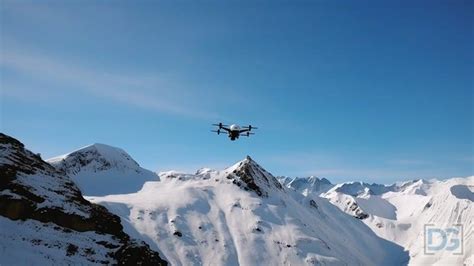
What This Means for the Future of Commercial Aviation
The incident near San Diego serves as a reminder that airspace is becoming increasingly complex. Traditional threats like weather and mechanical failure are now joined by emerging risks tied to technology democratization.
For airlines, this means adapting training programs to include drone encounter scenarios. For regulators, it involves tightening enforcement and improving real-time monitoring of low-altitude airspace. For drone operators, it is a stark warning that irresponsible use can have consequences far beyond fines or confiscation.
Ultimately, the safe landing of United Flight 1980 is a reassuring outcome—but it should not be mistaken for a non-event. In aviation, the absence of disaster often masks the presence of systemic risk quietly building in the background.
The skies are no longer occupied solely by birds and aircraft. They are shared with a new class of machines—small, agile, and sometimes invisible until the last moment. Managing that reality will define the next chapter of aviation safety in the drone era.