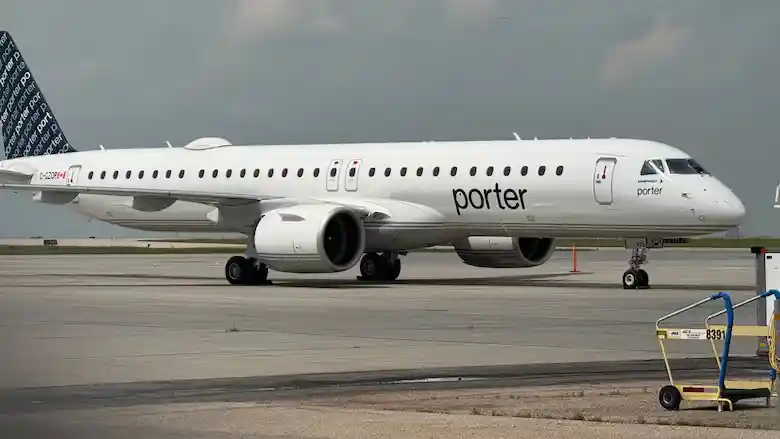
In a sudden turn of events that rattled passengers and prompted an urgent in-flight response, a Porter Airlines regional jet en route from southern Ontario to British Columbia was forced to make an emergency landing in Regina after reports of smoke inside the cabin. The incident occurred on the evening of Tuesday, July 15, 2025, transforming an otherwise routine transcontinental journey into a high-alert aviation event.
Emergency at Altitude: Smoke Triggers Rapid Descent
The twin-engine aircraft was cruising at 38,000 feet while traversing U.S. airspace when cabin crew and passengers detected a smoke odor, immediately escalating concerns among both the flight crew and those onboard. The pilots initiated emergency procedures and began a steep descent that, according to flight tracking data, exceeded 10,000 feet per minute at one point—indicative of a rapid response to a potential in-flight hazard.
Initial indications suggested the odor was localized and not visibly accompanied by smoke, but due to the unknown nature of the source, the flight crew made the prudent decision to divert. Their initial descent took the aircraft to roughly 7,000 feet, followed by a climb back to 14,000 feet, as they evaluated the safest airport for landing.
Strategic Rerouting: A Precision Decision-Making Moment
Flight trajectory analysis reveals that multiple diversion options were considered. The aircraft first appeared to set course directly for Regina, then veered slightly as if weighing an alternate airport before realigning with the original emergency plan. This kind of route behavior is not uncommon in aviation emergencies, where crew must balance time, terrain, technical diagnostics, and air traffic constraints in real-time.
Aviation experts commend this sequence as a textbook example of pilot decision-making under duress. The climb after the initial descent may have been part of a reassessment strategy—giving the crew time and altitude margin to handle potential systems issues or changing weather conditions.
Safe Touchdown in Regina Amid Emergency Protocols
At 8:33 p.m. Central Standard Time, the aircraft touched down safely at Regina International Airport, where emergency services were already deployed on standby. Upon landing, the aircraft was towed from the active runway to a secure inspection area. Passengers were evacuated safely and without injury, a credit to both the onboard crew and emergency responders on the ground.
Airport officials confirmed that no other flights were disrupted, and terminal operations continued as scheduled. The plane was quickly grounded for a detailed mechanical inspection, the results of which are still pending.
Onboard Smoke Alerts: What Triggers an Emergency?
Modern aircraft are equipped with automated smoke detection systems, especially in critical compartments like the cabin, cargo hold, and avionics bays. Any detection, even without visible smoke, can lead to immediate alarm escalation. In this case, cabin crew reported an unfamiliar odor, which was significant enough to alert cockpit systems and initiate emergency procedures.
Air safety analysts suggest that electrical faults, air conditioning systems, or hydraulic fluid leaks are potential causes of such odors, though each will require thorough forensic examination by the airline’s maintenance teams. The aircraft will remain grounded in Regina until comprehensive diagnostic and system integrity checks are completed.
Disruption and Passenger Response
While no one sustained physical harm, the psychological impact on passengers was tangible. Some onboard recounted the moment the cabin filled with an unusual scent, describing it as “electrical” or “plastic-like,” followed by a sharp drop in altitude. The sense of urgency was heightened by the fast descent and visible coordination among cabin crew.
Porter Airlines responded quickly after landing, providing affected passengers with hotel accommodations, rebooking options, and updates via their mobile platform and ground agents. Despite the disruption, most passengers resumed travel within hours or by the next morning.
Technical Context: The Aircraft and Its Capabilities
The aircraft involved belongs to Porter Airlines’ new fleet of Embraer E195-E2 jets, introduced in recent years to strengthen Canadian domestic connectivity. Known for their advanced avionics, quiet engines, and fuel-efficient design, these jets represent a modern step forward for short-to-medium-haul missions in North America.
This particular route—from southern Ontario to Vancouver—is one of several transcontinental services designed to offer more frequent and flexible travel options across Canadian provinces. The inclusion of the E195-E2 on such routes underscores the airline’s commitment to both passenger comfort and operational efficiency.
Safety Systems and Crew Preparedness Under the Spotlight
Aviation specialists point out that in-flight smoke alerts, while alarming, are relatively rare. When they do occur, the importance of procedural adherence, real-time diagnostics, and pilot reflexes becomes paramount. This incident highlighted how high-level training and onboard systems monitoring can prevent a critical situation from escalating.
The steep descent was a calculated maneuver, one typically used when pressurization issues or unknown hazards are suspected. Operating at lower altitudes reduces cabin pressure and allows for quicker landings, while also offering a safer margin should conditions deteriorate. The controlled nature of the aircraft’s descent and landing points to a highly professional execution of standard safety protocols.
Porter Airlines’ Official Response and Investigation
The airline released a brief statement shortly after the incident, confirming the safe landing of all passengers and crew, and affirming that an internal investigation was underway. Independent aviation analysts and regulatory agencies are expected to review flight data recorders (FDR) and cockpit voice recordings (CVR) as part of the comprehensive post-incident evaluation.
“While no immediate cause has been identified,” said a Porter Airlines spokesperson, “our safety teams are working in tandem with aircraft engineers to ensure every possible scenario is examined before the aircraft returns to service.”

The Transport Canada Civil Aviation Directorate is also likely to conduct a parallel investigation, especially given the mid-air safety incident involved a new-generation jet.
Broader Implications for Canadian Aviation
Though Tuesday’s scare ended safely, it reignites broader discussions about aviation safety culture, equipment reliability, and emergency preparedness in the growing Canadian air travel sector. As regional carriers expand their fleets and route networks, they must maintain uncompromising standards of mechanical integrity and crew readiness.
In fact, aviation insiders see such incidents as reminders—not failures—of why vigilance, training, and system redundancy are so vital. Every alert, even when later determined to be benign, must be treated with the highest priority, and Tuesday’s emergency landing exemplified this philosophy in action.
Looking Ahead: Confidence in Safety Procedures
Passengers aboard this flight were witnesses to the layers of defense built into modern aviation. From in-cockpit warning systems to swift coordination between ground and air teams, the airline’s response ensured that a potential hazard remained a contained event. While the experience may have been unsettling, it’s precisely these procedures that protect travelers from worst-case scenarios.
The final findings of the investigation are expected to provide valuable insights into whether the smoke odor was the result of electrical malfunction, oil leakage into ventilation systems, or another anomaly. Until then, the aircraft remains grounded, symbolizing the industry’s deep commitment to safety over schedule.
Conclusion: A Successful Response to an Unexpected Crisis
Tuesday night’s Porter Airlines diversion to Regina will be remembered not for tragedy, but for its demonstration of competent crisis management and safety-first operational conduct. No passengers were harmed, the aircraft landed without incident, and the situation remains under careful investigation.
As Canadian skies grow busier and regional travel becomes more essential, events like these serve as litmus tests for airline reliability, response time, and trustworthiness. Porter Airlines’ handling of the incident offers both relief and reassurance to future travelers that, even in rare mid-air emergencies, well-rehearsed safety protocols and skilled crews can guide them safely back to earth.