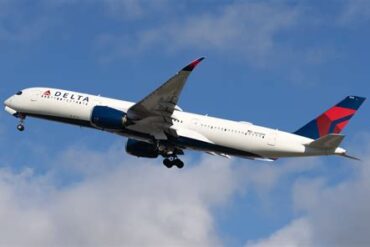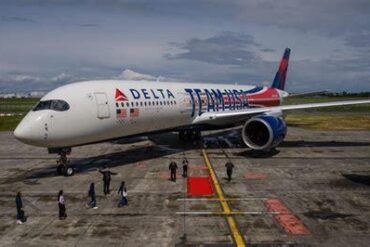
A serious in-flight medical emergency forced a Delta Air Lines transatlantic service to divert to Ireland, culminating in a carefully managed overweight landing at Dublin Airport and highlighting how modern long-haul crews balance urgent human needs with complex aircraft performance limits. The incident involved Delta Flight 234, operating from New York JFK to Tel Aviv, and unfolded high above the Atlantic with little margin for delay.
Medical Crisis Triggers Squawk 7700 Over the Atlantic
Approximately four hours into the flight, while cruising at 36,000 feet, the Airbus A330-900neo transmitted squawk 7700, the universal transponder code signaling a general emergency. This alert immediately notified air traffic controllers that the aircraft required priority handling. The trigger was a reported serious medical emergency onboard, a scenario where time-sensitive decisions can have life-or-death consequences.
With the aircraft still deep into its planned ten-hour journey, the flight deck crew evaluated diversion options across the North Atlantic. Dublin Airport emerged as the most suitable choice, offering long runways, advanced emergency medical response, and the infrastructure required to support a widebody aircraft arriving unexpectedly and significantly above its standard landing weight.
Decision-Making Under Pressure: Why Dublin Was Chosen
Selecting a diversion airport during a medical emergency is never arbitrary. Pilots must weigh distance, weather, runway length, airport capability, and medical access simultaneously. Dublin’s transatlantic role makes it a frequent alternate for North American–European traffic, and its ability to rapidly coordinate medical teams was decisive in this case.
By the time the A330neo turned toward Ireland, it had already been airborne for roughly six hours. That meant the aircraft was still carrying several hours of fuel, pushing it above its certified Maximum Landing Weight (MLW). Despite this, the urgency of the passenger’s condition meant delaying the landing to burn or dump fuel was not the preferred option.
Overweight Landing: A Controlled but Non-Routine Procedure
An overweight landing is not an emergency by default, but it is a non-standard operation that requires precise handling. Aircraft are structurally capable of landing above MLW in exceptional circumstances, provided crews follow strict procedures. These landings typically involve longer runway usage, gentler touchdown techniques, and careful brake management to avoid overheating.
Data from Flightradar24 showed Delta Flight 234 making a stable approach into Dublin before touching down safely at 01:17 AM local time. No injuries were reported among passengers or crew, underscoring how disciplined procedures and training mitigate elevated risks.
Aircraft and Crew Performance Under Scrutiny
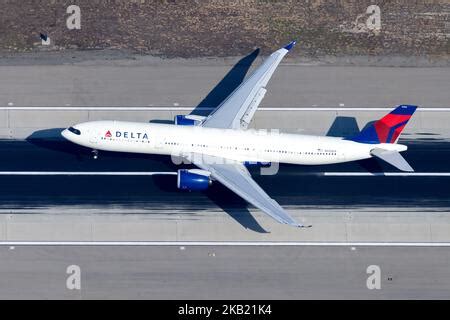
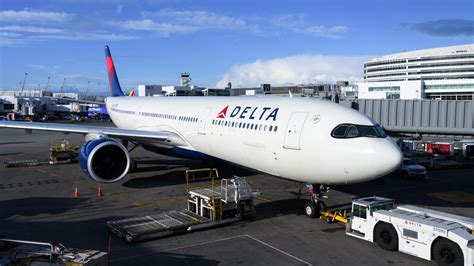
The aircraft involved, a two-year-old Airbus A330-900 registered as N430DX, represents one of the most advanced long-haul platforms in Delta’s fleet. Designed for extended-range operations, the A330neo offers enhanced fuel efficiency, modern avionics, and robust structural margins that support scenarios like overweight landings when circumstances demand.
On the ground, Irish emergency medical teams were already positioned. The affected passenger was transferred to a hospital shortly after arrival. While the individual’s condition has not been publicly disclosed, the rapid handover illustrated the value of established emergency coordination at major international hubs.
Minimal Disruption Despite Serious Incident
Despite the gravity of the diversion, operational disruption was remarkably limited. The aircraft remained on the ground in Dublin for just over two hours, allowing for mandatory post-landing inspections focused on the landing gear, brakes, and structural components. After being cleared, the flight resumed its journey, departing at 03:20 AM and landing safely in Tel Aviv later that day.
The total delay amounted to approximately three hours, a modest impact given the circumstances. Delta later confirmed that 158 passengers were onboard, and the aircraft quickly returned to regular service, including an 11-hour flight back to New York and a subsequent long-haul mission to São Paulo.
Why Fuel Dumping Was Not the Priority
Large widebody aircraft like the A330neo are equipped with fuel jettison systems, allowing crews to reduce weight before landing. So why wasn’t fuel dumped over the Atlantic? The answer lies in risk prioritization. Fuel dumping takes time and requires specific airspace coordination, while the medical emergency demanded the fastest possible landing.
Additionally, landing overweight after several hours of flight is inherently safer than doing so shortly after takeoff, as fuel burn during cruise already reduces stress on the airframe. In this case, the crew’s confidence in the aircraft’s performance envelope made the immediate descent into Dublin the most responsible choice.
A Case Study in Modern Aviation Safety
This incident serves as a clear example of how commercial aviation safety systems are designed to handle rare but critical events. From real-time flight tracking and standardized emergency codes to airport readiness and post-landing inspections, each layer functioned as intended.
The Dublin overweight landing of Delta Flight 234 was not a failure of planning, but a demonstration of adaptive decision-making in the face of human urgency. When seconds matter more than schedules or fuel calculations, aviation’s priority remains unchanged: protecting lives first, even when that means bending routine limits under carefully controlled conditions.