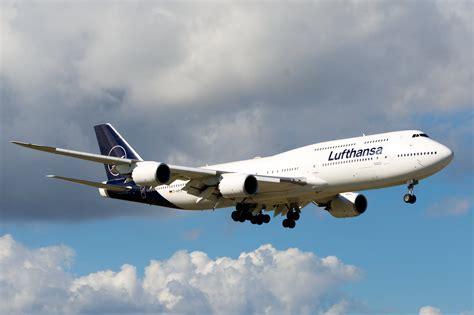
Within just 24 hours, Lufthansa experienced two separate emergencies involving its flagship Boeing 747-8 fleet, forcing two US-bound jumbo jets to perform overweight landings shortly after departure from Frankfurt Airport. Although both incidents ended safely without injuries, each aircraft required extensive inspections and maintenance, ultimately resulting in flight cancellations and highlighting the difficult decisions airline crews must make when every minute counts.
The unusual sequence unfolded on June 26 and June 27, when Lufthansa Flight LH418 to Washington Dulles International Airport and Flight LH402 to Newark Liberty International Airport both abandoned their transatlantic journeys shortly after takeoff. Despite occurring on consecutive days, the two events stemmed from entirely different emergencies. Yet they shared one significant operational consequence: both Boeing 747-8 aircraft landed while still carrying nearly full fuel loads, exceeding their normal maximum landing weight.
The incidents drew considerable attention from aviation enthusiasts after flight tracking data and airport footage circulated online, showing emergency vehicles surrounding one of the returning aircraft following touchdown. While overweight landings are uncommon during routine airline operations, they remain an important capability built into modern long-haul aircraft for situations where delaying a landing could introduce even greater risks.
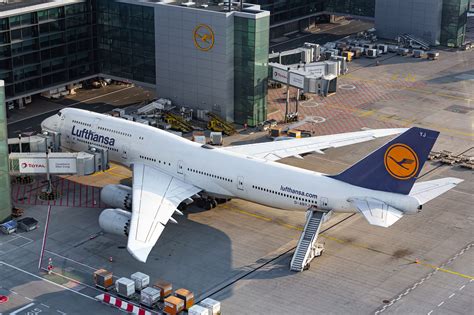
Why Lufthansa’s Boeing 747-8 Returned to Frankfurt
Saturday’s incident involved Flight LH402, which departed Frankfurt for Newark before the flight crew detected a burning brake odor approximately 20 minutes after takeoff. Although investigators have not indicated that an onboard fire actually developed, any indication of smoke, burning smells, or potential brake-related fire is treated as one of aviation’s highest-priority emergencies.
Rather than spending valuable time dumping fuel, the pilots elected to immediately return to Frankfurt. Although the Boeing 747-8 features an efficient fuel-jettison system, safely reducing tens of thousands of kilograms of fuel requires climbing to an appropriate altitude and operating within designated airspace where fuel can be released without creating hazards on the ground.
For an aircraft that has only recently departed on an intercontinental route, fuel dumping can easily require 20 to 30 minutes before the airplane reaches an acceptable landing weight. In scenarios involving possible fire, every additional minute spent airborne increases operational risk. Returning immediately, even with an overweight aircraft, represented the safest course of action.
Following touchdown, airport emergency crews inspected the aircraft while overheated brakes became the primary maintenance concern. The excessive energy absorbed during the heavy landing generated substantial brake temperatures, preventing the aircraft from returning to service as scheduled.
Medical Emergency Prompted Diversion of Flight LH418
Just one day earlier, Flight LH418, operating from Frankfurt to Washington Dulles, encountered an entirely different emergency shortly after departure.
Passenger reports later indicated that a young child suffered a serious medical emergency, prompting the crew to divert instead of continuing across the Atlantic. Rather than returning to Frankfurt, the aircraft landed at Cologne Bonn Airport, allowing emergency medical personnel to reach the passenger as quickly as possible.
According to passenger accounts shared online, the child later appeared to recover well after receiving medical attention. However, because the aircraft landed before burning sufficient fuel, it also completed an overweight landing requiring mandatory post-flight inspections.
Unlike routine arrivals, overweight landings subject the landing gear, brakes, wheels, tires, and surrounding structural components to significantly greater stresses. Even when no visible damage occurs, airline maintenance engineers must perform detailed inspections before approving the aircraft for further service.
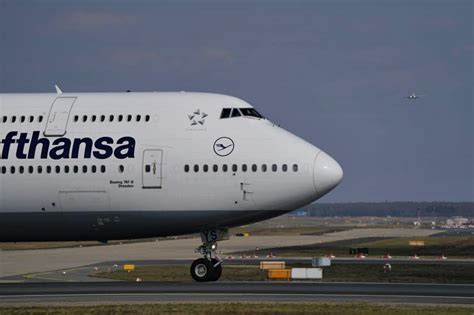
Why Pilots Sometimes Choose Overweight Landings
Although commercial aircraft are certified with both maximum takeoff and maximum landing weights, engineers also design large airliners to safely withstand overweight landings during genuine emergencies.
The decision ultimately revolves around risk management rather than aircraft preservation.
If pilots suspect fire, smoke, or another rapidly developing technical issue, remaining airborne simply to reduce landing weight may unnecessarily increase danger. Likewise, in severe medical emergencies, delaying treatment by twenty or thirty minutes could significantly affect a passenger’s outcome.
Modern aircraft like the Boeing 747-8 are specifically engineered to absorb the enormous kinetic forces generated during these heavy arrivals. Carbon brake assemblies, reinforced landing gear, high-strength wheels, and specially designed tires all play critical roles in safely dissipating the additional energy.
Nevertheless, an overweight landing almost always triggers inspections before the aircraft can fly again. Maintenance teams carefully evaluate braking systems, wheel assemblies, hydraulic components, landing gear structures, and surrounding airframe areas for signs of overheating, excessive loads, or hidden structural stress.
Maintenance Grounded Both Jumbo Jets
Although both aircraft landed safely, neither resumed scheduled service.
For LH402, severely overheated brakes required maintenance before the aircraft could safely operate another flight. Depending on temperatures reached during landing, technicians may replace brake assemblies, inspect brake lines, evaluate wheel components, and replace tires that experienced excessive thermal loads.
Meanwhile, LH418 required detailed landing gear inspections following its overweight arrival at Cologne. Even when no damage is ultimately discovered, completing these engineering inspections requires time, trained personnel, and maintenance resources that frequently disrupt airline schedules.
Consequently, both transatlantic departures were canceled despite the successful emergency landings themselves.
Lufthansa’s Boeing 747-8 Fleet Remains Operationally Essential
These two consecutive incidents come at a particularly important period for Lufthansa’s long-haul network.
The airline increasingly depends on its Boeing 747-8 fleet as one of its most capable high-capacity aircraft. While older Boeing 747-400 and Airbus A340-600 aircraft continue to leave the fleet, delayed deliveries of the next-generation Boeing 777X have extended the operational importance of the modernized jumbo jets.
At the same time, sustained demand for premium long-haul travel has even prompted Lufthansa to reactivate portions of its Airbus A380 fleet after years in storage. Until additional next-generation aircraft arrive, the Boeing 747-8 will remain a cornerstone of Lufthansa’s intercontinental operations, particularly across busy North Atlantic routes.
The two emergency overweight landings ultimately demonstrated not only the resilience of the Boeing 747-8’s engineering but also the careful judgment exercised by flight crews. Faced with situations where time carried greater value than preserving routine operating limits, both crews prioritized passenger safety over operational convenience—a decision that resulted in maintenance delays and canceled flights but ensured that every passenger reached the ground safely.