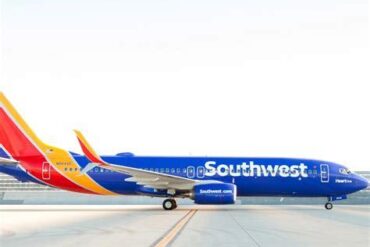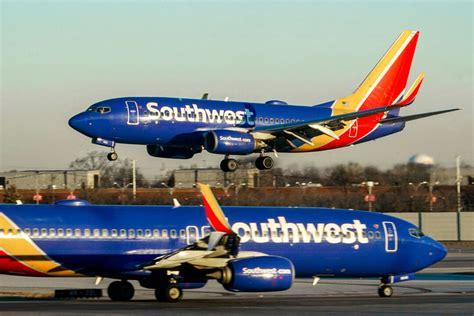
Southwest Airlines’ recently announced policy on portable charging devices was put to a real-world test far sooner than anyone anticipated. Just 24 hours after the policy was introduced, a flight from Baltimore to Tampa was forced to divert midair due to a smoking battery pack, dramatically underscoring the importance of proactive safety protocols surrounding lithium-ion technology onboard commercial aircraft.
A Flight Diverted by Fire Risk
Flight 1844 departed Baltimore at approximately 6 p.m. on Thursday evening, destined for Tampa, Florida. But only an hour into the flight, the aircraft, a Boeing 737, made an unexpected sharp right turn. Data from Flightradar24 shows that the trajectory change was abrupt, and passengers were likely caught off guard by the sudden shift.
The reason: a passenger’s battery-powered charger began to overheat and emit smoke inside the cabin. Flight attendants acted immediately, following emergency protocols that called for isolating the device. The item was placed into a thermal containment bag, a safety measure now standard equipment on many airlines for precisely such scenarios.

Why Lithium-Ion Batteries Are a Fire Hazard at 35,000 Feet
Lithium-ion batteries, though ubiquitous in modern electronics, pose a significant fire risk when malfunctioning. At cruising altitude, a thermal runaway event — where battery cells rapidly overheat — can escalate quickly. The confined environment, lack of external ventilation, and close proximity of passengers make any onboard fire a potential catastrophe.
According to the Federal Aviation Administration (FAA), lithium battery-related smoke and fire events onboard commercial aircraft are on the rise. In 2023 alone, there were nearly three such incidents every two weeks, up sharply from fewer than one per week in 2018. This is not a hypothetical risk. The danger is real, growing, and now unavoidable in public discussion.
Southwest’s Policy Shift: A First in the Industry
Just a day before the incident, Southwest introduced what it described as a “first-in-industry safety policy” regarding portable charging devices. The key regulation? Passengers may no longer use these devices while they are stowed in bags — especially in overhead bins or under seats. Instead, chargers must remain visible and accessible while in use, ensuring any signs of overheating can be quickly spotted and dealt with.
The logic is simple and scientifically grounded. The faster a smoldering device is detected, the higher the chances of containment before a full-blown fire erupts. By removing visibility barriers, Southwest has not only elevated its in-flight safety procedures but has also taken the lead in a new era of battery-aware air travel.
The Industry’s Wake-Up Call: From Korea to the U.S.
Southwest’s decision didn’t happen in a vacuum. Earlier this year, in January, a dramatic event unfolded on an Air Busan flight in South Korea. As the plane was preparing for takeoff, a power bank stored in the overhead bin ignited, sending flames through the cabin. Seven passengers were injured in the chaos. Investigators later confirmed that the source of the blaze was a faulty lithium device.
The incident was a catalyst for regulatory overhaul in South Korea. Airlines were quickly mandated to ban the storage of power banks in inaccessible areas and to enforce stricter screening and onboard behavior policies. Within months, international carriers began reevaluating their protocols. For an airline like Southwest — known for its aggressive focus on operational efficiency and customer safety — the writing was on the wall.
Swift, Professional Response Averts Disaster
Southwest’s flight crew on Flight 1844 deserves recognition. Their immediate recognition of the threat, use of the containment bag, and coordination with the pilot to divert the plane to Myrtle Beach, likely prevented a far worse outcome. As the airline noted in its official statement, “We appreciate the professionalism of our flight crew in swiftly handling the situation.”
The aircraft landed safely in South Carolina, and after a thorough inspection and passenger accommodation, a replacement aircraft resumed the journey to Tampa nearly five hours later. While the delay was inconvenient, the alternative scenario could have been disastrous.
Escalating Concerns Over Lithium Device Regulation
The increasing frequency of these incidents is not lost on safety advocates and regulators. Unlike more traditional mechanical failures, battery fires can spread extremely quickly, burn at high temperatures, and reignite hours later due to latent heat pockets within the battery cells.
The FAA and other aviation bodies are actively studying new containment technologies, while some experts advocate for pre-flight power bank declarations, similar to how liquids and aerosols are regulated. The idea would be to reduce surprise factors and enable more thorough risk assessments before takeoff.
Moreover, there’s a growing push for manufacturers of power banks and chargers to implement stricter compliance labeling and safety certification standards. Right now, the quality and build integrity of chargers vary widely, especially among low-cost products purchased online without third-party safety testing.
Southwest’s Policy May Set the Standard
While many U.S. airlines already require passengers to carry lithium battery devices in carry-on luggage rather than checked baggage, Southwest’s proactive step of banning the charging of hidden or inaccessible devices could set a new benchmark.
Passengers are now being advised during boarding announcements and through signage that invisible charging is no longer allowed. Flight attendants are empowered to intervene if they see devices being charged inside a bag, and the enforcement is expected to be strict. These actions aren’t merely procedural — they reflect a growing realization that passenger behavior must evolve to match the risks of the modern tech-filled travel environment.
Public Reaction: A Mix of Support and Skepticism
Not surprisingly, public opinion on the new policy is divided. Many frequent flyers and aviation safety advocates have praised the move, calling it a logical and overdue precaution. Others, particularly those relying on portable chargers for medical devices or long-haul connectivity, have expressed concern about enforcement inconsistencies and potential inconvenience.
Still, the timing of Flight 1844’s diversion makes for a compelling argument in favor of the policy. For a measure introduced on Wednesday to prove its relevance by Thursday is rare in aviation policy. It effectively cuts through any skepticism about whether such rules are necessary.
What’s Next: Will Other Airlines Follow?
With Southwest setting this precedent, other carriers — both domestic and international — will face mounting pressure to revisit their own guidelines. Some may opt for even stricter protocols, such as mandatory device inspections at boarding or designated charging zones within the cabin.
Ultimately, this moment serves as a pivotal point in aviation safety evolution, where airline policy must keep pace with consumer electronics. As more passengers travel with multiple high-capacity batteries — from phones and tablets to laptops and gaming devices — airlines can no longer afford to wait for regulations to catch up.
The skies are safer today because of decisive action and clear policy. But the future of air travel will depend on how fast the industry can move to turn lessons like Flight 1844 into lasting, global standards.