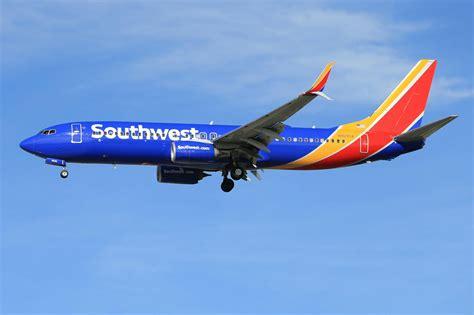
A growing controversy surrounding Southwest Airlines’ updated Customer of Size policy has reignited a broader debate about passenger dignity, airline procedures, and the challenges carriers face when balancing operational policies with customer experience. The latest dispute centers on a longtime Southwest traveler who says she was publicly embarrassed at the gate despite being able to fit comfortably into a single seat.
The incident has quickly attracted attention across the aviation industry, particularly because Southwest has historically been viewed as one of the more accommodating airlines for larger passengers. Critics argue that the airline’s recent policy changes risk undermining that reputation, while supporters contend that clear seat-space rules are necessary for safety and comfort.
Longtime Southwest Customer Challenges Gate Agent’s Decision
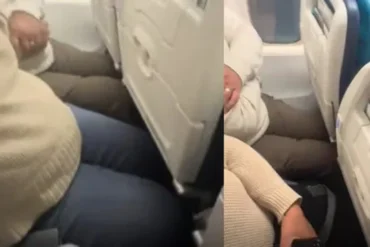
Linda Hyde, a Rapid Rewards member since 2014 and a frequent Southwest traveler, said she was confronted by a gate agent at Miami International Airport (MIA) regarding whether she could fit into a standard airline seat. According to Hyde, the employee questioned her ability to occupy a single seat and informed her that she would need to obtain the adjacent seat under Southwest’s revised procedures.
Hyde maintained that she could fit comfortably within one seat and pointed to numerous recent Southwest flights where her size had never been raised as an issue. Despite her explanation, she said the gate agent initially remained firm in requiring an additional seat.
The exchange left Hyde frustrated and angry. She later described the experience as degrading, arguing that travelers should not be subjected to public judgments about their bodies while boarding an aircraft.
By her account, the incident went far beyond a seating discussion. It became a matter of personal dignity and respect.
New Customer of Size Policy Sparks Fresh Debate
The dispute stems from Southwest’s evolving Customer of Size policy, which was modified earlier this year as the airline continues transitioning through major operational changes.
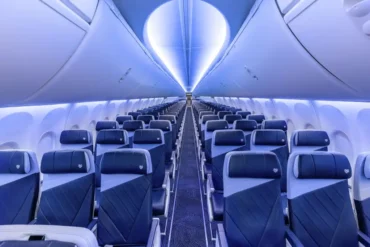
Under the current framework, airline employees may determine that a traveler requires an additional seat if they cannot confidently assess seating fit. The airline considers the armrest to be the boundary between seats and may require additional space when necessary for safety purposes.
The updated guidance also emphasizes that purchasing an extra seat before travel is recommended because adjacent seats may not be available on every flight. When flights are full, travelers who need extra seating space could be required to purchase the neighboring seat or potentially be rebooked on another flight with sufficient availability.
For many passengers, the controversy is not simply about policy details but about how those policies are enforced in real-world situations. Questions have emerged regarding consistency, employee discretion, and whether visual assessments can ever be conducted without causing embarrassment.
Southwest Responds to the Incident
In response to media inquiries, a Southwest Airlines spokesperson stated that the company is working toward a more seamless and consistent experience for customers who require additional seating accommodations.
The airline emphasized that airport employees are empowered to provide an extra seat at no additional charge when seats are available. According to Southwest, charging for an additional seat should generally be considered a last resort rather than the default approach.
The statement reflects the airline’s attempt to balance customer needs with operational realities. However, critics argue that the issue is less about the written policy and more about how passengers are treated during the decision-making process.
Hyde subsequently contacted Southwest Airlines, the U.S. Department of Transportation, and the Greater Miami Convention and Visitors Bureau, requesting accountability and a formal apology.
Empty Seats Raise Questions About Enforcement
One of the most controversial aspects of the incident involves the flight’s actual occupancy level.
After Hyde challenged the gate agent’s decision, another Southwest employee reportedly reviewed her reservation and examined the situation more closely. The employee discovered that Hyde was traveling on a return flight to Kansas City International Airport (MCI) and that the aircraft was far from full.
Reports indicate that approximately 30 seats remained available, meaning Hyde would have had multiple empty seats nearby throughout the journey.
Once this information was confirmed, the issue was ultimately resolved. Hyde was provided access to an additional seat at no charge, and the matter was dropped before departure.
Yet the outcome did little to ease concerns about the process itself. Critics argue that if substantial seat availability existed, the confrontation could have been avoided entirely.
Southwest’s Changing Identity Creates New Challenges
The controversy arrives during a period of significant transformation for Southwest Airlines. The carrier has spent decades cultivating a distinct identity built around customer-friendly policies, open seating, and a more relaxed travel experience.
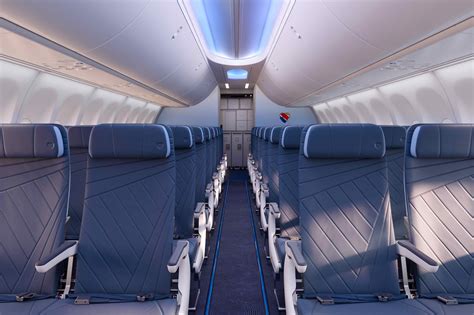
Recent years, however, have brought sweeping changes. Southwest has begun transitioning away from its famous open-seating model toward assigned seating arrangements, marking one of the biggest operational shifts in company history.
For larger travelers, the previous system often provided greater flexibility. Passengers requiring additional space could communicate directly with fellow travelers and adjust seating arrangements more organically. The move toward assigned seating has introduced new complexities that airlines must now navigate carefully.
Many observers believe Hyde’s experience illustrates the growing pains associated with these changes.
Passenger Says Experience Ends Decade-Long Loyalty
For Hyde, the dispute appears to have permanently altered her relationship with the airline.
Despite more than a decade of loyalty and frequent travel with Southwest, she has stated that she does not intend to fly with the carrier again. She also expressed concern that other passengers could face similar situations if policy enforcement remains inconsistent.
The episode highlights a challenge confronting airlines worldwide: creating policies that address safety and seating realities without making travelers feel singled out or publicly judged.
As public scrutiny intensifies, Southwest faces increasing pressure to clarify how its Customer of Size policy should be implemented and to ensure that employees apply those guidelines consistently. The airline’s response may ultimately determine whether this incident remains an isolated controversy or becomes a defining moment in the ongoing debate over passenger treatment and airline accountability.