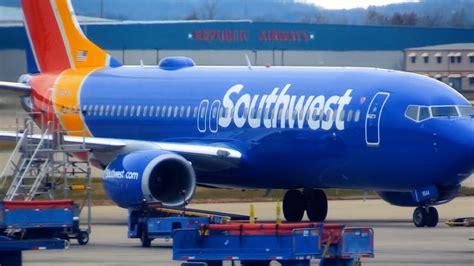
A seemingly simple gesture has spiraled into a revealing moment for Southwest Airlines, as a handwritten thank-you note given to a loyal A-List Preferred passenger ignited widespread criticism online. What might once have been viewed as a thoughtful, human touch has instead been interpreted by many as a calculated move, exposing deeper fractures in the airline’s relationship with its most dedicated travelers.
At the center of the controversy lies a growing sense that customer goodwill cannot be restored through isolated gestures alone. The reaction to this note underscores a shifting dynamic in how passengers interpret airline behavior, particularly when trust has already been weakened by broader operational and policy concerns.
A Viral Moment: How One Note Triggered a Wave of Skepticism
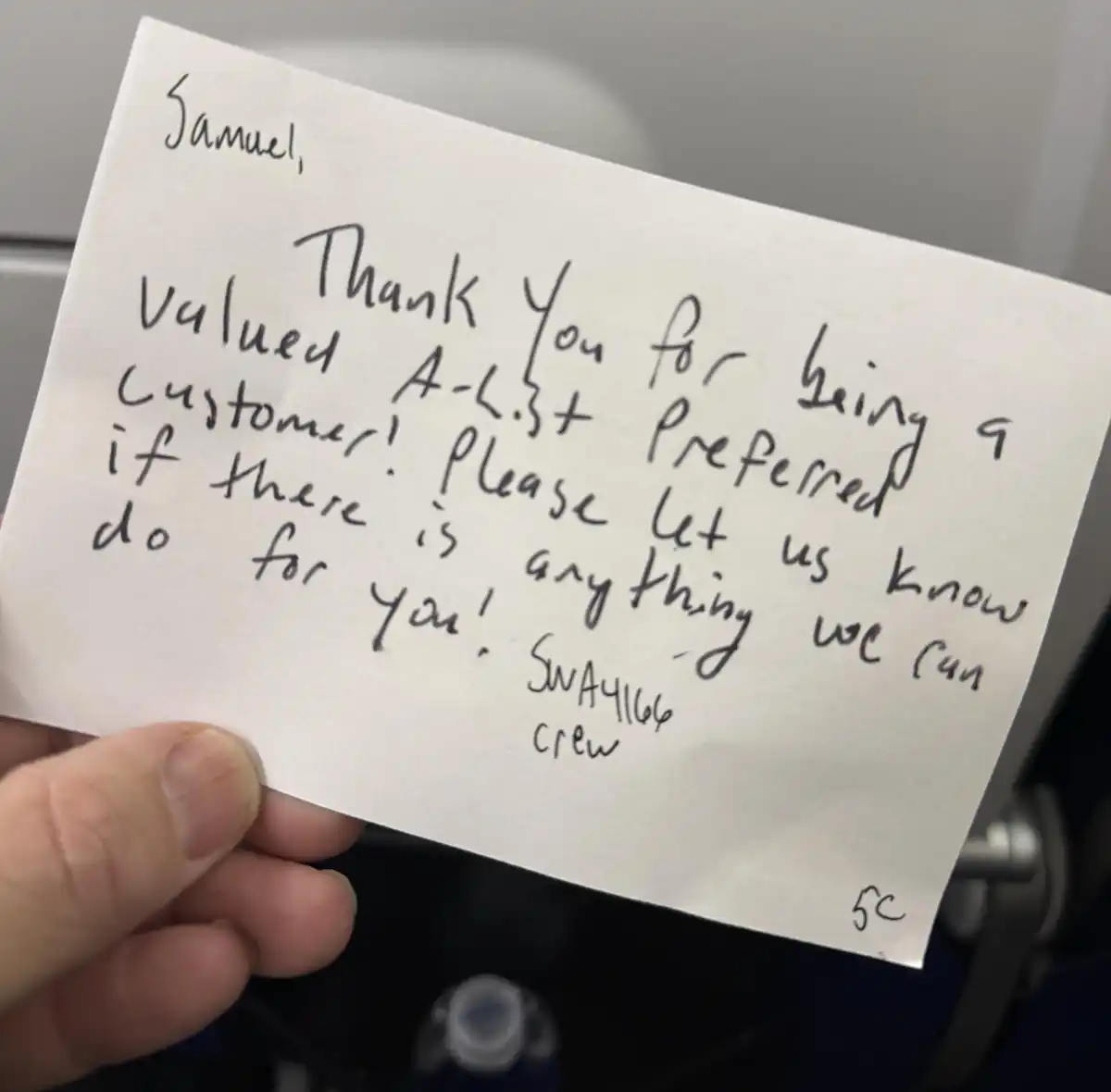
The incident gained traction after a Reddit post showcased a handwritten note addressed to a passenger named Samuel. The message thanked him for being a “valued A-List Preferred Customer” and encouraged him to reach out to the crew for any assistance during the flight. On its surface, the note appeared warm, personal, and aligned with Southwest’s historically friendly brand image.
Yet the online response told a different story. Rather than celebrating the gesture, many commenters questioned its authenticity. Some speculated—without concrete evidence—that the note looked prewritten or performative, suggesting it may have been part of a broader attempt to repair public perception rather than a spontaneous act of kindness.
This skepticism reflects more than just cynicism toward a single interaction. It highlights a broader erosion of trust, where even positive experiences are filtered through doubt. In this context, the intent behind the gesture becomes less important than how it is perceived.
When Small Gestures Collide With Larger Frustrations
The backlash did not occur in isolation. Southwest Airlines has been navigating a period of heightened scrutiny, with ongoing complaints related to boarding changes, pricing concerns, and evolving seating policies. For many passengers, these issues have compounded into a sense that the airline is drifting away from the simplicity and transparency that once defined its appeal.
Against this backdrop, the handwritten note became symbolic. Instead of reinforcing loyalty, it was interpreted by some as “damage control” wrapped in politeness. The timing proved critical; in a more positive climate, the same gesture might have been widely praised.
This reaction illustrates a crucial reality in customer experience: context shapes perception. A kind act does not exist in a vacuum. It is evaluated alongside recent frustrations, expectations, and the cumulative emotional journey of the customer.
The Fragility of Brand Trust in Modern Aviation
For an airline that has long relied on customer loyalty as a competitive advantage, this moment carries significant implications. Trust, once eroded, is difficult to rebuild—and easily undermined by even minor missteps or misinterpretations.
The handwritten note episode demonstrates how symbolic gestures have diminishing returns when underlying concerns remain unresolved. Passengers are increasingly focused on consistency, fairness, and reliability. When those elements feel uncertain, smaller efforts—no matter how well-intentioned—risk being dismissed as superficial.
This is not to say that such gestures are irrelevant. On the contrary, they can still enhance the travel experience. But their effectiveness depends on a foundation of operational credibility. Without that, even the most personal touches can feel hollow.
A Shift in Passenger Expectations and Interpretation
The reaction also reflects a broader evolution in consumer psychology within the airline industry. Today’s travelers are highly informed, quick to share opinions, and increasingly sensitive to perceived inconsistencies between brand messaging and actual experience.
Where a handwritten note might once have symbolized genuine hospitality, it can now be viewed through a more critical lens—especially when shared widely on social platforms. The speed and scale of online discourse amplify these interpretations, turning a single moment into a narrative about corporate intent.
Passengers are no longer evaluating airlines based solely on isolated interactions. Instead, they assess the entire journey, from booking and pricing transparency to onboard service and post-flight support. In this environment, authenticity is measured not by words, but by alignment between promise and delivery.
What This Means for Southwest’s Path Forward
For Southwest Airlines, the lesson is both clear and challenging. Rebuilding trust requires more than gestures—it demands consistent execution and a renewed focus on customer value. Loyalty cannot be sustained through symbolic acts alone; it must be reinforced through reliable, predictable experiences that meet or exceed expectations.
The handwritten note, while minor in isolation, has become a case study in how quickly perception can shift. It reveals that passengers are paying close attention, not just to what airlines do, but to why they do it.
Ultimately, the path forward lies in restoring confidence at a systemic level. When passengers feel respected, informed, and fairly treated, small gestures regain their power. Until then, even the most well-intentioned efforts risk being overshadowed by doubt.